
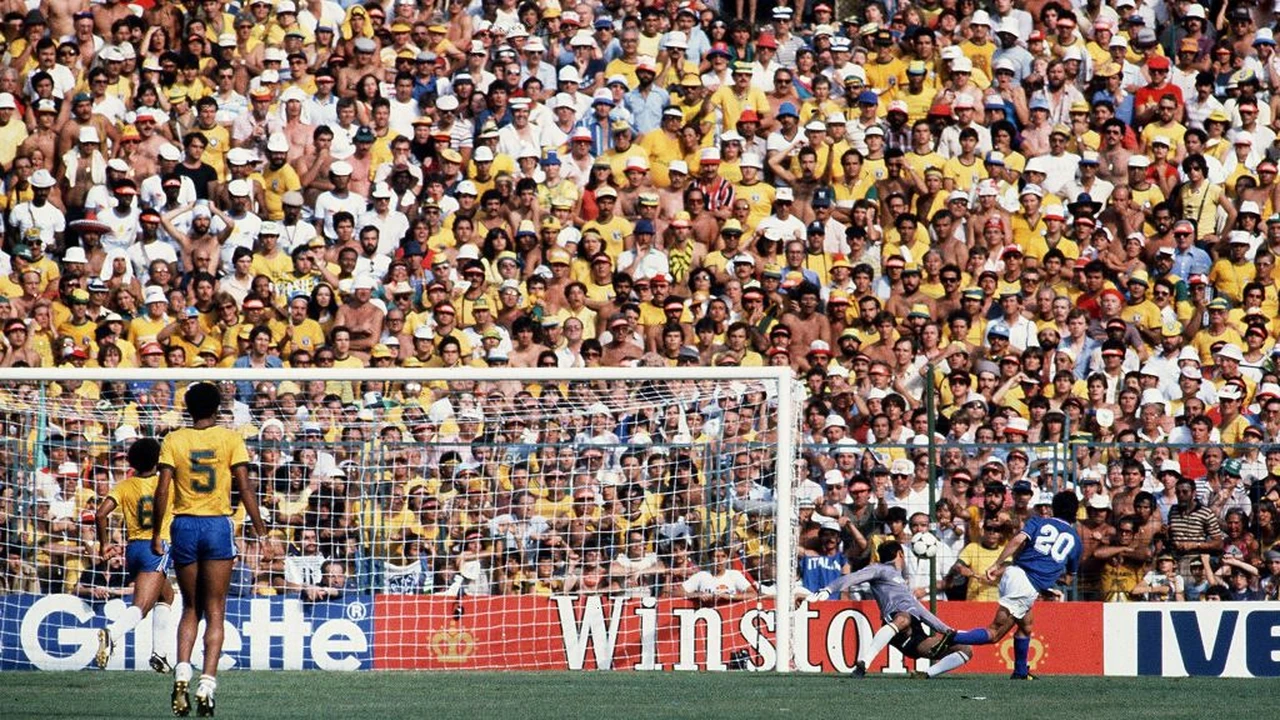
On 5 July 1982, on a sunny afternoon, the national teams of Brazil and Italy faced each other at the Estadi de Sarrià in Barcelona (then the home ground of Espanyol), vying for a place in the semi-finals of the World Cup. That match — remembered in the footballing scriptures by many names — became a historical landmark of the sport.
At the time, the World Cup was structured with two group stages. First, the 24 teams were split into six groups, with the top two from each advancing to form four new groups of three teams each. The winner of each group would then progress to the semi-finals. So, while the Brazil–Italy clash had all the intensity and finality of a quarter-final — since the winner would advance — it was, in fact, the third and final match of Group 3 in the second round. That group also featured the reigning world champions Argentina, marking the World Cup debut of Diego Armando Maradona.
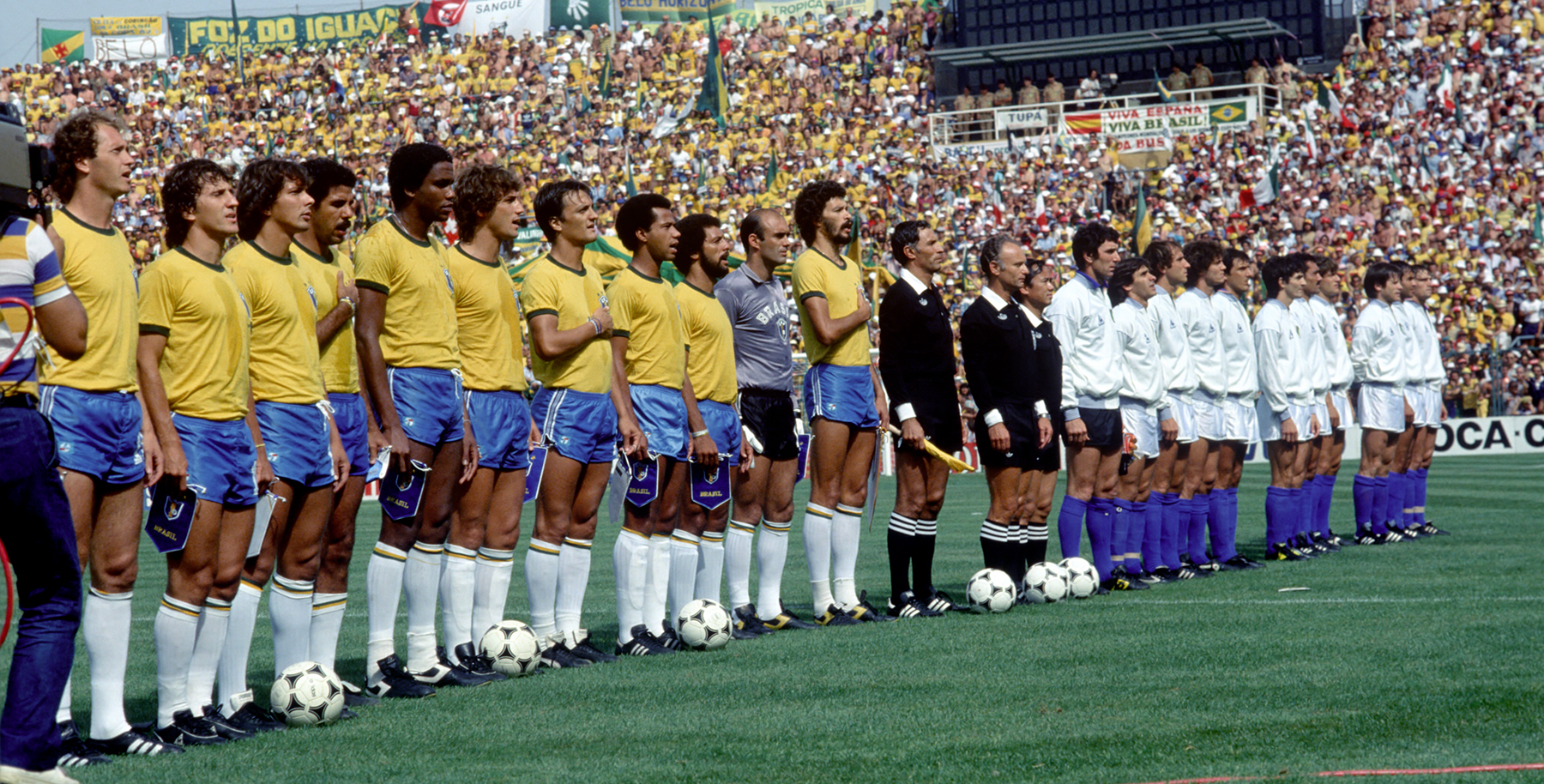
After Brazil’s dazzling display of dominance at the 1970 World Cup — a triumph made possible in part by the unique conditions of Mexico’s high altitude, which created larger spaces on the pitch — the team remained attached to a style of play built around individual skill and inspiration. This approach was characterised by the inclusion of numerous talented players, particularly in midfield. With a 4-2-2-2 formation, the generation of Zico, Sócrates, Falcão, and Cerezo had the platform to unfold a beautifully fluid game, full of triangular movements and an emphasis on attacking creativity.
This setup had made waves on the pitches of Spain and established Brazil as one of the tournament favourites to claim football’s greatest prize. In the initial Group 6, the Seleção secured three wins from three: starting with a 2–1 comeback victory over the Soviet Union, followed by a dominant 4–1 against Scotland, and an even more emphatic 4–0 over a clearly inferior New Zealand side.
In the second-round group, facing the reigning world champions Argentina and a young Maradona — who would be sent off in the 86th minute — the Brazilians were in scintillating form, brushing them aside 3–1. Argentina’s lone goal, a consolation, came in the 87th minute from Ramón Diaz, then playing for Napoli. Twelve years after the Mexican epic and following the rise of Total Football throughout the 1970s, that Brazilian generation looked ready to restore jogo bonito to its rightful place at the summit of world football.
On the other side, Italy was entering a new era, moving away from the rigid and often criticised catenaccio — the defensive system entrenched since the days of Helenio Herrera at Inter. In its place, a more flexible style of play was emerging, known in Italy as zona mista and abroad as gioco all’italiana. This tactical evolution, pioneered by figures like Gigi Radice and Giovanni Trapattoni, was essentially an asymmetrical 4-4-2.
In this setup, one fullback would push higher up on the open flank, complementing two central defenders and a libero, who provided a stable anchor at the back. A similar dynamic played out further up the pitch, where the wide midfielder on the opposite side operated beside the regista — the team’s deep-lying playmaker — supporting movements on the edges of the opponent’s penalty area.
This tactical system had already brought major success to Italian clubs from the 1970s onward — and especially throughout the 1980s — laying the groundwork for the rise of the iconic numero dieci in Italian football (even if many of those playmakers weren’t actually Italian). It was, in essence, an adaptation of Total Football principles — positional rotations and spatial coverage — layered over the foundational logic of catenaccio.
Italy’s journey through the World Cup, however, was far from triumphant in its early stages. In Group 1, they failed to win a single match, recording three draws: 0–0 with Poland, 1–1 with Peru, and 1–1 again with Cameroon. These results were enough to see them through to the second round, where they faced Argentina in their opening match — and beat them 2–1, with goals from Tardelli and Cabrini.
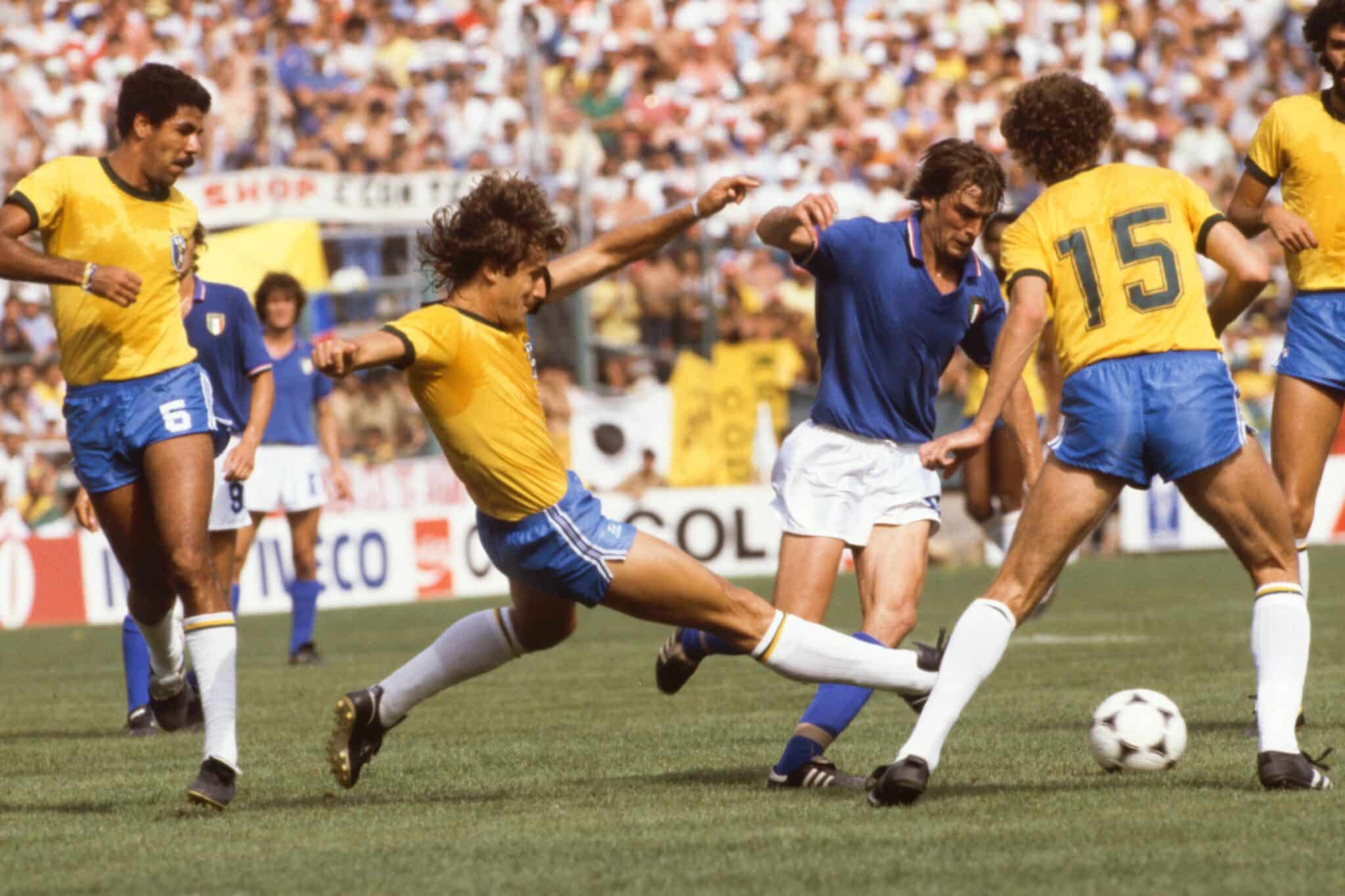
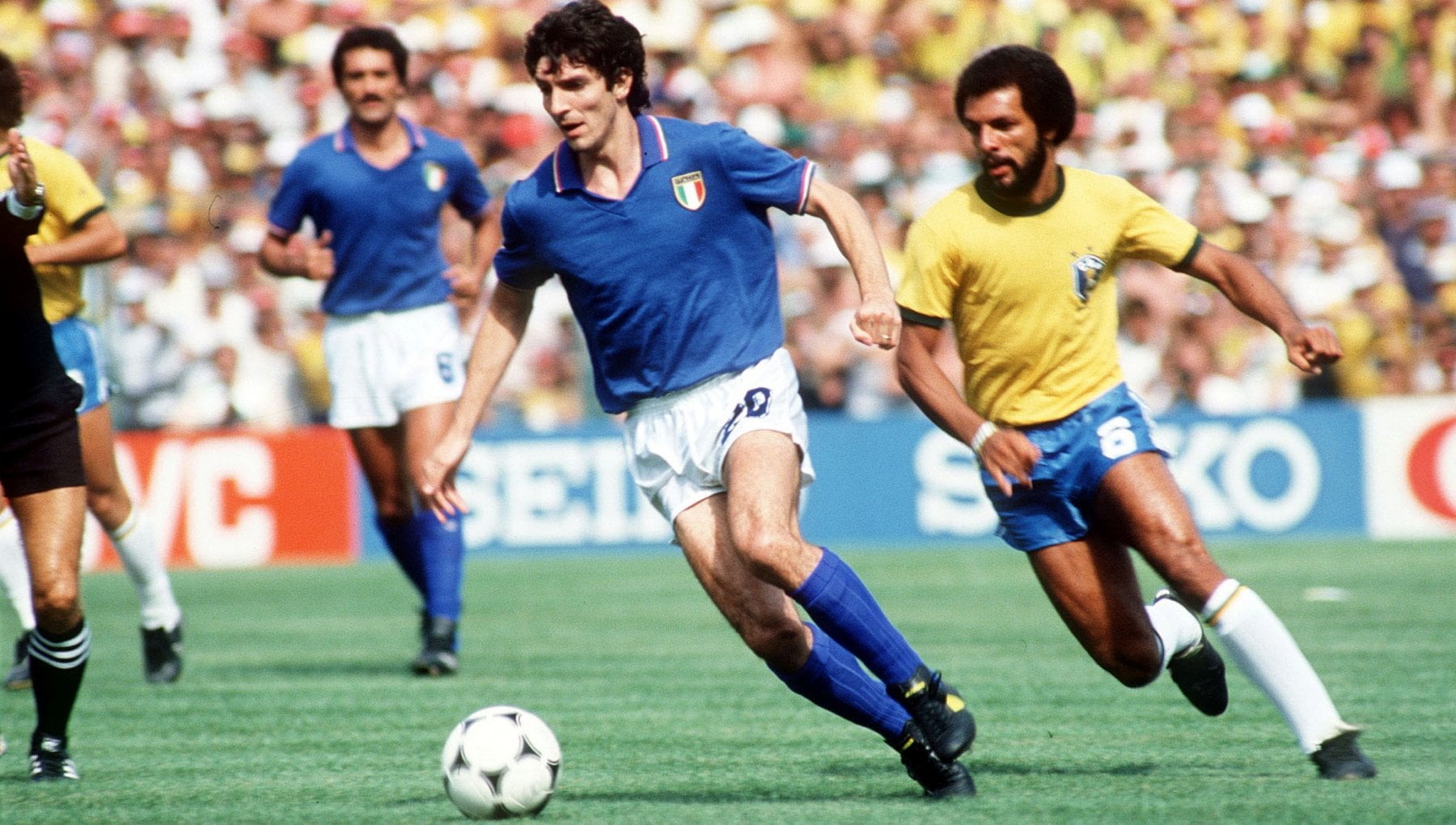
Given this context, Brazil were clearly the favourites going into the match, and they stepped onto the pitch intent on playing their beautiful game once more. However, Italy struck early — in just the 5th minute, Paolo Rossi, who would deliver a sensational performance that day, found the back of Waldir’s net.
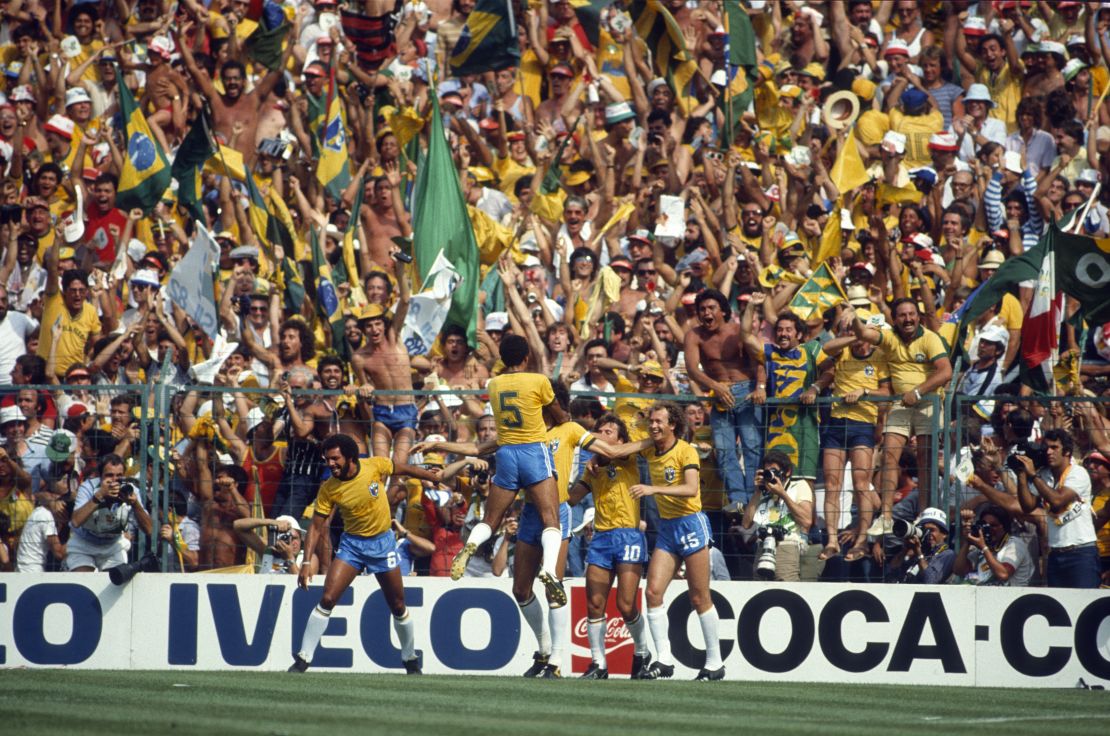
Brazil responded quickly, equalising in the 12th minute through Sócrates, but the Italians reclaimed the lead in the 25th minute with another goal from Rossi, going into half-time ahead. In the second half, Falcão levelled things again in the 68th minute, sparking hopes of a Brazilian resurgence.
But it was Paolo Rossi who had the final word. In the 74th minute, he completed his hat-trick, sealing a monumental and historic victory for Italy.
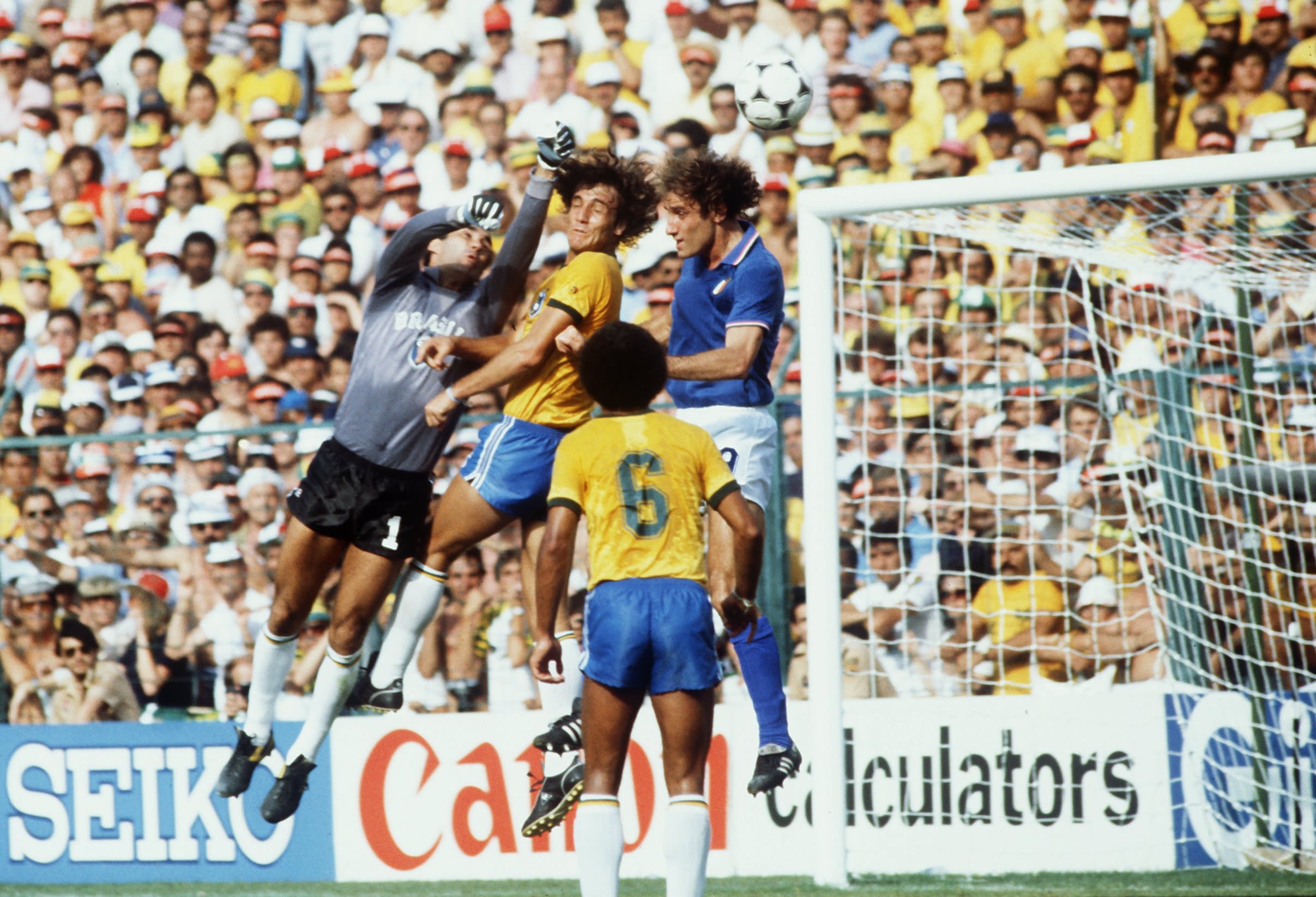
Italy advanced to the semi-finals and, with Paolo Rossi emerging as the hero of the tournament, went on to win their first post-war World Cup. Their squad was notably less Latin American in style than Pozzo’s sides of the 1930s — a paradox, considering that the match on 5 July had pitted the tournament’s most spectacular team against its most pragmatic.
Italy’s triumph in that clash marked more than just a footballing victory — it signalled the ideological triumph of footballing pragmatism.
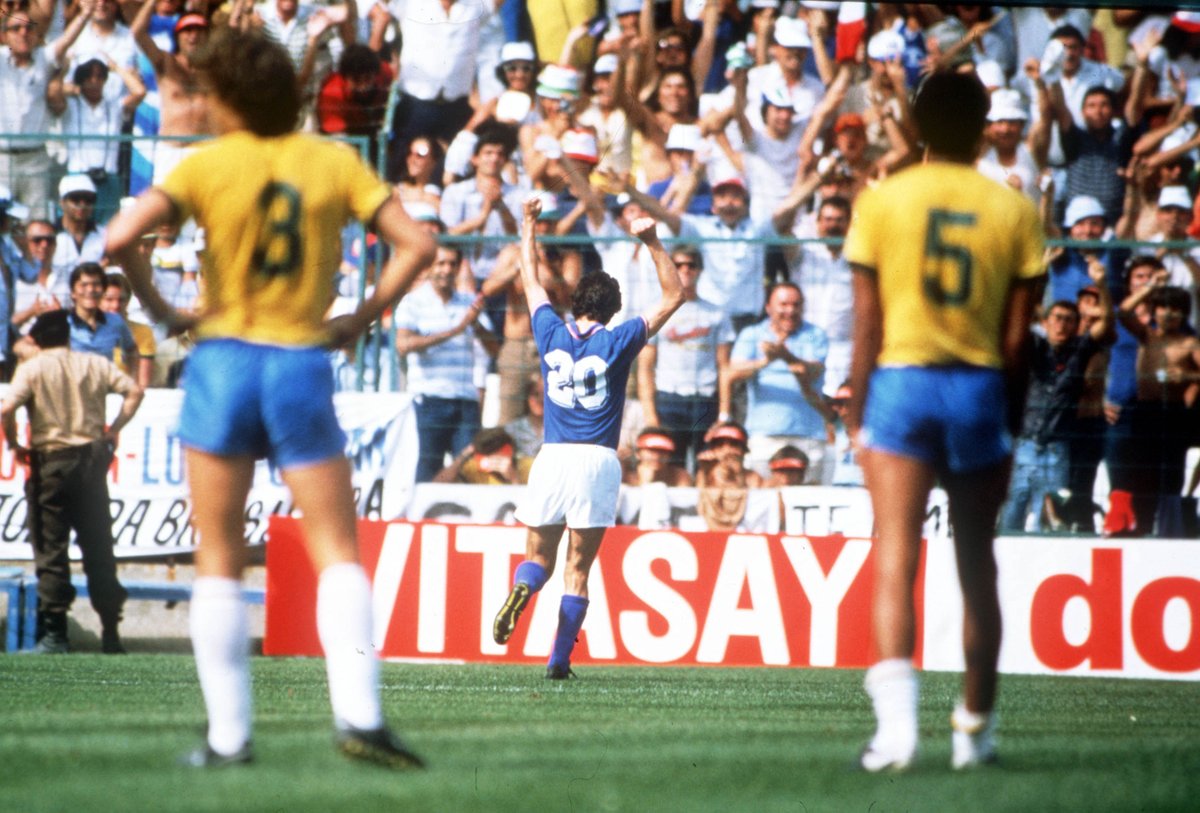
Some call that match the greatest game in football history, because of the clash between two opposing philosophies. Others, like Zico, remember it as the day football died. And still others believe it marked the beginning of modern football. What’s certain is that this match profoundly shaped footballing logic — even in Brazil, where, twelve years earlier, the ideas of Total Football as envisioned by João Saldanha had been rejected, but where the winds now shifted toward a more efficient, less spectacular style of play.
Twelve years after the final in Mexico, the Brazilians laid to rest their trademark style on that afternoon in Barcelona. And twelve years later, in Pasadena in 1994 — again against Italy — they would win the only World Cup final in history to end with a scoreline of absolute zero, having fully embraced this new formula of footballing pragmatism.
That same formula would take Brazil to three consecutive World Cup finals, two of which they won, securing their place — to this day — as the tournament’s most successful nation.
It would take several more years, until the early 2010s, for another footballing school — rooted in the same geography where that legendary match took place — to bring beauty back to the summit of the sport, and to restore the dominance of attacking plurality and creative expression.
