
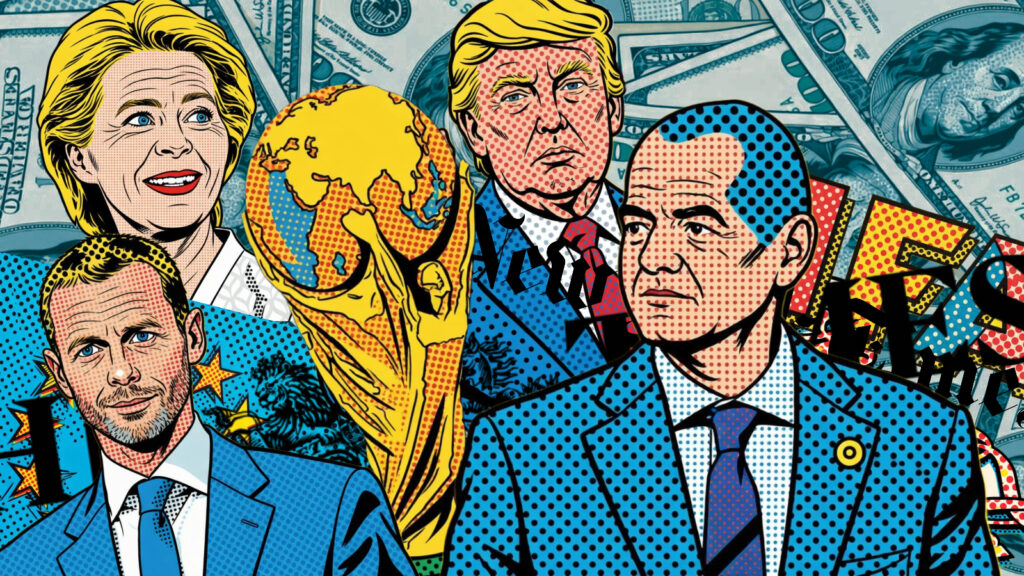
Rerum Novarum — The War for Football
The phrase “rerum novarum” could be translated from the Latin as “on new things” and, given the state into which world football has descended, it is perhaps the most fitting title for an attempt to analyse it. It is not, however, an original title where football is concerned. The document known as “Rerum Novarum” was the papal encyclical of Pope Leo XIII, through which the Catholic Church sought to shape the life of the working class within a framework that would incorporate it into capitalist power. It would be wholly unrelated to football were this ideology not also the worldview of a French lawyer, Jules Rimet, who, imbued with these ideas, took over the FIFA presidency and worked to create the World Cup. In this sense, FIFA, the World Cup, all the major football confederations and the major football competitions were never romantic, innocent expressions of a multinational football gathering. They were always instruments aligned with the political needs of their age and attuned to the political outlooks and interests of those who conceived them. Seen in this light, and without any illusions about a change in the character of the sport and its competitions, it is necessary a) to place current events in their true historical context; b) within that same context, to explain the actions and stance of...
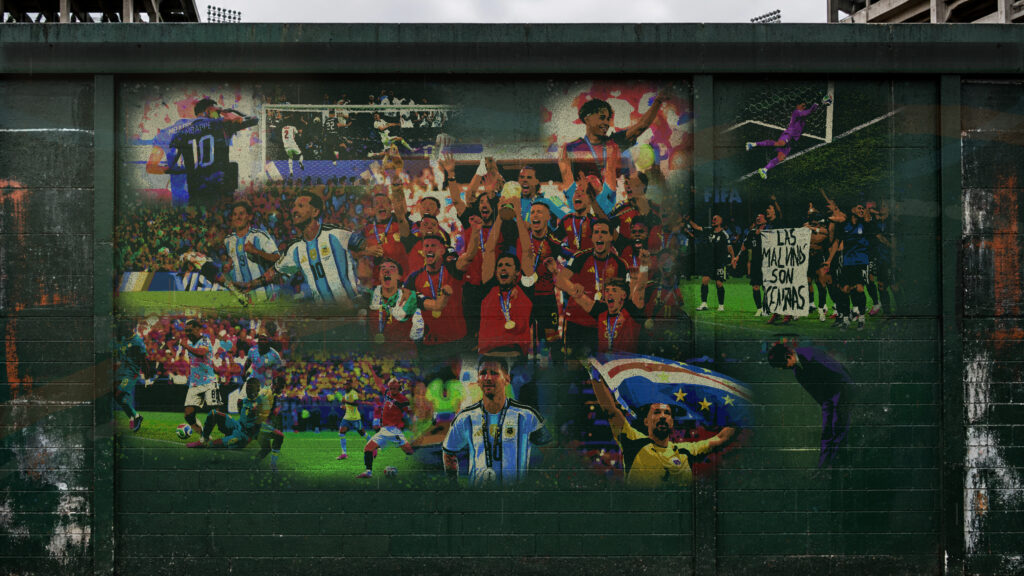
The World Cup is dead – Long live the World Cup!
On the afternoon of 19 July 2026, in East Rutherford, somewhere west of the Hudson, Lionel Messi walks across the grass of a football pitch for the final time wearing Argentina's albiceleste World Cup shirt. A silver medal hangs around his neck; before him stands a vast end full of people wearing the same shirt, bearing his name thousands of times over, chanting it rhythmically with no desire whatsoever for this ritual to end. Behind him, the Spanish national team celebrates winning the most important trophy in world football. And while this moment, charged with the emotion of the greatest human being ever to have played football, has now passed into History, 40 days earlier it would have been impossible for anyone to write the script of how he reached that point, in front of that end. This is the History of football, which would be a sorry thing indeed if it were written only in scores and statistics, if it did not give birth to stories with heroes who have always created its mythical narratives. A World Cup does not have just one story, nor just one narrative. This scene was the final page of its central story, but, like a mythology of heroes in its own right, the World Cup always contains many stories large and small that...
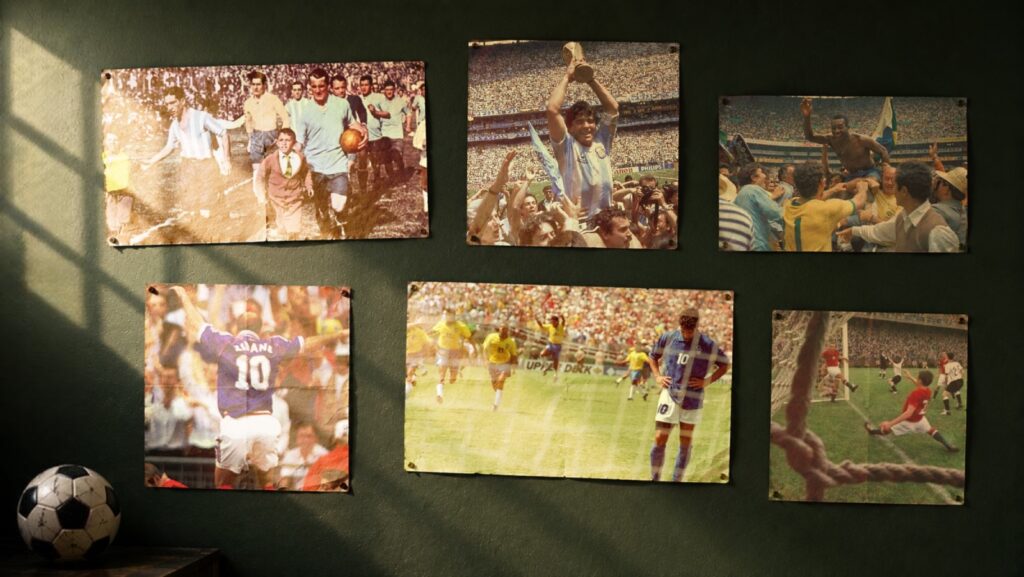
A Story for the World Cup
If one tries to find the human activities that simultaneously attract people’s interest on a global scale, it is difficult to identify any that has a greater impact than the FIFA World Cup. Over the years, the World Cup has claimed an ever more central place in the life of societies, in every country, during the period in which it is held. Perhaps the fact that it takes place every four years helps in this, since it makes the period of its staging less ordinary. Beyond the countless social activities related to it, the personal and collective memories that are created, society as a whole, in every part of the world, seems to be transformed during this period. Naturally, economic activities, within a network of interconnected opportunities, revolve around this central tournament. The streets, catering businesses, clothing shops, fill with the colours of the flags of the whole world, ultimately changing even the appearance of cities, of the places where people live. No other tournament today manages to change the appearance of cities to such a degree – the Olympic Games usually transform only the city or the country that hosts them, but never does an event taking place in America change the appearance of the streets of an Asian or European city. In this sense, the World Cup cannot...
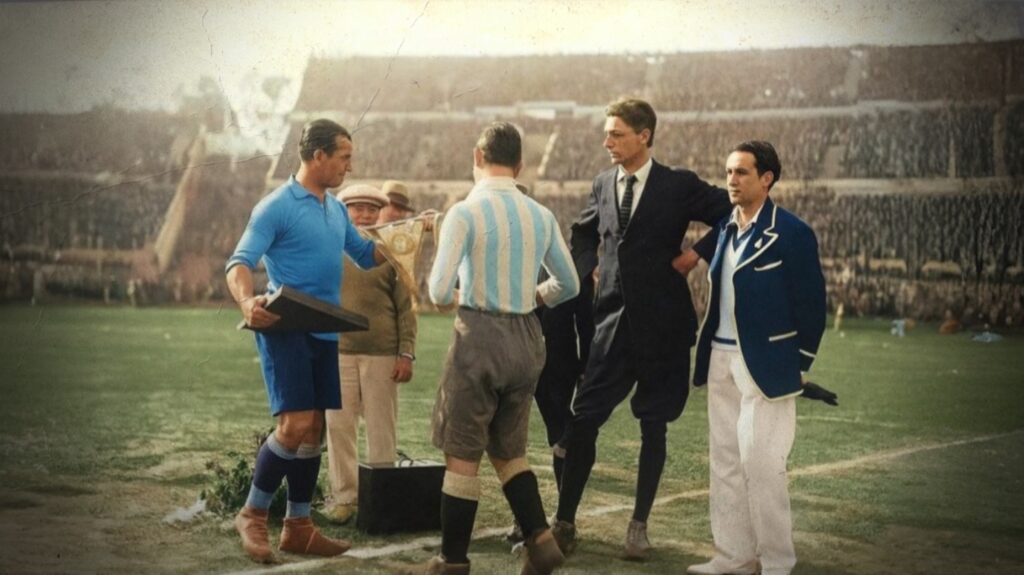
Pibe, charrúa, malandro
To Argentina FC London, On 30 July 1930, shortly after 4 in the afternoon, at the Estadio Centenario in Montevideo, the second half of the first Great Final of the FIFA World Cup has begun. More than 68,000 spectators are in the concrete stands of the majestic modern stadium, watching with passion and reactions that touch the limits of ferocity the greatest football match that had ever been played, up to that day. In the first half, which was played with a Scottish ball brought by the Argentine team, the Argentines were dancing on the grass of the pitch that celebrated the centenary of Uruguay’s existence. Although La Celeste had opened the scoring in the 12th minute through Pablo Dorado, Carlos Peucelle and Guillermo Stabile had turned the situation around. But that moment of the second half belonged to a 20-year-old from La Plata, the inside-right forward Pancho Varallo, footballer of Gimnasia y Esgrima, who was charging forward in yet another Argentine counterattack. The days before the final had been difficult for Varallo: his knee was injured and, had it been any ordinary match, he certainly would not have played that day. But it was the final of the first World Cup and, above all, a final against Uruguay. It was a match that made the players sleep the previous...

Standard de Liège: The Dialectic of the Fiery City
On the northern bank of the Meuse, a schoolboy carries, in a builder’s wheelbarrow, some of the materials he needs in order to build a piece of his life: some nets, a few pairs of boots, two leather balls, and a bundle of deep-red shirts. In front of him stands the multitude of chimneys, the signature of the Industrial Revolution, which by 1909 has completely altered the landscape of the city where he was born and raised. It is the present and the future—his, and that of the generations to come. His back is turned toward a city of narrow cobbled alleys, squares, cathedrals, religious buildings of power, statues, and monuments to conflicts from an age he himself never lived. Along with everything else, he has his back turned as well on his school, the Collège of St Servais, which, keeping alive a tradition from the Middle Ages, educated him too as a scion of a bourgeois class that found its identity in the middle of the fourteenth century, only to seek a new stride in the twentieth. The balls, the boots, the red shirts, are the materials with which the schoolboy, together with his comrades, will build a new, immaterial identity, springing from the city’s bourgeois class, from the milieu of cathedrals and schools, for the damned of the...

Football in Sun and Shadow, by Eduardo Galeano
Before the era of football’s commodified “gentrification” at the end of the twentieth century, the intellectual world almost refused to speak about the sport. In many cases, it even regarded football as its enemy, as a social phenomenon existing only to lull the very consciences it supposedly sought to awaken. Yet this intellectual class never did, and never will, encompass the whole of the artistic world – people of letters and spirit who observe the world and wish to express, in their own form, the phenomena unfolding around them: the struggles to be fought within them, the shape they themselves envisioned, and the experiences they created. In short, it was an elitist intelligentsia – one that refused to live as the people of the world lived – which turned its back on football. But it was never this intelligentsia that concerned Eduardo Galeano, the Uruguayan journalist and writer who dedicated his life and work to telling the truth of his continent’s peoples, and who clashed head-on with the harsh, usually American-backed, dictatorships. Born on 3 September 1940, Galeano grew up in a middle-class family in Montevideo, but from adolescence onwards he was already working, his first steps in journalism leading him to El Sol, a weekly paper of the Uruguayan socialists. Growing up in Montevideo, Galeano became a supporter of...
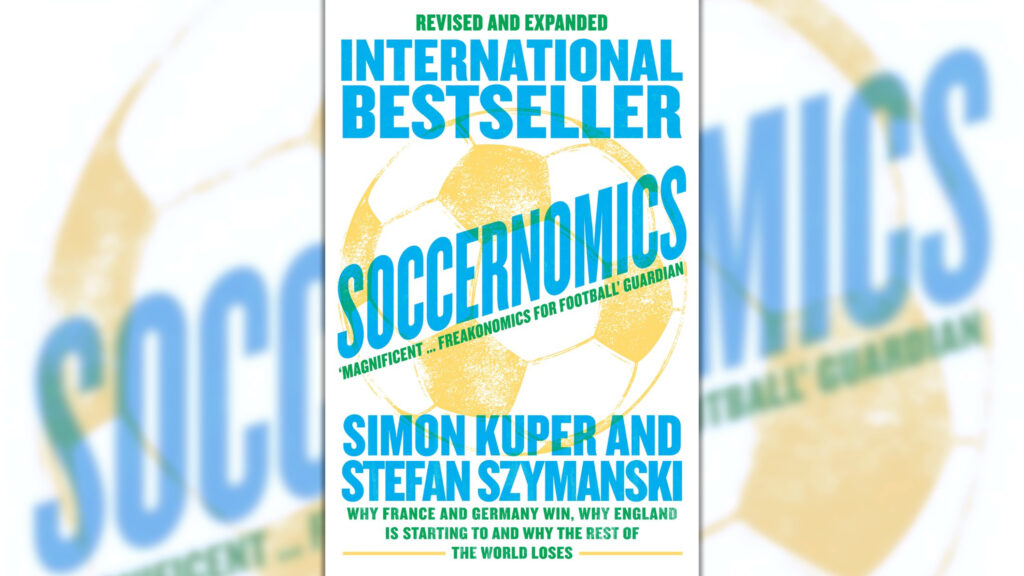
Soccernomics, by Simon Kuper and Stefan Szymanski
The economics of football do not only concern its commercialisation; it is the way one perceives and analyses it as a phenomenon, setting aside the – seemingly romantic – empirical approach and instead breaking down into quantities and mechanisms all its constituent elements. It is essentially the perception of football in a technocratic way, one that goes beyond the framework of pub talk, but at the same time one that can explain why everything happens: why one team wins and not another, why one club has more supporters, why in some countries reactions to the result of a football match differ from those in others, even how all these are connected with processes that affect to a much greater extent the life of societies. These elements, as well as the description of the analytical methods that examine them, are presented in their book Soccernomics by Simon Kuper and Stefan Szymanski. Kuper, a journalist with many years at the Financial Times but better known for some emblematic works in football literature, the most famous being Football Against the Enemy, met Szymanski, now Professor of Sport Management at the University of Michigan, at a conference in Paris, where the idea for this book was born – a work that has since been constantly renewed and enriched in order to explain the most...
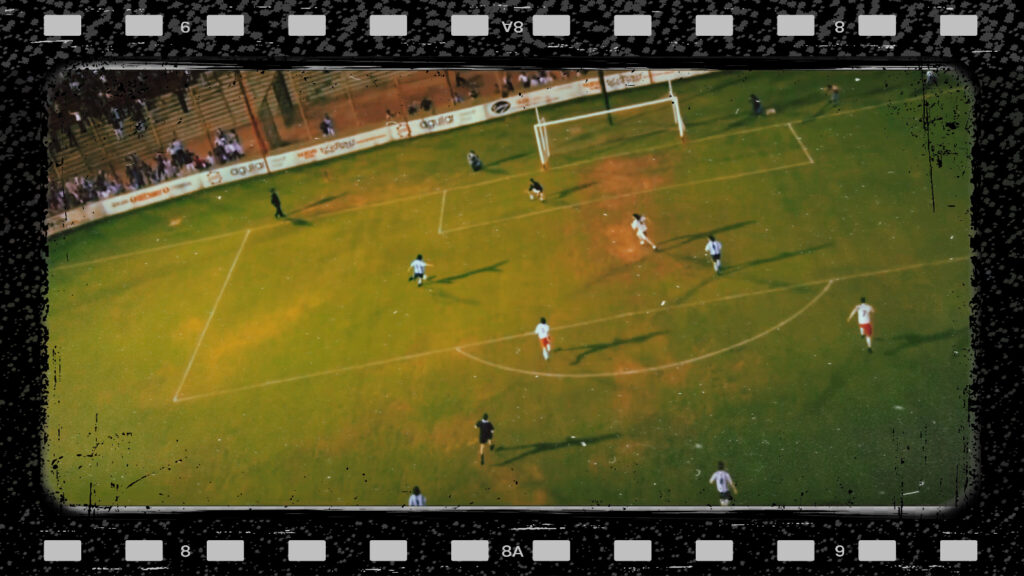
Football and cinema
Picture a scene: a crowd of people, of various ages, visibly drawn from different classes, composed of different genders, nationalities, and perhaps with differing levels of academic education. They sit in an amphitheatrical structure, facing us. On their faces we see the moment of suspense — for this instant of looking, and perhaps for the one that will follow — for the unknown but very immediate future, which has the power to unite this heterogeneous crowd in a single moment when all share the same emotion. We do not know whether calm had prevailed before, we do not know what will follow, we do not even know the reason why they are all in this similar state. At this moment adrenaline and emotional intensity seem to surge through all the tiers like an electric current. We do not even know what lies before them, for the object of their interest — the source that electrifies them — is situated on the other side of what, in theatre, is called the “fourth wall.” They are all spectators, while we are the spectators of a spectacle in which the crowd — the audience — is the protagonist. If one had to guess where this image is set, one could generally say that an athletic event, or a performing art, is unfolding beyond...

The Danubian School
On the afternoon of Wednesday, 25 November 1953, 150,000 spectators left Wembley having just witnessed one of the most influential matches in the evolution of world football. As is often the case in such moments, few may have grasped the historical significance of what unfolded before their eyes. Yet even fewer today, more than half a century later, place this event in its proper context. England’s defeat at Wembley went down in history not only because it was a heavy loss, but above all because it came in a match that England, for the first time, desperately needed to win in order to uphold its dominance in the sport—as the motherland of football. Admittedly, that dominance may have already been lost: in the 1950 World Cup, the English national team had been defeated by both the United States and Spain. Yet that tournament held little prestige in the minds of those in the British Isles. England had also suffered several defeats against the other teams of the United Kingdom, especially against Scotland’s combination game in the Home Championship, and had on occasion lost on European soil. Still, this was the first time a national team from continental Europe had beaten England on English ground— a match that had, even before kickoff, been elevated to the status of a national cause....
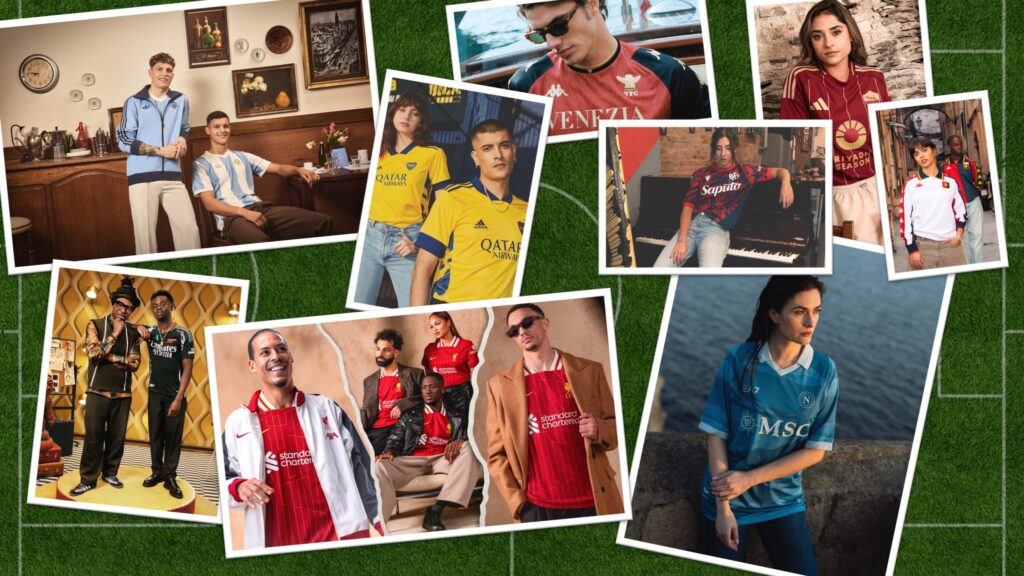
It’s football fashion time
The northern hemisphere is deep in summer. Football has been on hold for months. The leagues and European competitions of the past season feel like part of an increasingly distant past. The weekend routine, those rainy afternoons in every corner of northern and central Europe, also feels far away. Those who can afford it find themselves in a completely different setting, dressed lightly, by the sea, sometimes with a drink in hand, far from home. Each of them has made a choice they can't usually make during the year: the clothes they wear aren’t their work clothes, but their own. The ones they choose at the very moment they feel entirely free — or at least construct the illusion of temporary freedom, with greater or lesser success. And in this setting, one visual trait stands out: the colours people are dressed in — their hats, their shirts, perhaps their bag, their duffel, or the towel they carry. Many, more and more each year, are dressed in colours that travel with them — red, blue and white, black, green, stripes, vertical or horizontal, collars, sleeve details — all bearing a badge, small or large, sometimes more than one, and the name of one, two or even several companies. It’s the football tribe, far from its natural habitat, but carrying with it...
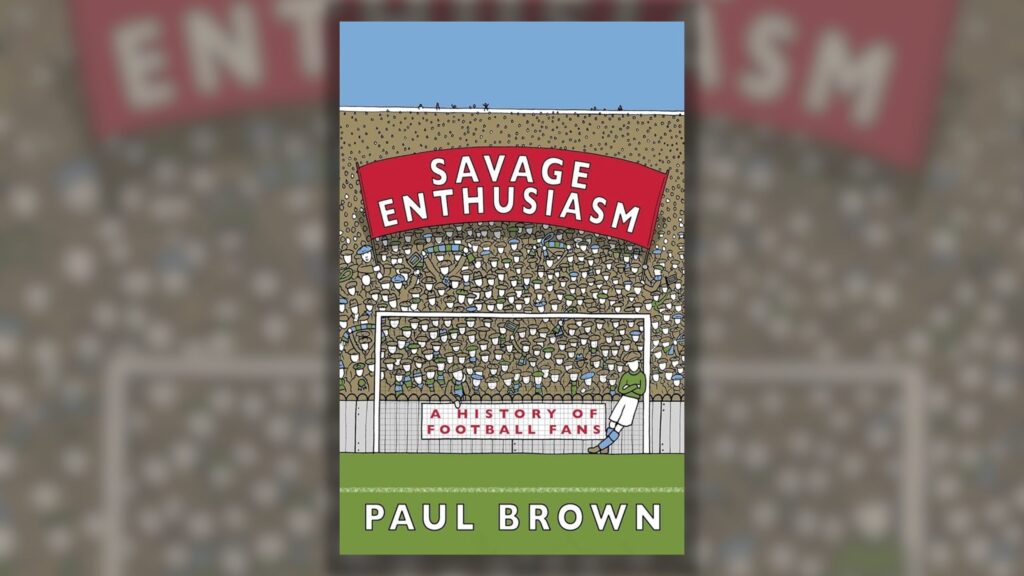
Savage Enthusiasm, by Paul Brown
There is a reason why football is not merely a popular sport, but something far broader than that definition suggests. The analysis of tactics and their evolution, the revisiting of great matches, the biographies of legendary footballers and managers — these fill the pages of books, the minutes of radio and television programmes, and inspire films and other works of art. Yet all these are elements one may also find in other sports: in basketball, boxing, tennis, motorsport, and many more. What sets football apart from any other athletic activity that has ever existed on Earth is one singular element: its fans. Football supporters occupy their own distinct space in books, in media broadcasts, even in the arts. They are not merely part of the culture of the sport — they create it. They transform an athletic club from an association of players into a focal point for an entire community. The history of spectators, fans, followers, and die-hards — from football’s prehistory to the present day — is what Paul Brown sets out to chronicle in his book Savage Enthusiasm: A History of Football Fans — and he does so brilliantly. Brown traces the development of football as a sport alongside the changing ways in which the game has been followed and each club supported. He locates the origins...

The Deceptive Innovation of the FIFA Club World Cup
The countdown is on for the 21st edition of the FIFA Club World Cup, which will take place in an entirely new format in the United States. Regardless of the current climate in the host nation—at the centre of enormous and potentially historic social developments—the new shape of the competition raises major questions about its contribution to the evolution of the global game, particularly at the top tier of club football. It is worth pausing to reflect on the supposed innovation in the tournament’s format, as FIFA’s ongoing experiments have muddied the waters when it comes to its history and tradition. Historically, the most prominent intercontinental club competition was the Intercontinental Cup, in which the champions of Europe and South America—the two continents where football has consistently been most advanced—faced each other. This competition began in 1960 and was held annually as a clash between the two continental champions, either as two-legged ties or a single final on neutral ground, usually in Japan. This format remained in place until 2004, with Porto crowned as the final champion. The following year, FIFA replaced the Intercontinental Cup with the Club World Cup—though 2005 was, in fact, the second time the competition had been held. The inaugural Club World Cup was held as an experiment in Brazil in January 2000, featuring eight teams...
Salvem Mestalla
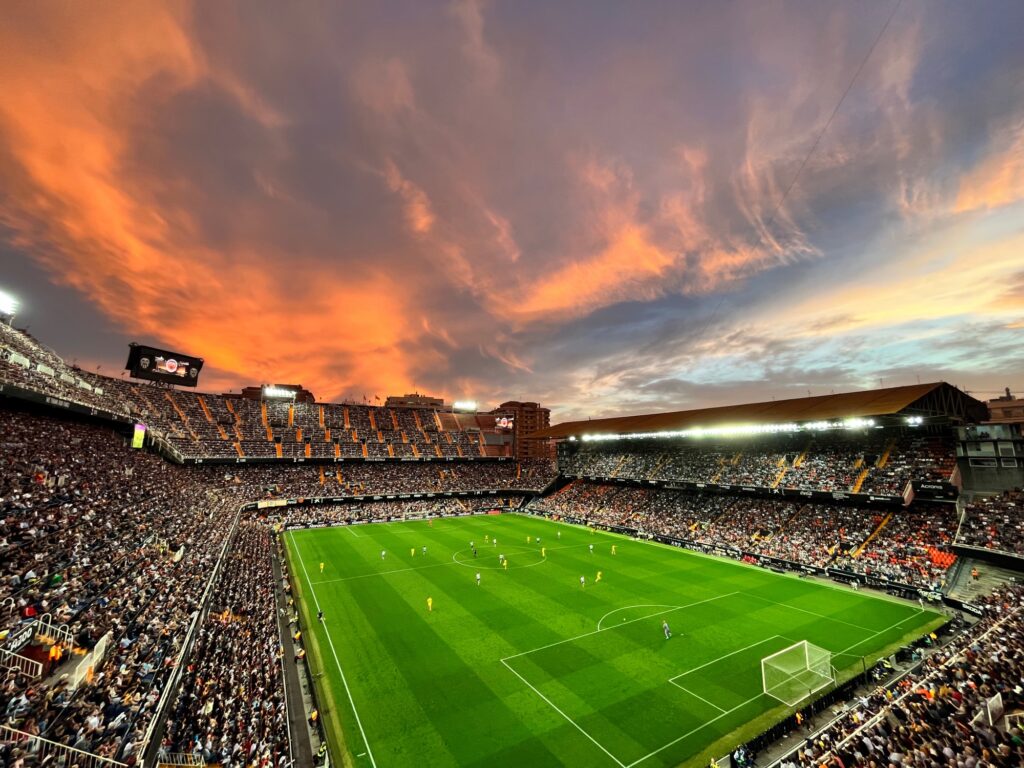
The hours of Sunday pass by, the sun has already crossed its zenith and is now on its way to the oceans, leaving the Mediterranean behind. It’s the hour when the voices begin, when people start to gather. The road leads through the old bed of the Túria and winds its way from Carrer de Misser Mascó—with all the cafés packed—towards the Avenida de Suècia, where scarves are sold, where people wait for the buses, where you catch sight of the spiralling towers that carry human rivers to the highest and steepest balconies of football viewing. In between, though, stands the great black and orange wall, with its balconies, its iron railings, its carved bats—and from the second floor emerges the band to complete the grand welcome. The bus draws near, the brass instruments sound the melody of "ès un equip de primera, nostre Valencia Club de Futbol", and the emotion before any match begins to take on colour and scent: the golden-orange hue of the afternoon sun striking the stadium’s main entrance, the scent of tobacco smoke, and even the illusion of the eternal springtime that this city seems to exude. The buses have arrived; you head left onto Calle de les Arts Gràfiques, towards the small, jet-black door on the corner. The seats on your ticket are on...
Inverting the Pyramid, by Jonathan Wilson
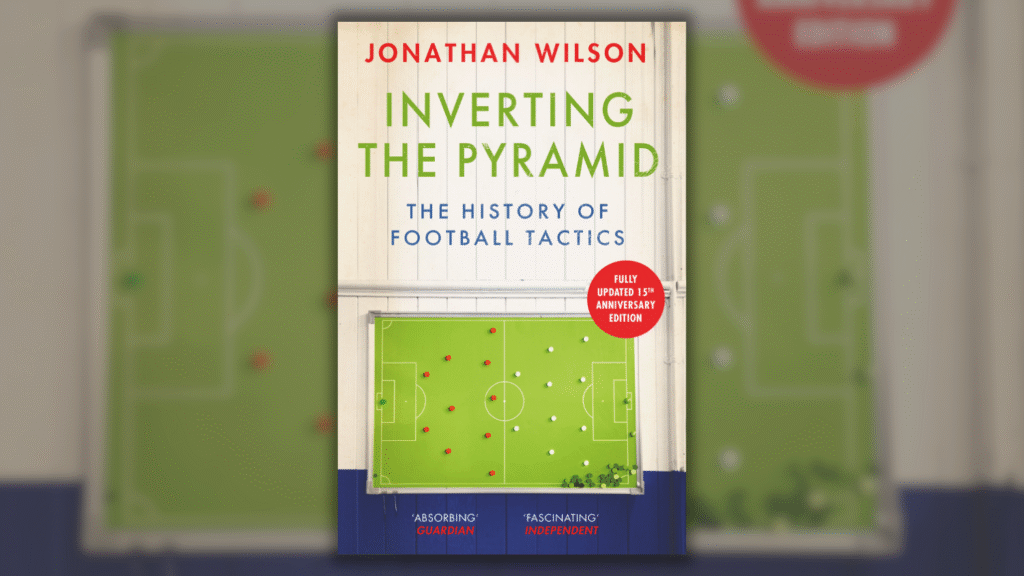
In every field of human activity and inquiry, there are certain special reference points — human creations that stand out as exceptional within their broader context. In football literature, that exceptional work is the now-classic book by Jonathan Wilson, Inverting the Pyramid, which presents the tactical evolution of the game from its first chaotic steps up to the present day. In essence, it is the “Bible” of football, as far as the game’s identity is concerned — an identity that is shaped, in turn, by the development of tactics. In the footballing stories that are usually recalled, it is the protagonists who dominate — the players, and perhaps, in a secondary role, a few coaches and later some officials. This is of course no coincidence, as footballers take centre stage in every football performance: they are the ones who create the collective experience that extends into the stands, and in many cases it is their own life journeys that produce tangible myths with which the wider public can connect in every corner of the globe. Yet, however paradoxical it may seem, it is not usually the footballers — at least not as individuals — who shape the game’s identity. The great stars, the charmers of the round goddess, are those who, within a particular framework of evolution, can stand out...

The Glorious Solitude of a Tribe
Football is full of clichés which, although they make sense, never truly reflect their full depth when spoken aloud. One of them is that “a team starts from the number one”. I know – many will say yes, or no, or that it’s true – but honestly now, yesterday no one sat down to watch Sommer or Szczęsny; all the fuss was about Yamal, Olmo, Lautaro, and the rest. It makes sense: the aim in football is the goal, and the great matches are the 4–3s, not the 0–0s. But then there are those moments when, even if you’ve let in three, you become the reason why even the most indifferent viewer from yesterday can suddenly understand that football is a sport of eleven players – and that attack and defence, especially since 1992, include them all. It’s on nights like last night, when the balls just happen to fall that way, and the number one becomes the hero – and with him, the percentage of kids deciding to stand between the sticks rises by 5%–10%, in a city, in a country, sometimes even across the whole world. What’s paradoxical, though, is that while the creative player is responsible for his own artistry, the goalkeeper “needs” someone else’s action for his work to begin. That shot from Yamal had to...

The Birth of Football in Britain
The history of football is lost in the depths of humanity’s historical existence, with the search for the reasons why our species became involved with a ball game touching upon questions that range from the biological to the philosophical. The codification and development of the game as we know it today, however, raises more specific questions—not so much about our existence, but about the way we function within societies and different socio-economic formations—because the play of humans is a mirror of our social history. Thus, as a continuation of the analysis of the historical path that shaped football games, we now turn to the conditions that defined the character of the modern sport in its cradle, Great Britain, during a period that not only gave birth to modern football, but to the modern world itself. Why is football British? Why is what is played today all over the world the “English game” and not some evolution of cuju, pok-ta-pok, calcio, soule, or even the Greek episkyros? Why was it British mob football—and not any other variant—that served as the womb for the birth of foot-ball? The search for the reasons behind the dominance of the British game and its global spread leads us to the causes of the universality of a national culture, with humanity’s entrance into capitalism and the...

The Greatest Moment of 2024
The years after 2020 were not like the ones before—everything had changed, and so had we. We were no longer the small and wronged; we had grown, become strong, invincible, and of course, enemies of a system in whose home turf we now played. That was the meaning of Varela’s goal, the meaning of the unbeaten double, the finals won at OAKA, the won throw-in, the goals in Agrinio, in Tripoli, and so many others. Our generation no longer searched for moments and heroes in a glorious past—it gave birth every year, every match, to its own mythology. The Double-Headed Eagle had grown, and many things had changed—yet we were still here, faithfully, in a new quality of support, passion, and devotion. We changed a lot—we gradually left behind the microphones, the ink, the people holding them, and we found a new quality in communication, because no longer could any professional—paid within a sociopolitical framework that encourages the acceptance of the unacceptable simply because it stems from whatever authority and is parroted by its mouthpieces—satisfy any of our needs. In that sense, we also changed our criticism; we became again that fearless, great club with “the truth of Toumba,” a courtroom that always judged with fairness, recognized effort, and thundered against dishonesty. We changed and learned to keep within the...

December ’44, Arsenal, and the “Pavlis” of Yannis Ritsos

The Match of the Century: England – Hungary 3–6

Nikos Godas – Hero of the people and the pitch

Oleg Blokhin

Newell’s Old Boys – The Red-and-Black Hemisphere of Rosario

Union Saint-Gilloise – The erratic history of the Unionistes

Diego Armando Maradona

The Prehistory of Football

We lived through the sacking of Wembley

Lo squadrone che tremare il mondo fa

A Saturday at Loftus Road for QPR – Millwall

We went to Plough Lane for Wimbledon – MK Dons

Toumba: A Legendary Black-and-White Story

The Beginning of the European Cup

The Death Match

The Photograph of Fútbol’s New History

Football’s Olympic Retrospective

Borac: A Historic Signature of the Balkan Fighters

The First European Nations’ Cup

The Death and Birth of a Game

The “Miracle of Bern”

A Prometheus of Total Football in Brazil
