

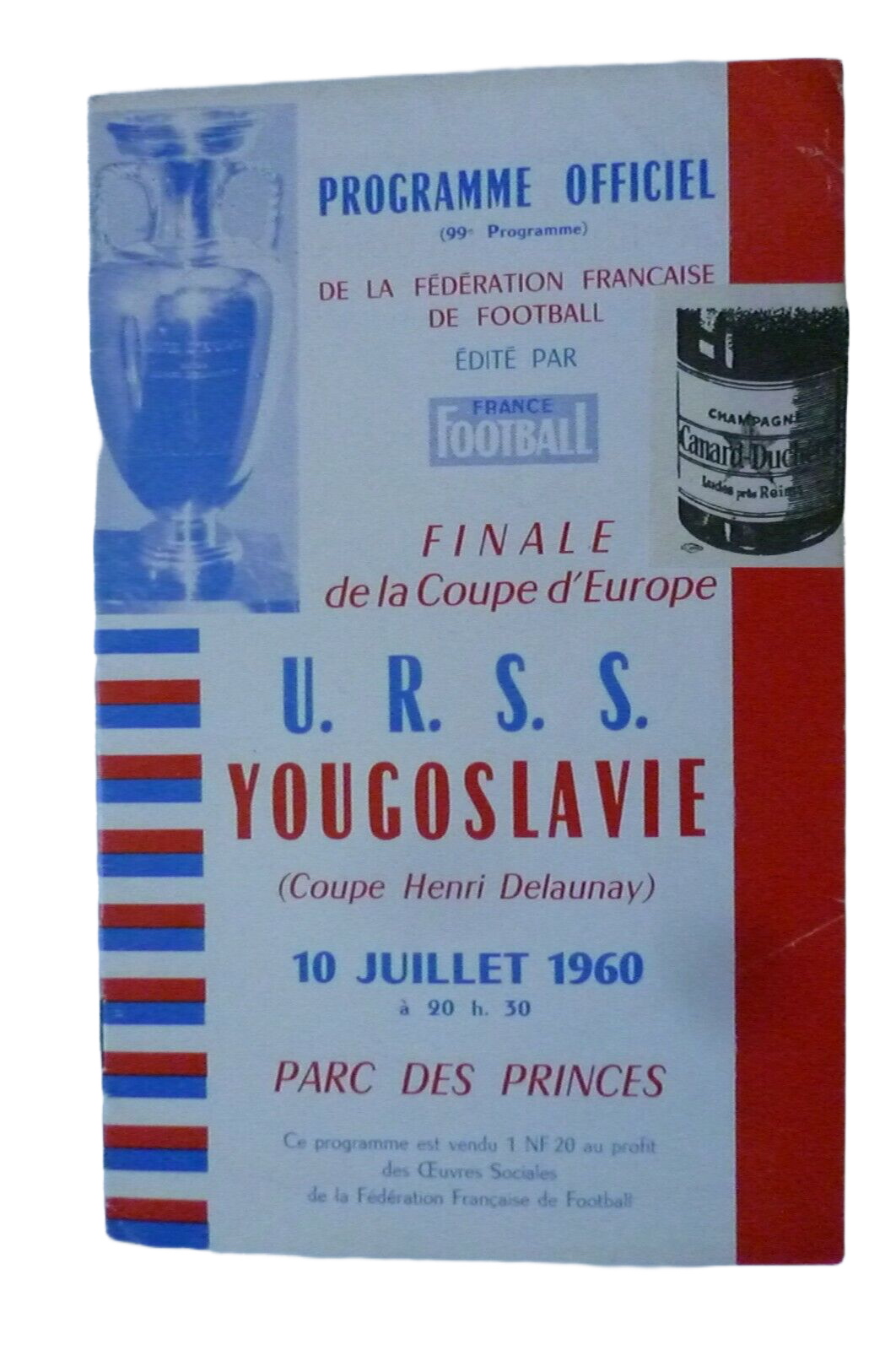
On 10 July 1960, at the packed Parc des Princes in Paris, the very first final of Europe’s major national team tournament took place — then known as the UEFA European Nations’ Cup, which would later become famous simply as the EURO.
The triumphant side in this inaugural edition was the Soviet Union, whose national team would go on to achieve notable success in the competition over the years. Their opponents in the final were Yugoslavia, in a match that featured two Eastern European teams — a reflection of the region’s dominance in that first tournament. Alongside the hosts France, the other participant was Czechoslovakia.
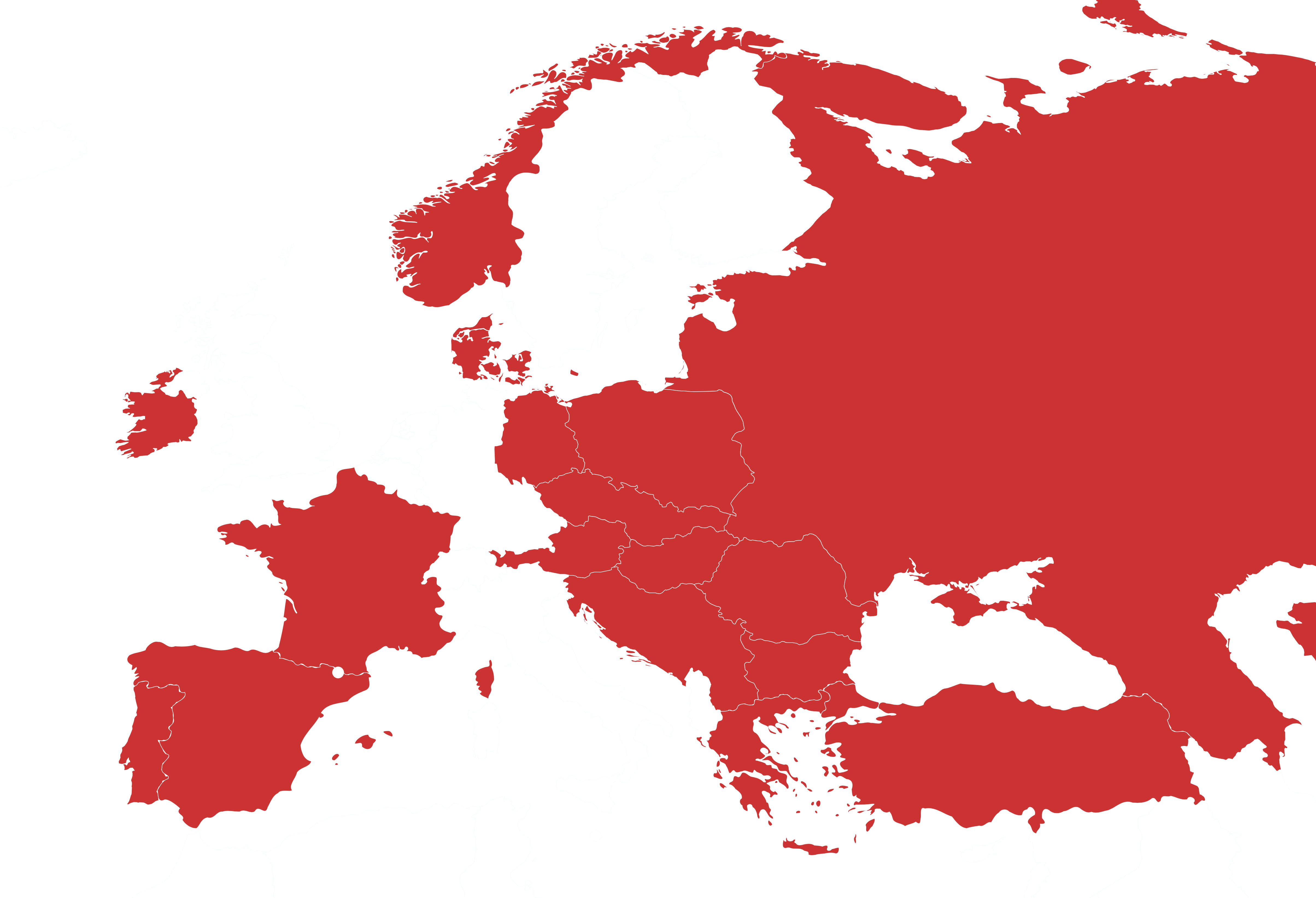
This outcome, however, was no coincidence. The “great powers” of the European continent were opposed to the creation of such a competition open to all national teams. Italy, the Netherlands, West Germany, and England all voted against its establishment within UEFA — and later boycotted the tournament altogether.
As a result, only 17 teams entered the newly formed competition — a strikingly low number, especially considering how late Europe had come to organise such an event. After all, the Copa América had been held in South America since 1916.
The idea for a continental competition between national teams in Europe was first proposed in 1927 by Henri Delaunay, General Secretary of the French Football Federation. At the time, he and then-FIFA President Jules Rimet were laying the foundations for what would become the World Cup. However, due to war and the existence of various regional tournaments, it would take nearly 30 years for the inaugural European Nations’ Cup to become a reality. In honour of Delaunay, the final tournament was held in France, and the competition’s trophy was named after him.
The tournament featured a qualification phase, with teams playing two-legged knockout ties — one home, one away — leading up to a final stage in France, which included the semi-finals, third-place match, and the final itself. From the 17 teams that entered, two were selected to contest a preliminary round, reducing the field to 16 for a standard bracket. However, the matches did not always proceed in the chronological order expected for a tournament. Notably, the preliminary round took place after several Round of 16 matches had already been played.
As a result, Greece holds a unique place in the competition’s history: on 3 December 1958, the national team became the first ever to be eliminated from the European Nations’ Cup, losing 8–2 on aggregate to France (a 7–1 defeat in Paris followed by a 1–1 draw in Athens).
The Soviet Union began their campaign against Hungary, who were then entering the decline that followed their golden era. The Soviets won 3–1 and 1–0 to reach the quarter-finals, where they were scheduled to face Franco’s Spain — who refused to play against them for political reasons. This handed the Soviets direct passage to the final tournament.
Yugoslavia, on the other hand, had to battle through two tough ties. First, they faced Bulgaria in a Balkan showdown, winning 2–0 in Belgrade and drawing 1–1 in Sofia. In the quarter-finals, they lost 2–1 away to Portugal but thrashed them 5–1 in the return leg at Partizan Stadium in Belgrade on 22 May 1960.
At the time, Soviet football was beginning to produce its first true geniuses. Viktor Maslov, working at Torpedo Moscow, was gradually developing what would become, in the following decade, the tactical and methodological foundation of modern football — through the introduction of a universal training programme and a tactical shift toward the 4-4-2 system. While these innovations had not yet fully transformed the national team, the foundations were already in place: a strong professional infrastructure and state backing that demanded success from a team representing the ideological vision of sport.
The first major success of that Soviet side had come in 1956, with Olympic gold in Melbourne — where, coincidentally, their opponents in the final were once again Yugoslavia.
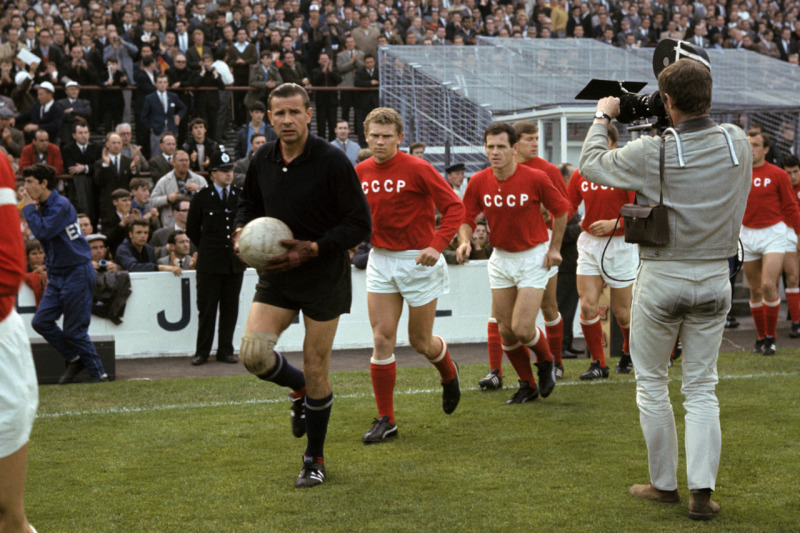
The undisputed star of that Soviet team was, of course, Lev Yashin — the legendary Dynamo Moscow goalkeeper who excelled in both football and ice hockey, but left his indelible mark on the round ball. An iconic figure, always dressed entirely in black, he earned the nickname “The Black Spider” or “The Black Panther.” To this day, he remains the only goalkeeper ever to win the Ballon d’Or. Yashin redefined the role of the modern goalkeeper, combining acrobatic saves with exceptional positioning, command of the defensive third, and the ability to organise the back line.
In the semi-finals of the tournament, Yugoslavia faced hosts France in Paris, while the Soviet Union played Czechoslovakia in Marseille. The Paris match was spectacular — a goal-fest with dramatic twists. France led by two goals up until the 75th minute, but then the Yugoslavs mounted a stunning comeback, scoring three times in five minutes, with goals from Knez and a brace by Jerković, to snatch a 5–4 victory. The USSR had a far easier time in Marseille, brushing aside Czechoslovakia 3–0. In the third-place playoff, the Czechoslovaks beat France 2–0, a result that reflected the relative strength of the two finalists.
The grand final was held on 10 July 1960, at the Parc des Princes. At the time, the stadium in Paris’s 16th arrondissement was not yet the country’s main football venue — that role still belonged to the Olympic Stadium in Colombes, with its greater capacity and rich history, having hosted the 1924 Olympic Games and the 1938 World Cup final.
After the war, however, the velodrome next to the Jean Bouin stadium began to see more frequent use by Paris’s two main football clubs — Stade Français–Red Star and Racing Club de France — gradually bringing top-level football back inside the heart of the French capital.
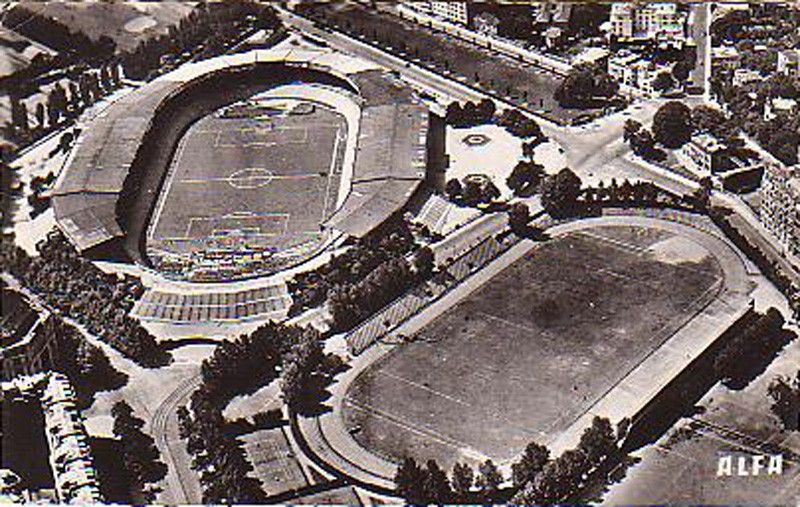
This led to the gradual upgrade of the stadium, which had already been rebuilt in 1932 — for a second time — as a velodrome. By 1960, the Parc des Princes had begun to feature roofing over most of its stands, and since it served as the home ground for the city’s football clubs (those later effectively displaced to make way for the creation of PSG), it was chosen as the venue for the final of the major new European tournament. For similar reasons, just four years earlier, the very first European Cup final (the forerunner to today’s Champions League) between Real Madrid and Reims was also held at the same ground.
Its reconstruction in 1972 would make it France’s central football stadium — a status it held until 1998, when the Stade de France was inaugurated.
Kick-off was scheduled for 8:30 p.m. local time, with official records noting an attendance of 17,966 spectators in the stands for that historic match. The referee was Englishman Arthur Ellis — the same official who had overseen the notorious “Battle of Bern,” a brutal 1954 World Cup clash between Hungary and Brazil remembered for its extraordinary violence.
The two teams lined up in the classic system of the era: the 3-2-5, also known as the WM formation, in which the two inside-forwards played slightly deeper than the centre-forward and the two wingers.
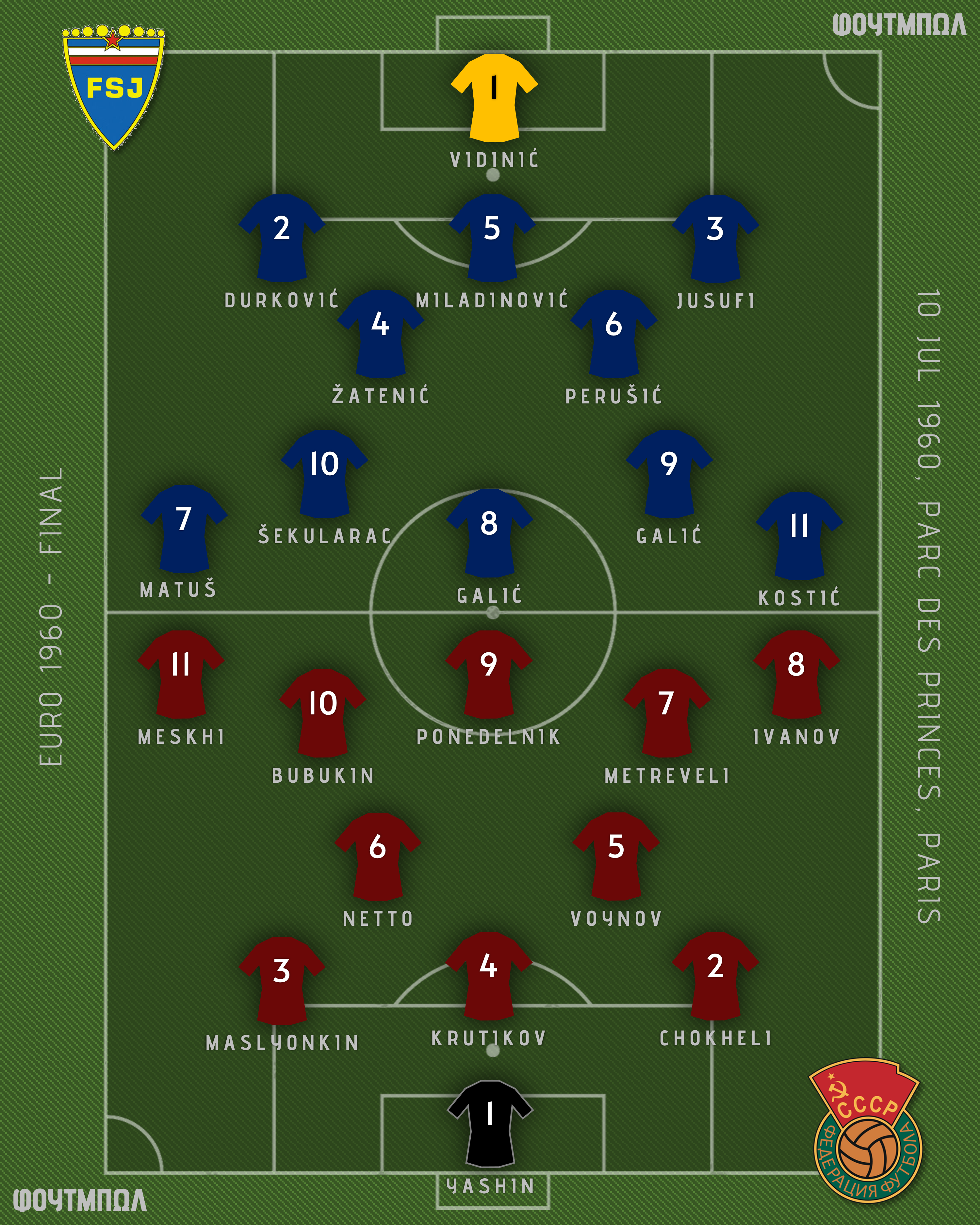
The Soviet Union lined up with Lev Yashin in goal — the Dynamo Moscow legend. On the right side of defence was Georgian Givi Chokheli from Dinamo Tbilisi, while the left-back position was filled by Anatoli Maslyonkin of Spartak Moscow, with his club teammate Anatoly Krutikov playing as centre-back. In midfield, Yuriy Voynov of Dynamo Kyiv operated on the right, while Spartak icon and national team captain Igor Netto played on the left.
In attack, the right winger was Valentin Ivanov, and the inside-right role was taken by Slava Metreveli — both from Maslov’s Torpedo Moscow. Centre-forward duties were carried out by Viktor Ponedelnik of SKA Rostov-on-Don, flanked on the inside-left by Valentin Bubukin of Lokomotiv Moscow, and out wide on the left by the electrifying Mikheil Meskhi — the “Georgian Garrincha,” a legendary figure at Dinamo Tbilisi and in Georgian football as a whole. The team was managed by Gavriil Kachalin.
Yugoslavia took to the pitch with Blagoje Vidinić of Radnički Belgrade between the posts. Vladimir Durković of Red Star played at right-back, with Jovan Miladinović as centre-back and Fahrudin Jusufi of Partizan on the left. In midfield, Ante Žanetić of Hajduk Split operated on the right, while Željko Perušić from Dinamo Zagreb played on the left. The attacking five, from right to left, were: Željko Matuš (Dinamo Zagreb), Dragoslav Šekularac (Red Star Belgrade), Dražan Jerković (Dinamo Zagreb), Milan Galić (Partizan), and left-winger and captain Bora Kostić (Red Star Belgrade). The team was led by a coaching trio: Lovrić, Nikolić, and Tirnanić.
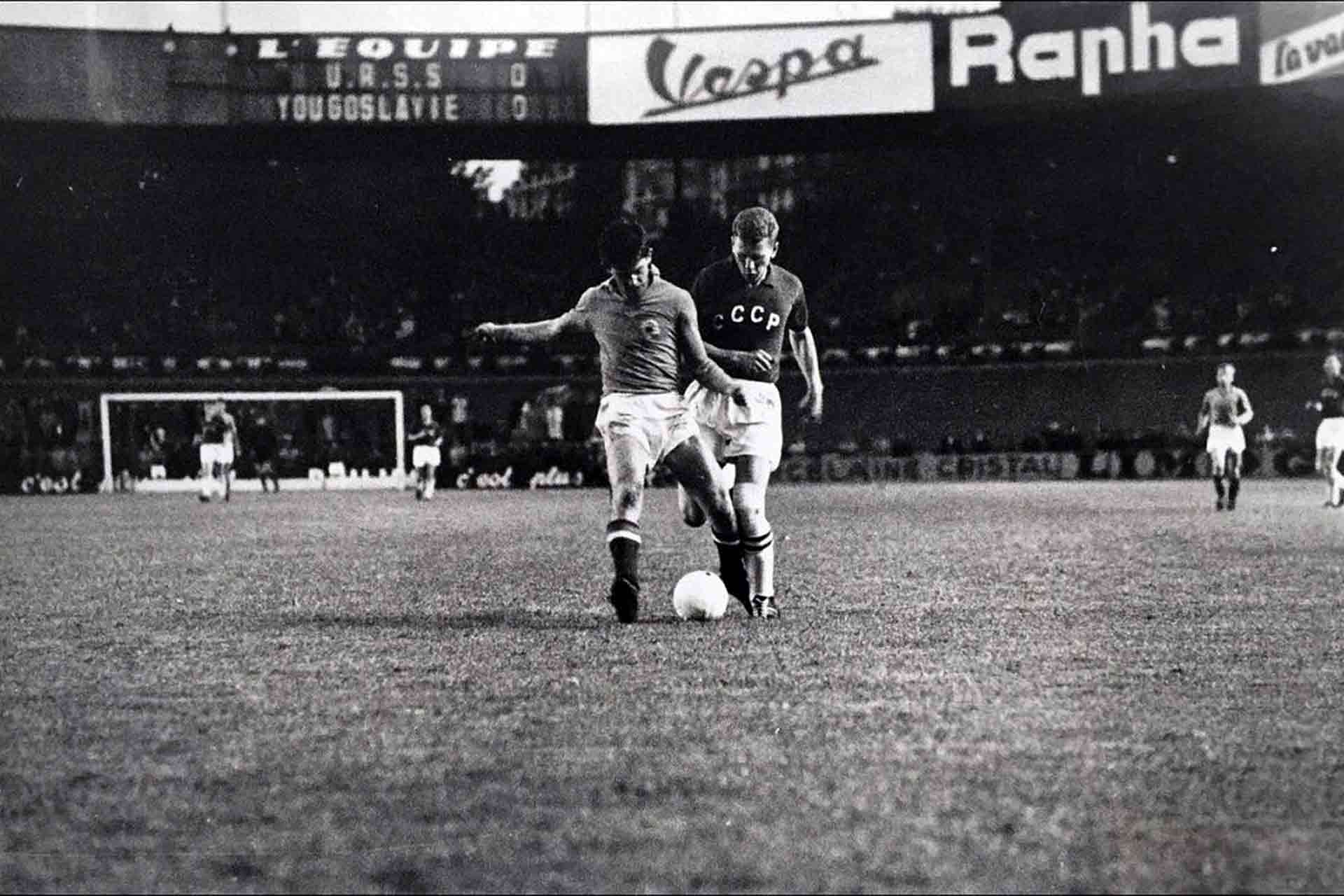
The deadlock was broken in the 43rd minute when Jerković delivered a low cross into the box. Yashin attempted to intervene but couldn’t fully clear it, and the ball spilled into a contested area where Igor Netto and Milan Galić battled for it — before it found its way into the net. The goal was ultimately credited to the Yugoslav forward.
The Soviets didn’t take long to respond after the break. In the 49th minute, Bubukin unleashed a powerful left-footed strike from 23 metres out. Vidinić failed to hold on to the shot, and Metreveli pounced on the rebound to level the score.
With the teams locked at 1–1 after 90 minutes, the match went into extra time. As penalty shootouts had not yet been introduced, a replay would have been scheduled if the score remained unchanged.
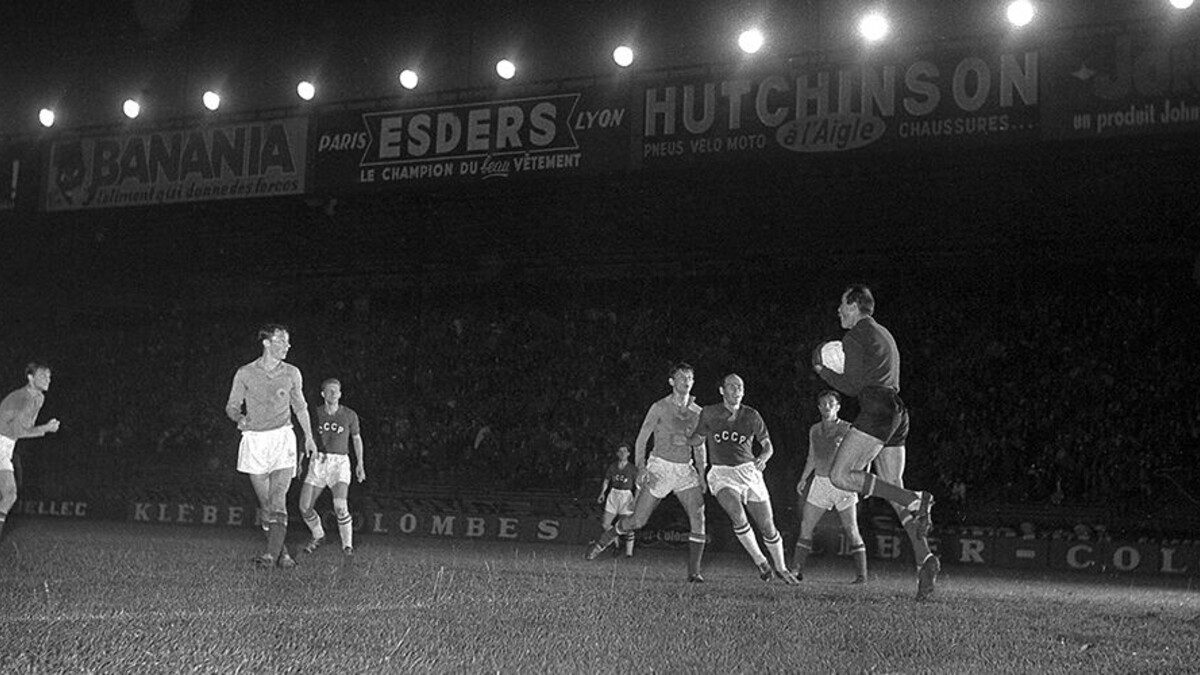
In extra time, the decisive goal came in the 113th minute. Ivanov whipped in a cross for centre-forward Viktor Ponedelnik, who rose to meet it and guided his header into the corner of the Yugoslav net — making it 2–1 and securing the first ever European trophy for national teams for the Union of Soviet Socialist Republics.
Just two months later, Yugoslavia would earn redemption of sorts, winning Olympic gold in Rome — turning a year that had begun in Parisian heartbreak into a golden one, with two major final appearances and a historic triumph.
In the end, five Soviet and four Yugoslav players were named among the tournament’s standout performers. The best XI was arranged in a 2-3-5 formation — designed to accommodate as many creative midfielders and attackers as possible, in keeping with the era’s flair for attacking football.
