
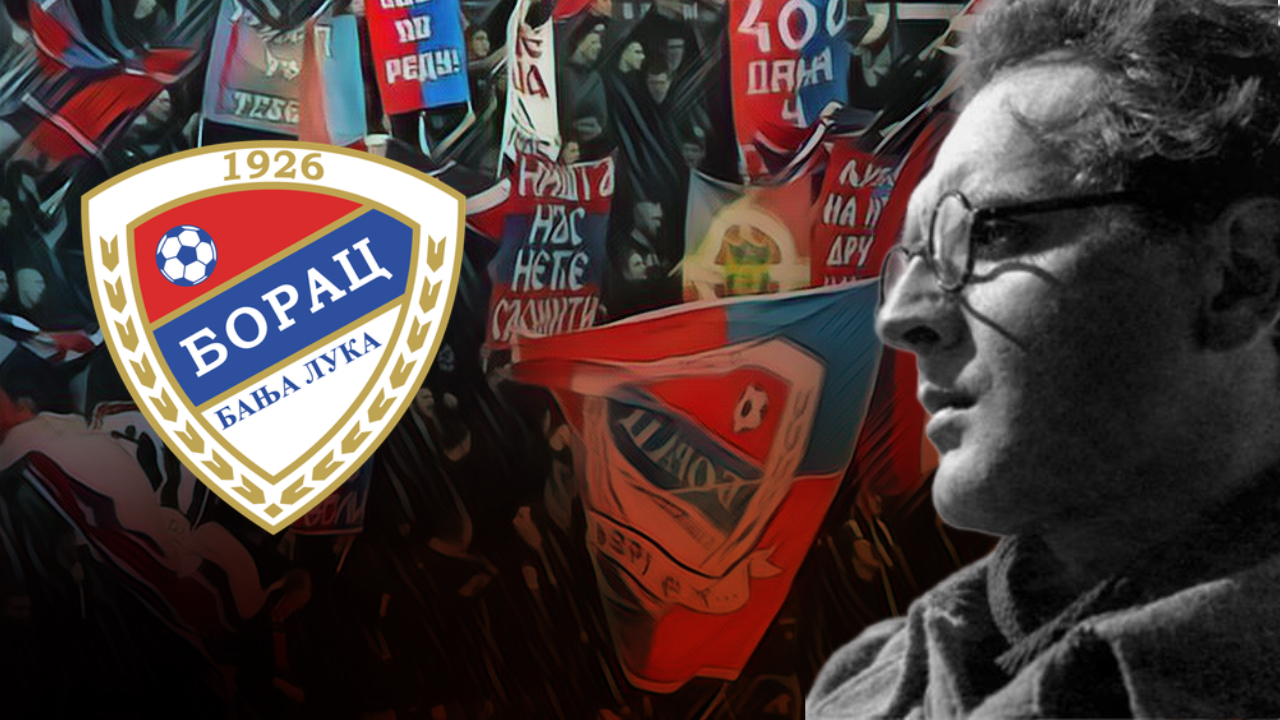
The 1920s were a tempestuous decade, following a World War — known at the time simply as the Great War — and what John Reed described as the event that “shook the world”: the October Revolution. The spread of communist ideas across much of the globe brought with it not only ideological conflict with the capitalist world, but also ignited fierce debates about the role of physical education, sport, and competitive athletics within the framework of a new society.
Football, in particular, became the subject of heated controversy within the circles of Komsomol and the Soviet authorities now in power. On one side were those who rejected athletic games involving contact — like football — and who sought to eliminate all remnants of bourgeois culture, football included. On the other were figures — including Lenin himself — who argued that these cultural remnants of the old order could and should be reworked to serve the interests of the workers’ state.
History ultimately favoured the latter view, leading to the development of early Soviet football. But these debates did not remain confined to the Soviet Union.
As the USSR’s national team remained unrecognised by FIFA (until 1946), the Soviets were forced to seek alternative avenues to play matches abroad. This gave rise to a surge in workers’ clubs across Europe — associations that not only aspired to compete against the Soviet team, but also hoped to serve as vehicles for ideological solidarity and the spread of revolutionary thought.
One of the empires that had collapsed in the wake of the First World War was Austria-Hungary, which had controlled nearly half of the Balkans. The other half had belonged to the also-defunct Ottoman Empire. Out of this geopolitical vacuum emerged several new states — including Turkey — and in the western Balkans, the newly formed Kingdom of Serbs, Croats and Slovenes, later renamed the Kingdom of Yugoslavia.
The workers’ movement thrived in Yugoslavia, in part due to the industrialisation and modernisation that had taken place during the final decades of Austro-Hungarian rule. It was in this environment that one of the Balkan revolutionary movement’s key figures, Veselin Masleša, came of age. Born on 20 April 1906 in Banja Luka — then part of the Austro-Hungarian province of Bosnia and Herzegovina — Masleša was of Bosnian Serb descent. He studied law in Zagreb, economics in Frankfurt, and political economy and sociology in Paris. Upon returning home, he joined the revolutionary cause, fuelled by communist ideals and contributing through both activism and theoretical writing.
In July 1926, against this backdrop, a group of railway worker trade unionists in Banja Luka decided to found a football club. Among the driving forces behind the initiative was none other than Veselin Masleša himself, who, according to historical accounts, was the one to envision and propose the club’s name. Thus, on 4 July, the “Workers’ Sporting Club – Fighter” was founded, known in Serbian simply as Borac.
Masleša was killed during the Partisan resistance in an operation to reclaim territory held by Axis forces, on 14 June 1943. After the war, he was officially recognised as a national hero of the newly established Yugoslav state. Yet the team he helped found — alongside his comrades — continued to compete, proudly bearing the name he had given it.
Competing as a regional force in the Yugoslav league, Borac Banja Luka claimed its first major title in 1988, defeating Red Star Belgrade 1–0 in the cup final in Belgrade, with Lupić scoring the winner. In 1992, amid the chaos of the Yugoslav Wars, the club travelled to Foggia, Apulia, to face Hungary’s Vasutas in the final of the last-ever Mitropa Cup— and triumphed in a penalty shoot-out, securing an international title.
With the breakup of Yugoslavia, Borac played in the national league of Republika Srpska — the Serb entity of Bosnia and Herzegovina — but in 2002, the club joined the unified national league. Since then, it has won the Premier League of Bosnia and Herzegovina three times (2010/11, 2020/21, 2023/24) and emerged as the principal rival of Željezničar Sarajevo — a clash that goes far beyond football.
The club’s supporters remain loyal to its founding principles, known for their solidarity campaigns and social activism. In doing so, they continue to carry the colours for which Masleša — and countless other fighters — gave their lives in the struggle to liberate the Balkans from all forms of oppression.
