
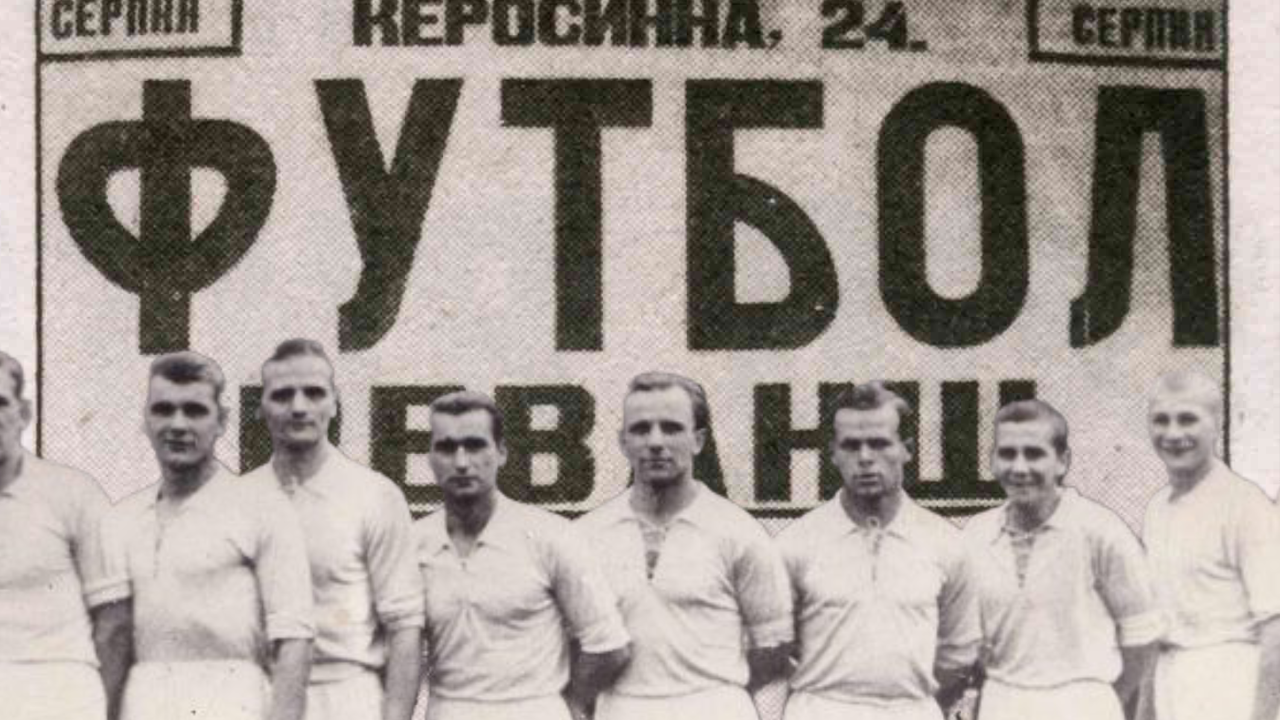
It was the 9th of August, 1942, when one of the most heroic football matches in history was played in Kyiv. Around a year earlier, on the 19th of September 1941, the Nazis had occupied the capital and largest city of the Ukrainian Soviet Socialist Republic. The invasion was followed by the extermination of 33,000 Jews. In the year that followed, millions of Soviet citizens had lost their lives, either in the occupied cities or on the battlefields against the monstrous invader.
Inside Ukraine itself, hordes of nationalists who sought independence from the Soviet Union collaborated with the occupiers, contributing to the devastating consequences of the criminal occupation, which resulted in the death of between 5 and 7 million Ukrainian civilians, depending on the sources.
The Nazi authorities, however, wished to establish themselves as the power in control of a functioning society, believing that every occupied territory was effectively a part of their expanding empire. Within this framework, they attempted to restore a basic form of social life, which naturally included football. However, every social activity — as had been the case for more than a decade within German borders — could not escape the bounds of the monstrous regime’s control and was, in many instances, nothing more than a parody of real life.
Such was the case with the football league that began in the summer of 1942 in Ukraine, where Ukrainian teams took part alongside sides representing Germany, Hungary, and Romania — teams composed of soldiers from countries allied with the Axis powers.
One of the Ukrainian teams participating in this tournament was FC Start. This club was essentially a mix of players from different clubs. The names of the players who made up the team have been uncovered through historical research and were not officially registered in any institutional archive, since all official institutions of the occupying regime had replaced the previous ones, and were of course dissolved after liberation. Nevertheless, records show that at least three players from Lokomotyv Kyiv — Sukharev, Khotsarenko, and Sotnyk — were part of the team.
On the other hand, the Nazis, with the help of football official Georgiy Dmitriyevich Sviridov, tried to integrate the players of Ukraine’s biggest club, Dynamo Kyiv, into a German team. However, the Dynamo players refused, and instead rallied around goalkeeper Trusevych, who turned the bakery where he worked into the space where the Ukrainian football resistance was born. Various footballers who had played for Dynamo or other clubs before the war supported the creation of FC Start. The team’s stadium was located on the western side of Kyiv, and its remnants still exist today, next to Rostyslavska Street.
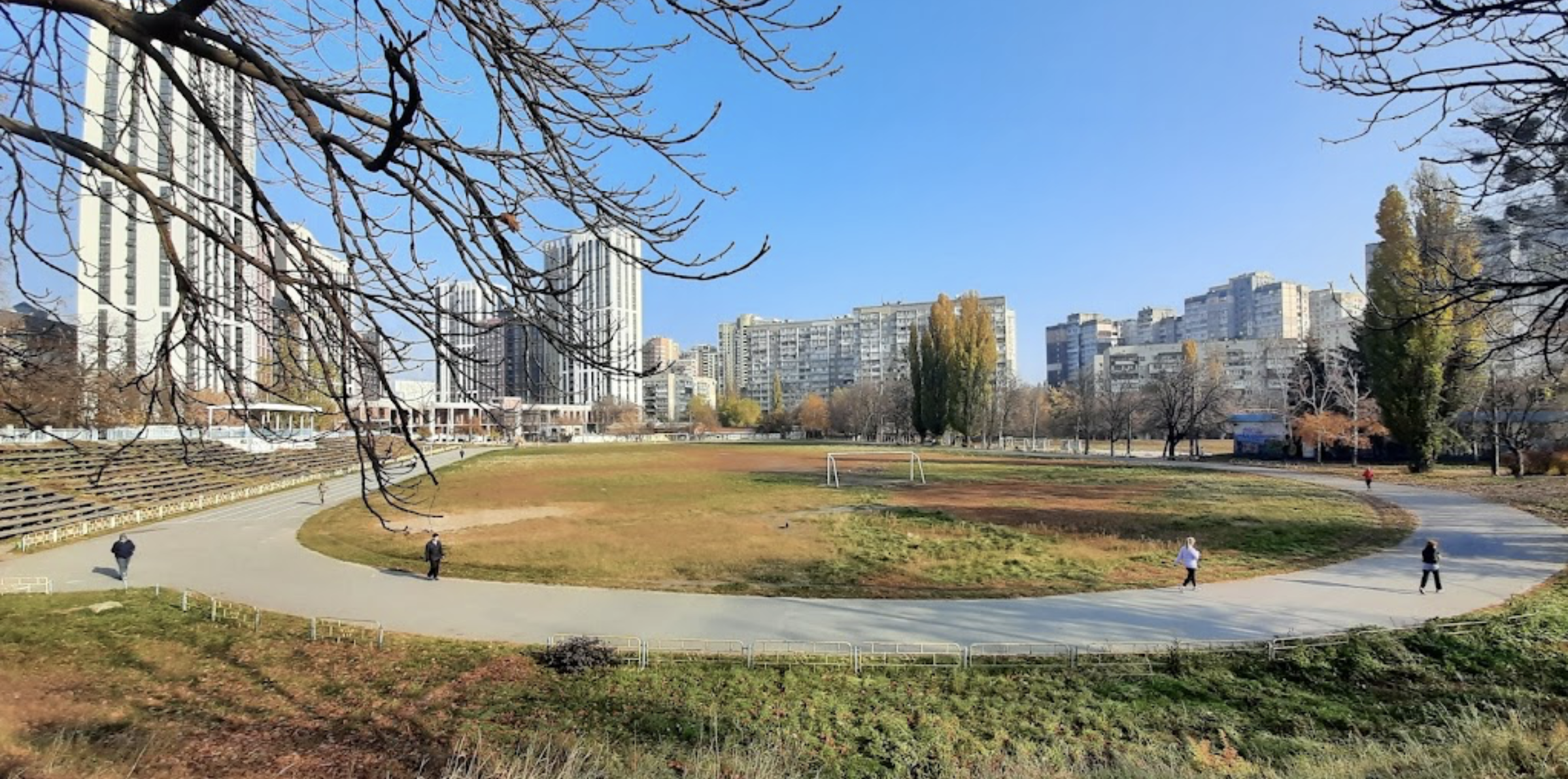
The official matches of the makeshift championship under Nazi leadership began in June 1942. Reports on the results vary, but all agree that FC Start was one of the strongest participants, having defeated the Ukrainian teams Rukh (a team of Nazi collaborators) and Sport, three Hungarian military teams, one team from the German artillery, and another from the German railways.
Following this strong start, Start was set to face Flakelf — the flagship of the Nazi regime, the strongest of the German teams. The first match between the two sides was scheduled for the 6th of August 1942. In that match, Start crushed the German team with a score of 5–1. This result was hard for the occupiers to digest, and they immediately scheduled a rematch. However, the rematch would not be as… peaceful as the first game, in which the Germans had been certain of their upcoming victory.
On the 9th of August, the referee for the match — a Nazi officer — visited the Start dressing room to draw the local players’ attention to two things: that they should perform the Nazi salute and that they should respect the rules — something which, as it turned out, referred to his own interpretation of the rules, since several accounts noted the referee’s failure to call fouls committed by Flakelf players.
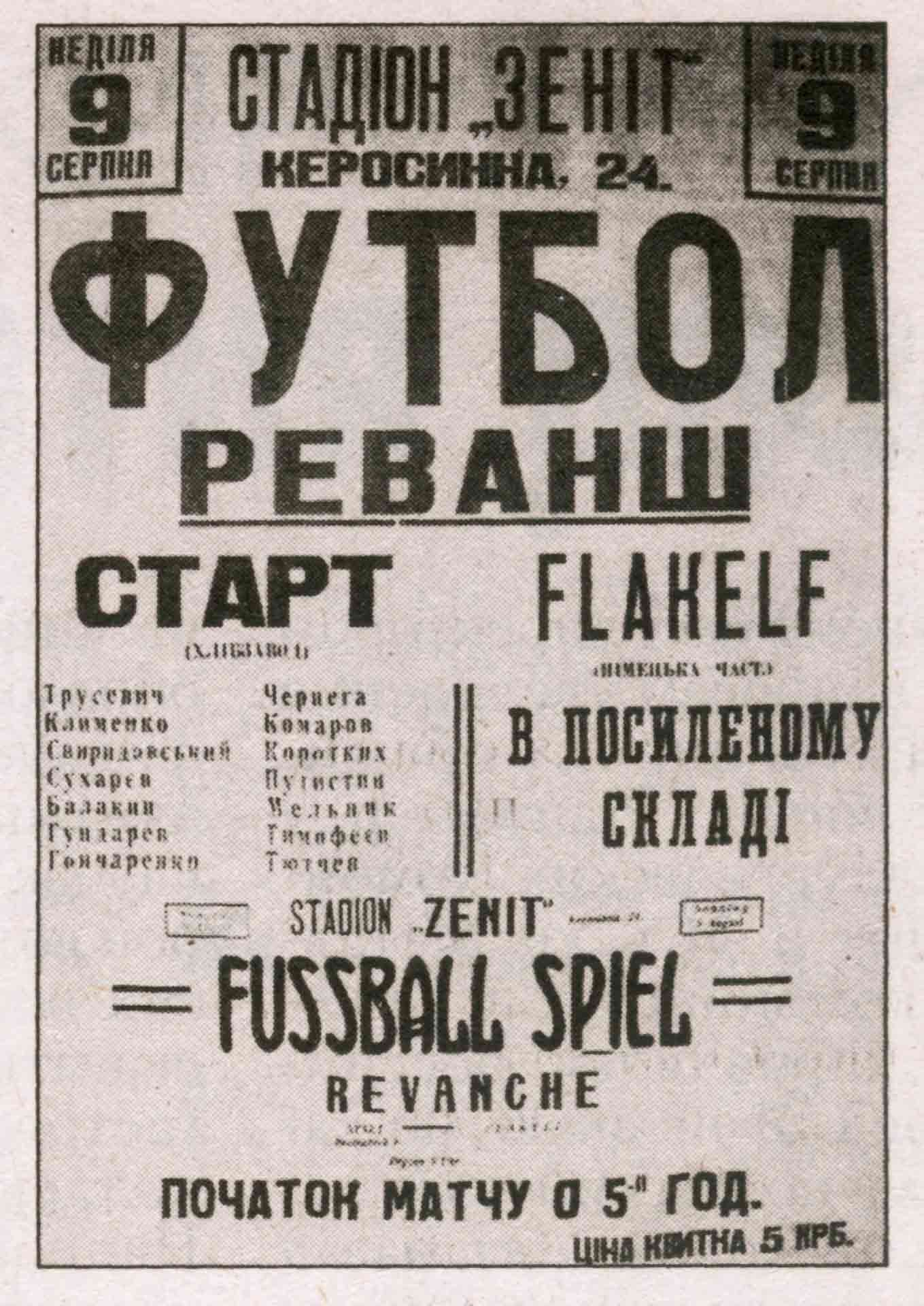
Beyond that account, witnesses also reported efforts by the German authorities to “warn” the Soviet footballers about the danger of getting into trouble — should they fail to lose that match. These same testimonies describe the chaotic atmosphere in FC Start’s dressing room before the match: some players wanted to withdraw from the tournament, while others insisted on going out to win. As the result — which has never been disputed — shows, the latter prevailed. FC Start took to the pitch and defeated the occupiers 5–3 for the second time in just a few days, in front of more than 6,000 spectators.
The victors of that match were to receive their prizes — and it’s these prizes that remain contested to this day. The resurgence of a peculiar nationalism and the rewriting of history in recent decades have sought to muddy the waters around the fate of those victors. This systematic effort attempts to portray the game as having ended in a friendly spirit. That may very well be true — but even so, it does not change the fact that the players of Start were later arrested, sent to concentration camps, or executed by the Nazis. And since this truth is difficult to hide, the current strategy is simply to dissociate their fate from the fact that they took part in that match.
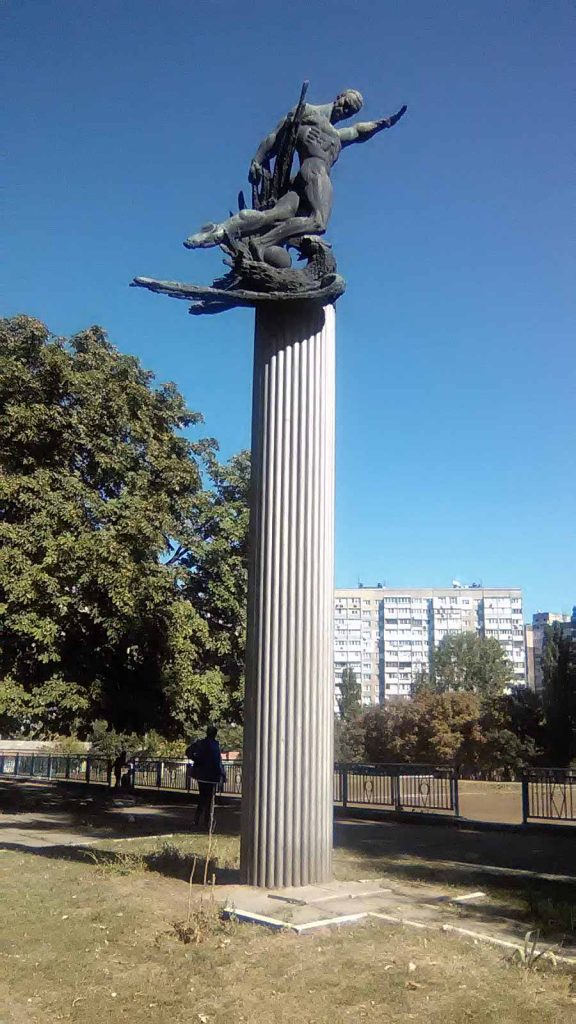
On the other hand, the Soviet Union, after the war, officially recognised the heroism of FC Start’s players, thoroughly documenting their story and erecting a monument at the stadium where the match was played — a monument akin to those dedicated to the millions of Soviet citizens who gave their lives fighting against Nazi barbarity.
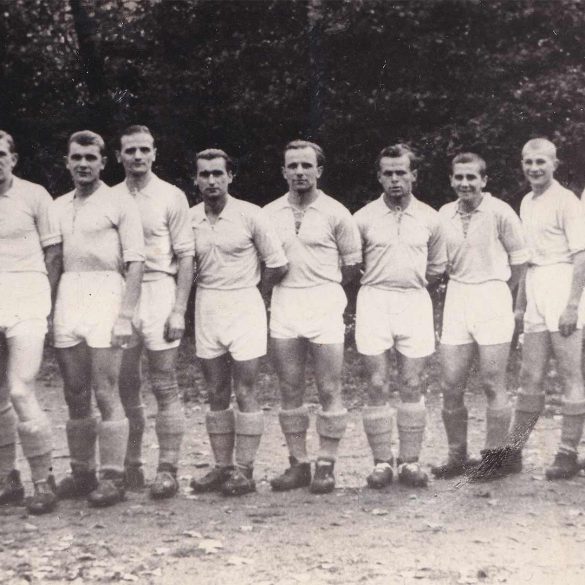
What this whole controversy ultimately confirms is something far greater: the players of FC Start were not merely some random skilled footballers — they were fighters against the occupiers, both on and off the pitch. And it was for this stance that they paid with their lives, whether for the goals they scored or for their part in organising resistance within their occupied society. The match of the 9th of August 1942 will forever serve as a reminder — for generations who will continue to struggle for the kind of society and the kind of football that the people will one day play in freedom.
