
On August 17, 2002, two matches took place in different tiers of the vast pyramid of English football. At Bottom Meadow, a ground with a capacity of 1,950 people and just 250 seats, around 2,500 fans gathered to watch a game in the Combined Counties League—in other words, the 9th tier of English football. The local team, Sandhurst Town, founded in 1910, faced off against a club that had been established just six weeks earlier: AFC Wimbledon.
On the very same day, another team with a similar name, Wimbledon FC, played away at Watford for the League One championship, which at the time was the second division, just below the Premier League. 10,292 fans were present in the stands of Vicarage Road, only 200 of whom had traveled the roughly 30 miles to support the visiting team.
The records of that day show that AFC Wimbledon won away by a score of 1–2, while Wimbledon FC lost 3–2. It was the prophetic seal of a great confrontation—one that touched and still touches the very nature of the sport, the most popular game and arguably the most significant athletic, cultural, and social activity on the planet.
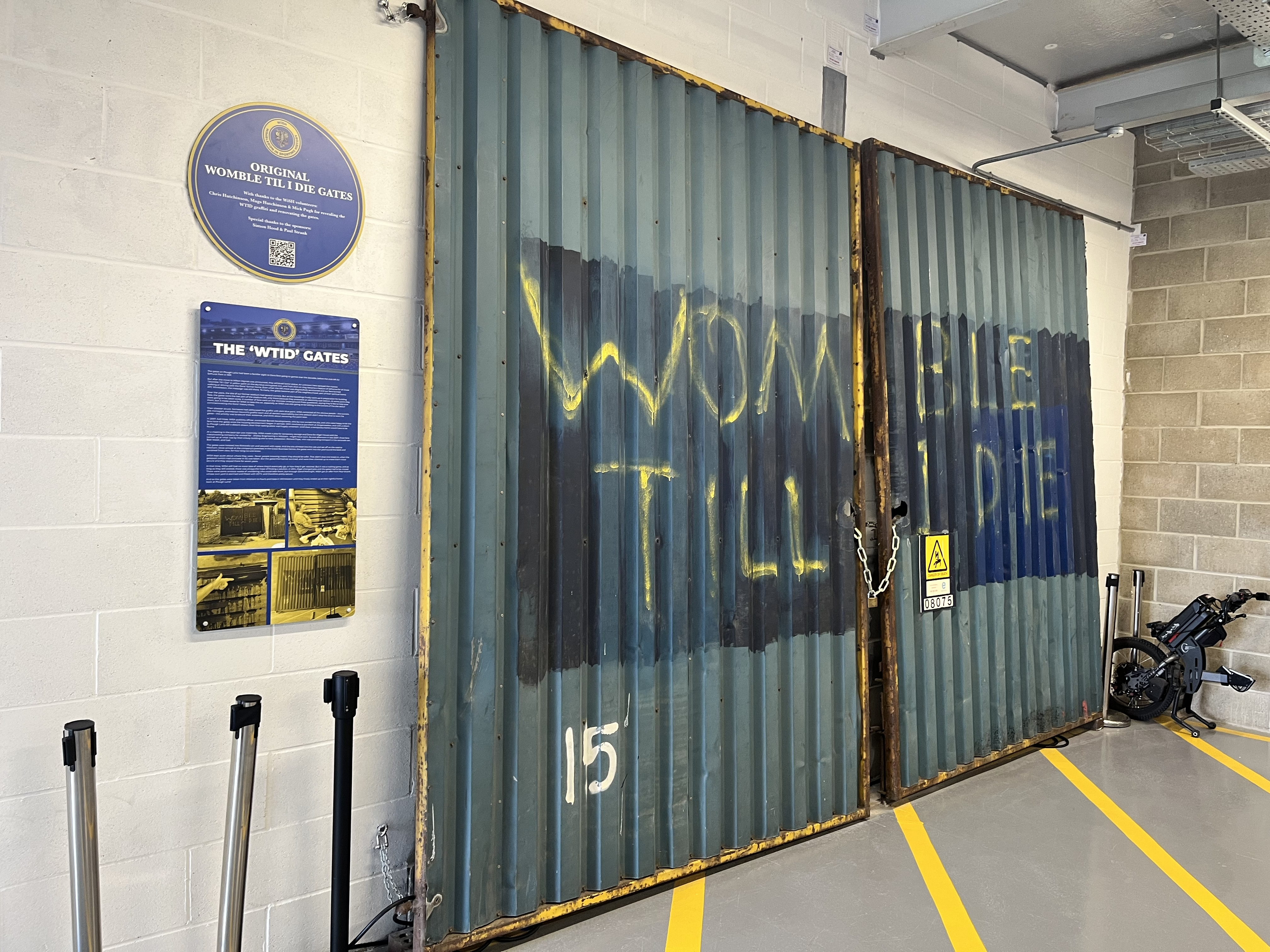
Wimbledon FC had been taken over in 1977 by the Lebanese businessman Sam Hammam, who reshaped the club and led it out of amateur football and into the professional game, even achieving promotion to the elite division in 1986. Two years later, in 1988, Wimbledon won the FA Cup Final at Wembley against the mighty Liverpool, placing their first—and only—major trophy in their collection. But Hammam didn’t stop there. In 1991, he stripped the club of its home, deciding that Plough Lane was no longer suitable for the financial growth he envisioned. Wimbledon moved to Selhurst Park, the home ground of Crystal Palace, to compete in the newly founded Premier League.
Hammam struggled to guarantee the club’s continued development in the increasingly competitive environment, and so he began considering options that would secure its financial stability. Among other ideas, he contemplated relocating the club to Dublin—a city without a strong football tradition, where Gaelic football and rugby union hold sway among a generally non-Anglophile public in the Republic of Ireland. These plans never materialized. Instead, in June 1997, Hammam sold the club to two Norwegian tycoons, Kjell Inge Røkke and Bjørn Rune Gjelsten. At the same time, he also sold the club’s historic home ground, Plough Lane, to a supermarket chain.
The new Norwegian owners, having no knowledge of football, brought in a financial manager who likewise had no football background—the South African Charles Koppel—to take charge of the club’s management and development. Koppel, in turn, found another financial manager from the pop music industry: Pete Winkelman, who at the dawn of the 21st century was involved in a development project to build a stadium in the town of Milton Keynes, 70 miles north of London. Winkelman convinced Koppel and the ownership of Wimbledon—who by 2000 were playing in League One—that the best prospect for the club was to relocate to Milton Keynes, “the biggest town in England without a football club.” In fact, Winkelman had first approached Queens Park Rangers with this proposal, but after being rejected, he succeeded in persuading Wimbledon’s leadership to take that step.
So, in August 2001, Wimbledon’s board publicly announced its intention to move—far from its historic home and its fan base. This sparked fierce opposition from supporters and developed into an ideological clash that touched on the very essence of the sport—especially in Europe, in its heavily industrialized era. In English football—just as in many other countries—the idea of a franchise moving like a business from one place to another was entirely unheard of until then, and it remains so to this day, with this being the sole exception. Previous stadium relocations had all occurred before 1930 and over much shorter distances, such as Arsenal’s move from Woolwich to Highbury in North London, Manchester United’s move from Newton Heath to Stratford, and the longer—but still only 10-mile—relocation of South Shields, which became Gateshead FC. For most of the 20th century and during the development of the English football league system, the idea of fans losing their club was unthinkable and unacceptable.
Nevertheless, on May 28, 2002, the FA’s appointed three-member commission, with two votes in favor and one against, decided to open the way to this “new era,” allowing Wimbledon to move to a different city. The fans of Wimbledon were now left without a home and without a club—victims of the commercialization of the very thing they loved. But that didn’t break them. That same summer, they founded their own club: Association Football Club—AFC, which also stood for “A Fans Club”—Wimbledon, to start anew from the amateur leagues.
In its final season, Wimbledon FC sold off all of its assets, played in League One at Selhurst Park, and finished bottom of the table under temporary administration. Then, in the summer of 2004, the club moved to Milton Keynes and was renamed. This was the beginning of the journey of MK Dons—the franchise club—starting from the newly formed League One (now the third tier), going through relegation and promotion, and eventually reaching the Championship in the 2015–16 season. The newly promoted team from Milton Keynes, however, only lasted one season in the second division, failing to reach the status of its …predecessor. In the end, in 2023, it was relegated to League Two.
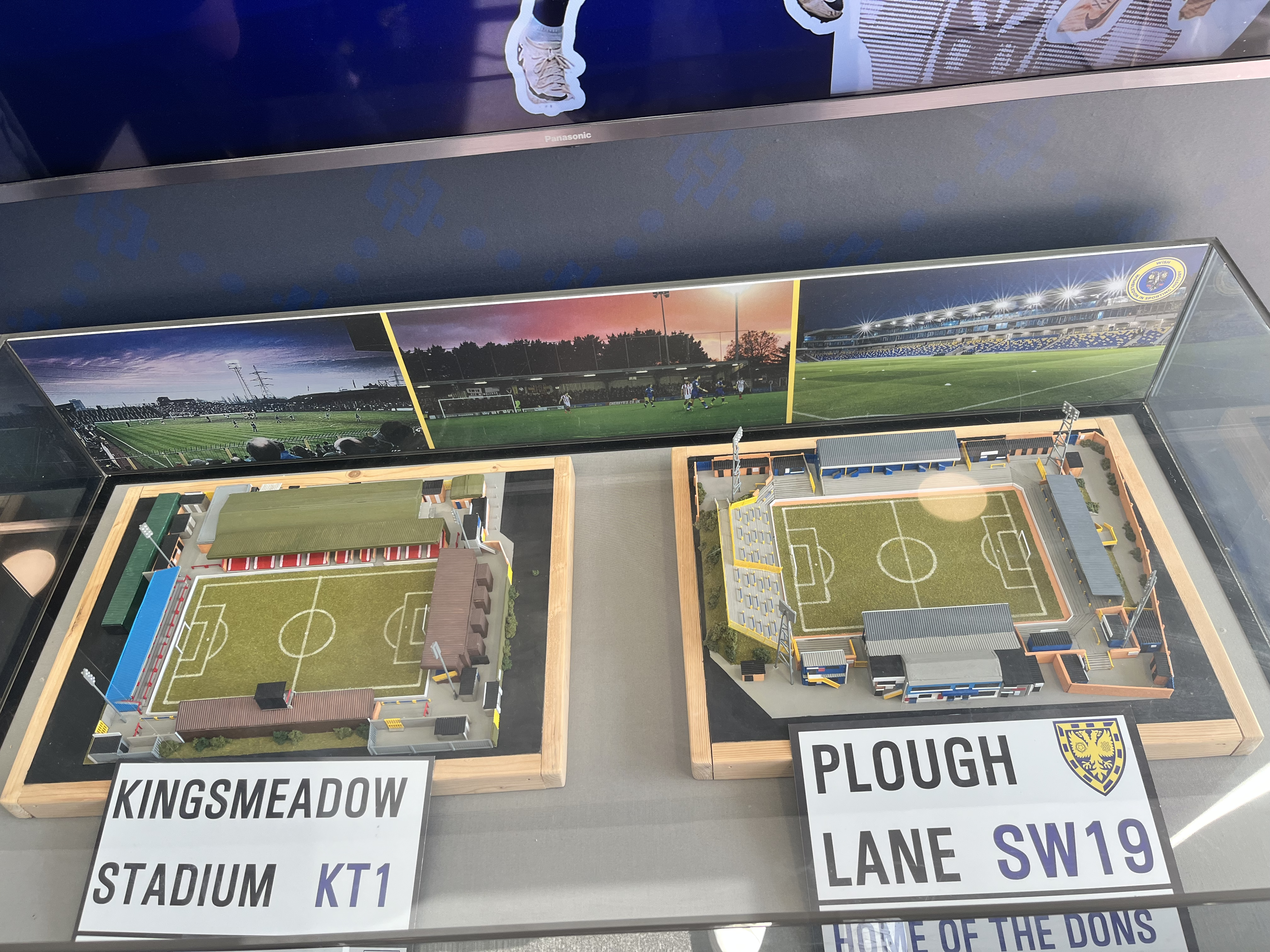
There, among all its opponents, it encountered none other than AFC Wimbledon, which had shot up through the amateur and semi-professional leagues and had returned to professional football by the 2011–12 season, reaching League One (third tier) in 2016 and staying there for six seasons. Starting their journey at Kingsmeadow Stadium in Kingston-upon-Thames—a few kilometers west of Wimbledon—they built a ground that they later sold to Chelsea in order to buy back their historic home: Plough Lane. Finally, on November 3, 2020, AFC Wimbledon returned home—after nearly three decades.
AFC Wimbledon first came face-to-face with MK Dons in the 2012–13 FA Cup, losing 2–1 in Milton Keynes. On October 7, 2014, however, in the Johnstone’s Paint Trophy—as the League Cup was then called—AFC achieved its first victory on the opponent’s turf, winning 2–3. The club’s first league win came in 2017, while at Plough Lane, AFC earned a legendary stoppage-time victory on March 2, 2024, in a League Two fixture.
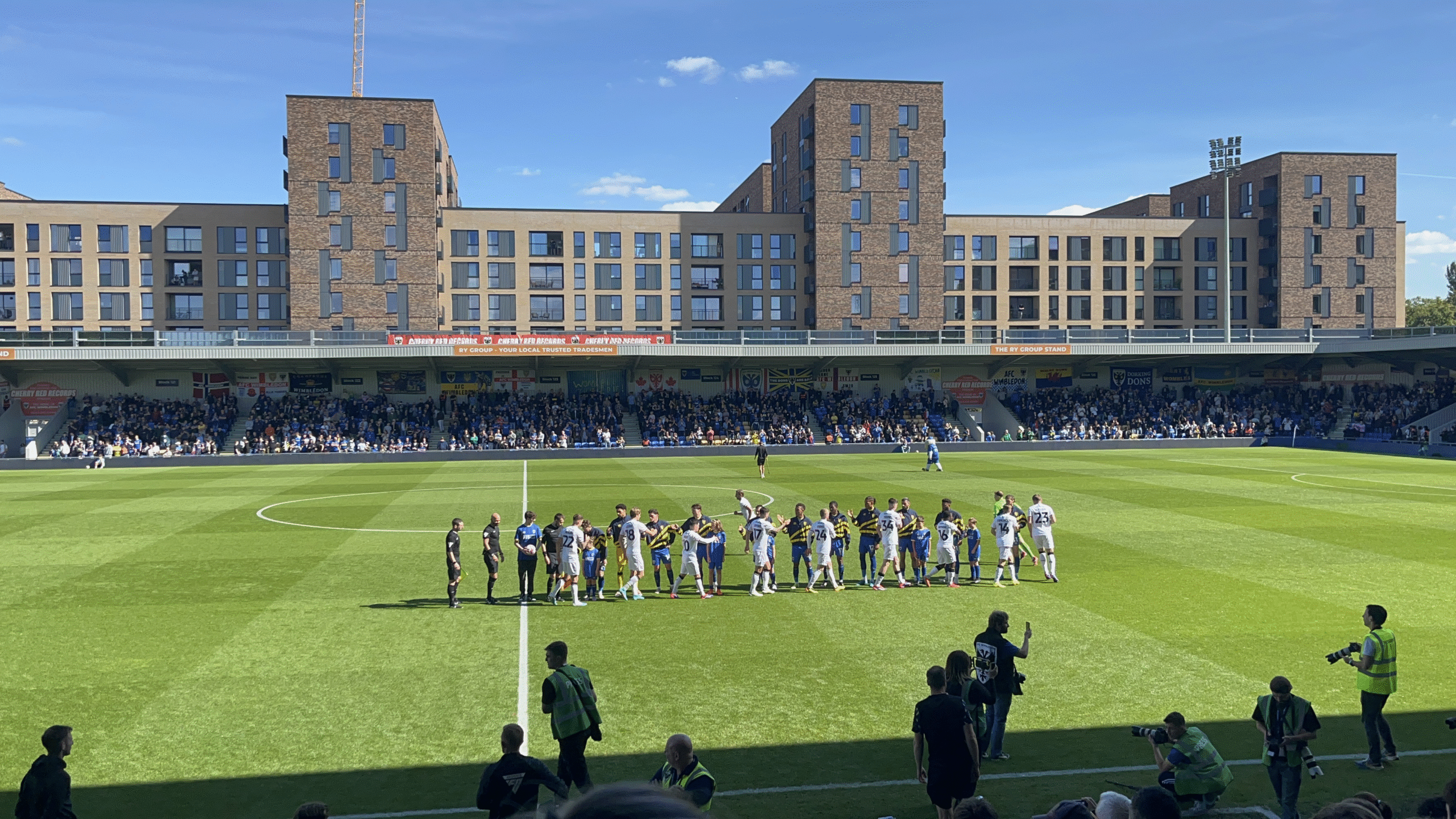
On Saturday, September 14, 2024, the two teams met again in a League Two matchday six clash at Plough Lane. The match was scheduled for 12:30 in the afternoon, on a sunny Saturday that followed a cold and grey London week—one that abruptly and inelegantly cut short the course of that year’s summer.
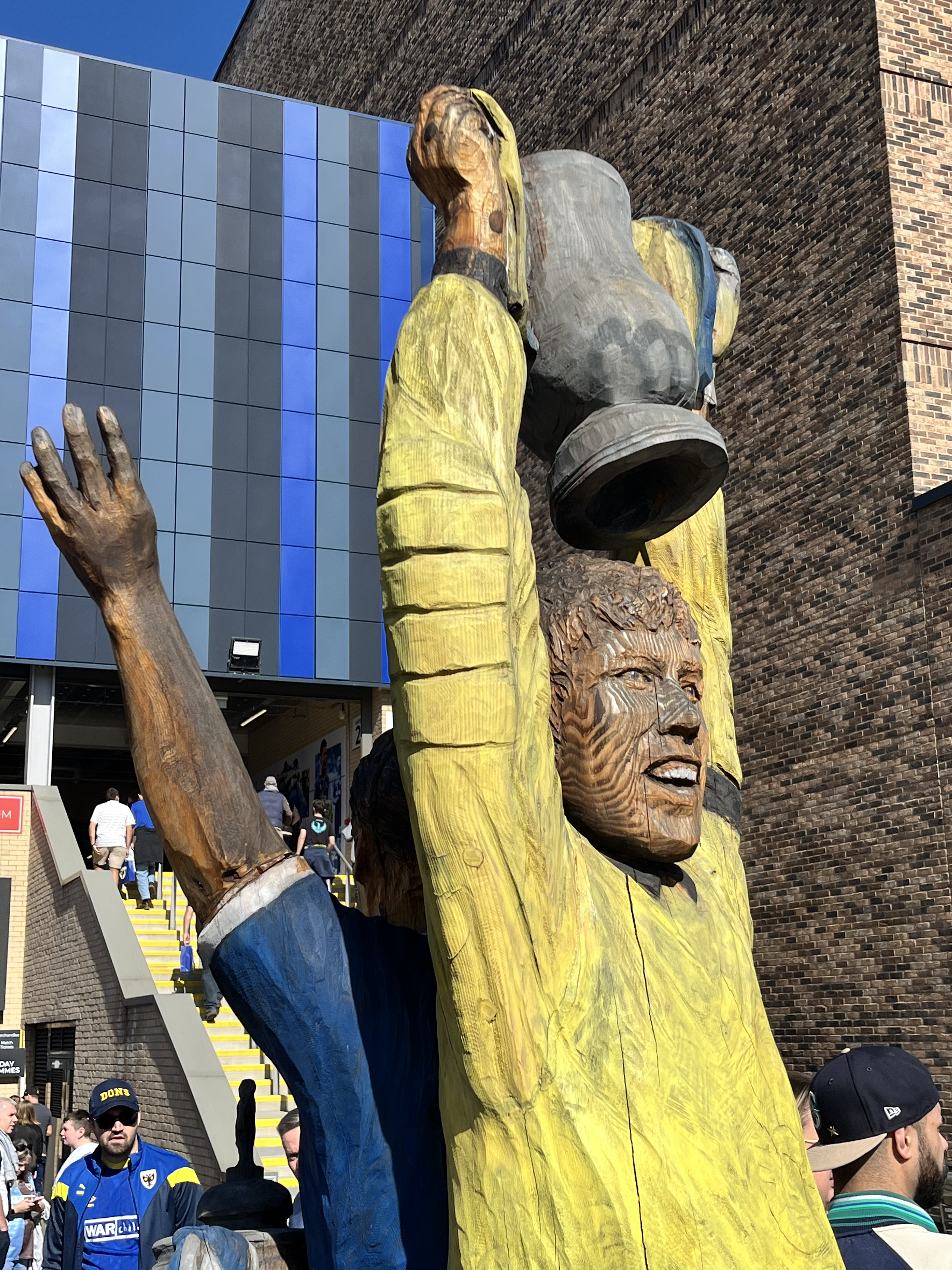
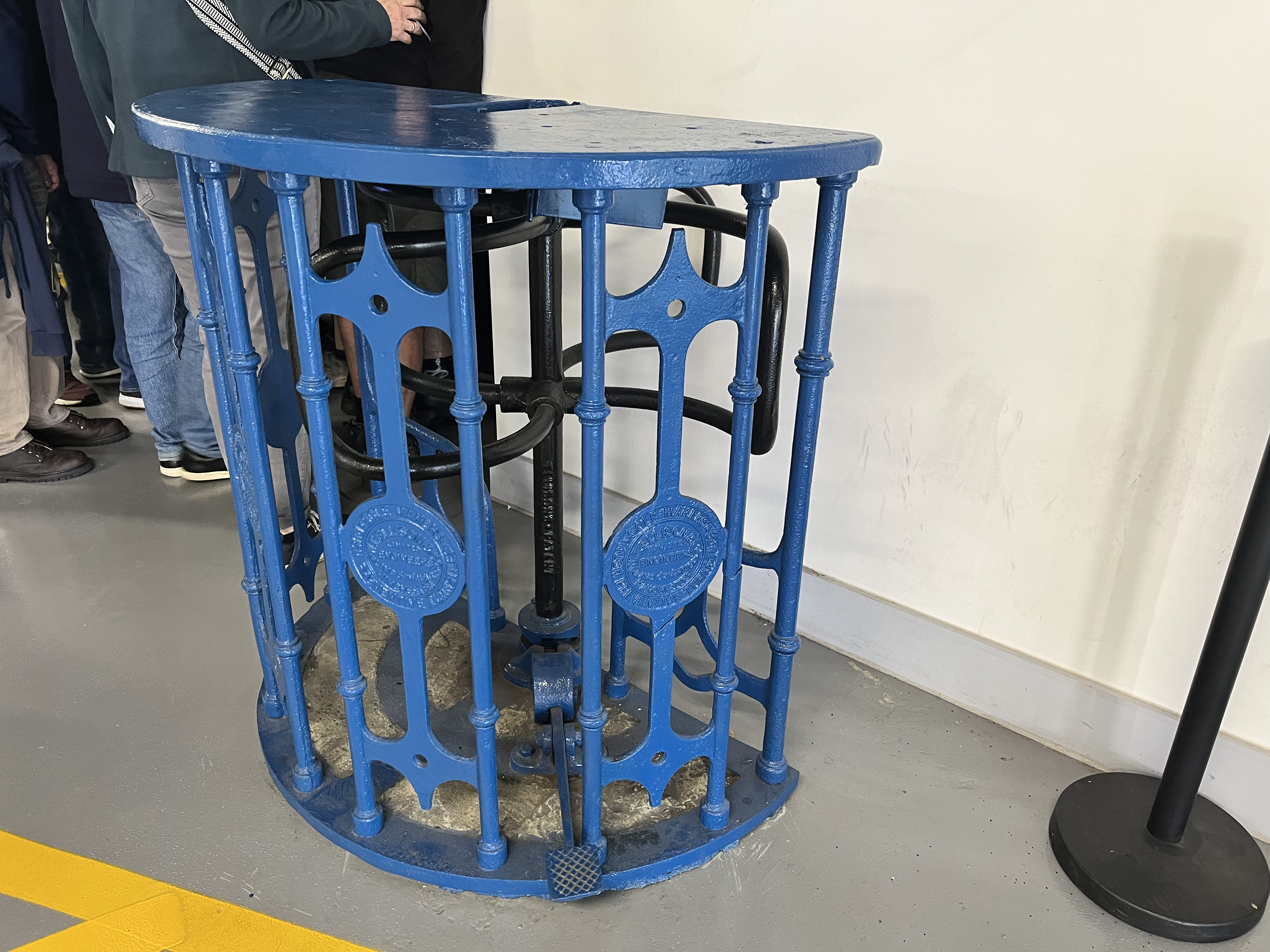
An hour before kickoff, the atmosphere around the stadium was very quiet. People had started to arrive, and many passed straight through the club shop—located beneath stands 1 and 2—to pick up something extra, supporting a club for which they had once raised money to found, made donations to rebuild its stadium, and now pay ticket prices rivaling even those of smaller Premier League teams in order to ensure its survival.
Just a few dozen meters away, at the Woodman Pub—next to the bridge that crosses over the railway tracks connecting Wimbledon Park station to Plough Lane—the MK Dons supporters had gathered, watched over by a fair number of police officers on foot, on horseback, and in vehicles. In a collective mood that smelled of excess, with many minors among the gathered crowd, the Dons fans began their march toward the stadium, heading down the south side of Plough Lane at around 11:45—forty-five minutes before kickoff. There were some very minor incidents, entirely without cause—more a matter of some people wanting something to remember than of any real confrontation.
When the stadium filled up, five minutes before kickoff, with 7,921 home supporters and 705 away fans, the chanting began—focused, of course, on the vast gulf between the two clubs. The AFC fans told their rivals they “don’t know who they are,” highlighting the deep importance in football culture of forming a collective historical consciousness—the so-called DNA of each team. The MK Dons fans were engaged in a constant scuffle with stadium security, clearly aided by the consumption of various substances.
Wimbledon came out of the gates ferociously, pinning the Dons deep in their own box—and by the 10th minute, the referee awarded the home side an indirect free kick, who were already proving dangerous. A minute later, Myles Hippolyte sliced through the visitors’ defense right in front of the away end, making it 1–0 and setting the tone for the day at Plough Lane.
From that moment on, the MK Dons’ stand turned into a circus, with an ongoing clash between fans and security leading to the constant ejection of supporters. The way these removals were carried out, however, revealed something else. On the one hand, there was the violence of the stewards and police, who hauled people out like sacks—six men to one—carrying them off “by force,” in a display that was both revolting and degrading to human dignity. The MK Dons fans, even those following the same path out, remained passive in the face of this scene, while the AFC Wimbledon fans celebrated. Perhaps this, too, is one of the reasons why it was their club that fell victim to business plans, and not some other London side. The bitter experience of having their team stolen may have brought out some admirable qualities in their fanbase, but how such situations are dealt with also shows how deeply each crowd respects the so-called etiquette of the terrace—something that, in the end, helps protect a club from being stolen.
As for the pitch, from the 30th minute onward, Wimbledon’s 5-3-2 left plenty of space and surrendered control of midfield to the visitors. As a result, MK Dons dominated much of the game, though without posing much of a threat, while Goodman came up with crucial saves on the few good shots they did manage. This led to poor football—a match that bordered on dull, made interesting only by the fan and historical rivalry between the two clubs. At one point, from around the 70th to the 85th minute, Wimbledon were completely pinned back, showing no structure, no hunger to win the ball back, making their slim lead seem increasingly fragile.
But from the 85th minute onward, the tide turned. Wimbledon’s players began throwing themselves into challenges with far greater conviction, and in one sequence around the 90th minute—after winning a series of consecutive duels—Maycock became the final recipient of the ball inside the box, making it 2–0 and sparking celebrations. AFC Wimbledon had once again defeated the monster that had stolen its history.
A few minutes later, deep into the ten minutes of stoppage time, Maycock scored again—giving his team’s victory a triumphant sheen (a fine cliché, that one)—and forcing the away end to continue emptying out, what little remained of it after the ejections by security and police.
The match ended with Wimbledon’s supporters living through a historic day—just their third league win against the very enemies of their existence—while the MK Dons fans hurled abuse at their own players as they came over to thank them for their support.
It was a fine match, a classic English Saturday afternoon, with two of the 92 professional football clubs adding another entry to their statistical record—but a much larger one to the memories of their supporters. It wasn’t metaphysically romantic; it was measured by the scale of these clubs—small, but fair. And when football is fair to History—not necessarily to performance—then it becomes just a little more beautiful.
