

On the 3rd of November 1903, the Anglo-American Commercial College of Rosario founded its football club, thus breathing life into the dream of its founder, Isaac Newell—a man whose passion was to instil in his students and in the city’s population his own devotion to fútbol, the sport he had carried with him from his homeland.
Isaac Newell, a headstrong young man from Kent, left his homeland at the age of sixteen to seek a different path and to chase an unknown dream on the far side of the Atlantic. Arriving in Argentina aboard a merchant-passenger ship, together with a few acquaintances of his father, the long journey brought him to the city of Rosario. There, with a letter of recommendation from his father, he found work as a telegraph operator, while also continuing his studies.
At the age of twenty-three, he married Anna Margareth Jockinsen, and the two of them received a joint certificate to teach English, awarded by the Anglican College in 1878. That same year, their son Claudio Lorenzo was born, followed by five more children. In 1884, Isaac Newell bought a plot of land in Rosario, taking out a loan from the Provincial Bank of Santa Fe, in order to found the Anglo-Argentine Commercial College. The Colegio Comercial was the first of its kind in Rosario not to be an exclusively Catholic institution.
Within the school’s curriculum, Isaac insisted on the inclusion and development of physical exercise, introducing countless students to football, who would go on to become stewards of this tradition. That was the seed that would blossom into the football club founded in 1903 by alumni of the college. The colours of the college—and later, of the football club itself—were red, in honour of Isaac’s homeland, England, and black, in honour of his wife Margareth’s homeland, Germany.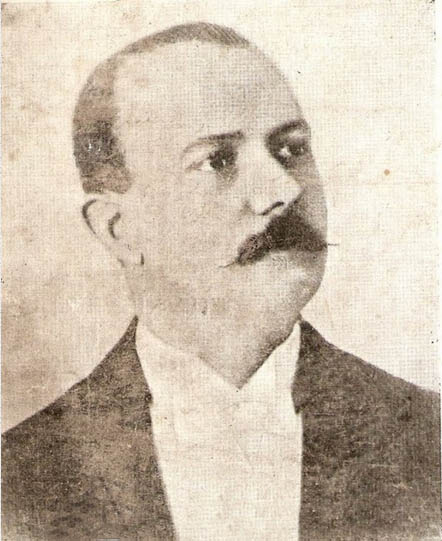
In 1907, shortly after the death of the club’s founder, the official approval of the club’s charter was granted. It formally adopted the college’s colours and chose its name: Newell’s, in honour of its founder, and Old Boys, in line with the English tradition of naming clubs formed by college alumni.
Around that same time, a request was made to the footballers of the newly founded Newell’s Old Boys by the Carasco hospital—which at the time operated as a treatment centre for leprosy—to visit the hospital in a show of support for its work. The other major club in the city, Rosario Central, had declined to take part. The decision by Newell’s to attend gave rise to the nickname that has followed the club ever since: Los Leprosos—“the Lepers.”

The journey of Newell’s Old Boys began in 1905 with their participation in Rosario’s local league. From those early years, the city was decisively split in two camps—the blue and yellow of Central, and the red and black of Newell’s. This rivalry would take on a character quite unlike that of derbies in other cities, since the two clubs ended up commanding the allegiance of virtually the entire population. In Buenos Aires, for instance, the biggest derby—the so-called superclásico—is Boca versus River. But the capital is home to many more top-flight clubs, and other historic rivalries like the Avellaneda derby between Racing and Independiente mean a large portion of Buenos Aires’ football-loving (i.e., nearly total) population remains neutral or only loosely invested. Rosario, however, knows no neutrals. You are either with Central or with Newell’s. This gives the rivalry a near-paranoid intensity, with serious social ramifications—especially in the days surrounding the derby.
Since both teams competed in the local Rosario league for about three decades, until the creation of Argentina’s national league system in 1939, their rivalry essentially decided who won the titles year after year. Between 1905 and 1930, in the amateur era of the league, Newell’s won 11 championships, Central won 9, while Tiro Federal claimed 3, and Belgrano won 1. With the onset of the professional era, the situation remained unchanged: in the 8 years before the creation of the national Primera División, Newell’s and Central claimed 6 of the 8 titles between them, with Central Córdoba managing to snatch the remaining two. After joining the national league, Newell’s and Central continued competing in the local championship, but only with their reserve squads—national competition was now the priority.
Since 1939, Newell’s has been one of the enduring protagonists of the Primera División, accumulating enough points to place them 7th in the all-time table—just behind the five biggest clubs and Vélez Sarsfield. This makes them, historically, the most successful club outside Buenos Aires’ metropolitan area.
Even before the formation of the national and professional leagues, Newell’s had already helped lay the foundation for Argentina’s footballing identity. The sport’s development, with its distinctive focus on individual skill, would define the national team’s success up through the World Cup era—and this ethos was reflected in Newell’s own international feats. A landmark moment came on July 17, 1927, when they thrashed Real Madrid 4–0.
Among Newell’s international results prior to the emergence of CONMEBOL’s competitions and the Intercontinental Cup, one of the most notable was their 1949–50 European tour. They played 14 matches, winning 9 and drawing 3, with a goal tally of 40 for and 18 against. Highlights included victories over Athletic Bilbao (3–1), the Spanish national team (4–1), Benfica (5–0), and the then-strong Rot-Weiss Essen (2–0).
During the Primera years, clubs outside Buenos Aires faced immense challenges. Aside from everything else, they had to endure far more travel for away matches—an in-built disadvantage. From 1939 to 1966, only the five major clubs won a league title. This changed in 1967, when Zubeldía’s Estudiantes claimed the championship. Up to that point, Rosario’s derby remained a regional affair.
Newell’s, however, has consistently held its place in the top flight. The club has only played three seasons in the second division—between 1960 and 1963. In fact, they had won immediate promotion after the first of those seasons, but the AFA’s disciplinary committee deducted 10 points from the league leaders in a decision that was never fully explained, costing them their return to the top tier. That same year, Newell’s had the opportunity to play a friendly against the great Santos side of Pelé—and managed a draw, confirming their quality.
With the Rosario derby defining much of the club’s identity, Newell’s first major moment at national level came in the semi-final of the Nacional in 1971. Fate, however, had it that their opponent in this defining match would once again be Central. A goal by Aldo Pedro Poy—later immortalised as la palomita, the diving header that gave the play its name—sealed Newell’s fate, with their historic rival going on to win the national title that season. The final, to make matters worse, was played at Newell’s home ground.
At last, revenge and the club’s first major title came three years later. In the Metropolitano championship, Newell’s qualified top of their group for the final round-robin tournament that would decide the champion. Joining them were Boca Juniors, Huracán, and eternal rivals Central. The four sides each played one match against the others. On May 26, both Rosario clubs started strong—Newell’s beat Huracán 3–2, and Central defeated Boca 3–1. In the second round, Newell’s edged Boca 1–0, while Central lost 1–0 to Huracán. That meant heading into the final match, with the two Rosario sides facing each other, Newell’s needed only a draw to win the title.
The game took place on June 2 at Central’s ground—then still known as Estadio de los Canallas, later renamed Gigante de Arroyito. Central took a 2–0 lead through goals from Arias and Aimar. But Newell’s pulled one back with Capurro, and then came one of the most iconic goals in club history—a thunderous left-footed strike from Zanabria, considered by many the greatest in Newell’s history. The match ended 2–2, and Newell’s were crowned champions of Argentina for the first time in their history.
Among the starting eleven in that team was a right midfielder who would later go on to have a notable career in Greece—Juan Ramón Rocha.

The following year, Newell’s competed for the first time in the Copa Libertadores, in Group 1, which included clubs from Argentina and Paraguay. In their opening match, on February 28, the opponent was—who else?—Rosario Central. The match ended in a 1–1 draw. The two Rosario sides met again on March 21, drawing once more. Newell’s ended the group stage with 3 wins, 2 draws, and 1 loss, while Central recorded 2 wins and 4 draws. The two sides finished level on 8 points, but due to superior goal difference, it was Central who advanced to the semifinals.
It would be a long wait for Newell’s next title. It wasn’t until the 1987–88 season—contested in a single-table format across the full campaign—that the club returned to the summit. That season saw Newell’s achieve something historically remarkable: they won the championship with a six-point lead (in the 2-1-0 points system) over second-placed San Lorenzo, fielding a squad and coaching staff composed entirely of academy graduates. But the club’s greatest era was only just beginning…
In the autumn of 1988, the reigning champions Newell’s embarked on a remarkable Libertadores campaign, with a young striker named Gabriel Batistuta leading the line. After topping their second-round group—securing first place in a playoff against San Lorenzo—they faced Bolivar of La Paz in the next round. Both legs ended 1–0 in favor of the home sides, and Newell’s progressed on penalties.
In the third round, the five qualified clubs joined reigning champions Peñarol, who entered the competition at this stage, forming three quarter-final pairings. Newell’s drew away in Montevideo, but lost 2–1 at home in Rosario. Nevertheless, they advanced as the best-performing losing side, having scored two more goals than Peñarol. In the semifinals, they met San Lorenzo again, beating them twice—0–1 and 2–1—to book their place in the final.
Playing the biggest match in their history once again at Central’s ground, they won the first leg 1–0. But in the return leg at the Estadio Centenario, they fell 3–0, missing the chance to claim their first international title.

In 1990, the head coach of Newell’s Old Boys’ reserve team was promoted to lead the first team—a former defender from the 1970s, Marcelo Bielsa. Bielsa, a towering figure who had already made waves for his intellectual approach to football, evoking comparisons to Menotti (who had ironically begun his managerial career at …Central), introduced innovative ideas to the game. His tactics featured a sweeper and nine outfield players distributed evenly across the pitch in a peculiar 1-3-3-3 formation, a style that would become his hallmark.
In that Bielsa-led team, the sweeper role was assigned to an 18-year-old Mauricio Pochettino, whom Bielsa had brought up from the Newell’s youth ranks. The 1990–91 season ended in yet another triumph, with Newell’s winning the 1990 Apertura. In the two-legged final to decide the overall champion of the season, they defeated Boca Juniors 1–0 at Arroyito—Central’s stadium—and lost by the same score at La Bombonera. The title was decided on penalties, with successful spot-kicks from Berizzo, Llop, and Zamora securing the championship for Newell’s and a place in the Copa Libertadores.

In the 1992 Copa Libertadores, under Bielsa’s guidance, Newell’s finished top of Group 1. In the round of 16, they eliminated Defensor from Uruguay, and in the quarterfinals, they once again faced San Lorenzo—this time dismantling them with a stunning 0–4 win in the first leg away from home. In the semifinals, after two 1–1 draws against América de Cali, the second leg held in Colombia ended in an exhausting penalty shootout that Newell’s won 11–10, securing a place in the two-legged final.
There, they faced São Paulo. Newell’s won the first leg 1–0 at El Coloso (this time playing at their own ground), only to lose by the same scoreline in Brazil. The title would once again slip from their hands—this time in a penalty shootout that ended 3–2.
However, just a few weeks after the heartbreak of the Libertadores final, Bielsa’s Newell’s clinched yet another title, winning the 1991–92 Clausura. It was the last trophy of Bielsa’s tenure, as that summer he left for Mexico to manage Atlas. His contribution to the club’s revival was so monumental that in 2009, when Newell’s stadium—long referred to as El Coloso del Parque—was officially named for the first time, it was christened Estadio Marcelo Bielsa.

In 1993, another great figure—perhaps the greatest in the history of world football—linked his name with the story of Newell’s. After a disastrous spell at Sevilla, Diego Maradona returned to Argentina, and on October 7th, he wore the red-and-black shirt and number 10 jersey for the first time. From that day on, October 7th has been celebrated by “the Lepers’” fans as “Diego Maradona Day.”
Maradona would later say in an interview: “I, Diego Armando Maradona, ID number 14,276,579, was, am, and will always be a ‘Leper’, without a shred of doubt. Because I learned to love Rosario, even if I stayed only briefly, and wherever I may be, I will always check Newell’s results. Because I adore them. I adore 75% of the people of Rosario. I send a big kiss to the Lepers, I tell them I love them very much, I tell them I miss them and that I will come back, I will come back, because no one can break me. My name is Diego Armando Maradona and I am a fan of Newell’s.”

Two years later, a short, scrappy kid from Grandoli would join the youth ranks of Newell’s academy—his name: Lionel Andrés Messi. Despite being diagnosed with a hormone deficiency that affected his physical growth, the impression he made was immense. On September 3rd, 1999, his first interview appeared in Pasión Rojinegra (“Red and Black Passion”).
A year later, at the age of just 13, Messi would depart for Barcelona’s academy, before going on to write an unfathomable chapter in the history of world football—one that would span across three decades.
In 2020, many years later, Messi would reveal the Newell’s shirt under his Barcelona jersey after scoring a goal—just days after Maradona’s death.

Newell’s, in turn, would once again find a great Argentine number 10 in Ariel Ortega, in order to reclaim a domestic title—winning the 2004 Apertura with a squad that included Fernando Belluschi, the league’s top scorer, and Ignacio Scocco, both of whom also played in the Greek championship. In the 2012–13 season, under a complex league format, the club would win the Torneo Final, securing its sixth title—its most recent to date.
Among the many players to have worn the Newell’s shirt, some of the most prominent names include Gabriel Batistuta, Gabriel Heinze, Lionel Scaloni, Ariel Ortega, Mauricio Pochettino, Maxi Rodríguez, Walter Samuel, Jorge Valdano, and Mario Zanabria—making the club one of Argentine football’s essential talent producers. Even more significant, however, is its youth academy. Many of those who excelled for Newell’s at the professional level began in its ranks, reaffirming the “college” identity it has carried since its foundation, and which lives on in its very name.
