

On the afternoon of 19 July 2026, in East Rutherford, somewhere west of the Hudson, Lionel Messi walks across the grass of a football pitch for the final time wearing Argentina’s albiceleste World Cup shirt. A silver medal hangs around his neck; before him stands a vast end full of people wearing the same shirt, bearing his name thousands of times over, chanting it rhythmically with no desire whatsoever for this ritual to end. Behind him, the Spanish national team celebrates winning the most important trophy in world football. And while this moment, charged with the emotion of the greatest human being ever to have played football, has now passed into History, 40 days earlier it would have been impossible for anyone to write the script of how he reached that point, in front of that end. This is the History of football, which would be a sorry thing indeed if it were written only in scores and statistics, if it did not give birth to stories with heroes who have always created its mythical narratives.
A World Cup does not have just one story, nor just one narrative. This scene was the final page of its central story, but, like a mythology of heroes in its own right, the World Cup always contains many stories large and small that make up the film of each tournament, each differently directed yet all serving one central plot. And, as always happens with football, a game played within a fixed span of time, many people arrive afterwards either to tell the story we all watched or to interpret it and, at times, falsify it. Those many who attempt this usually seek vindication from History by telling their stories — but it is absurd to go looking for historical vindication after the historical events have taken place, let alone to appear as their narrator and recount them to those who have already lived through them.

And so the question arises: what need is served by a review of an event, a tournament, watched simultaneously by billions of pairs of eyes until only a few days ago? Unlike interpreting the past from a distance and reading it with a broader knowledge of human History, recording it and putting one’s name to the telling of the present among those living through it is the testimony that must remain for that future moment — and, for this testimony to have value, it must be honest. That is the purpose of this article: to record, as testimony, this chapter in the history of football as we, its contemporaries, experienced it, placing it within the great evolution about which we read and learn through historical documents and the corresponding study of history. That is how this account can have value: presented as a single whole today, but begun on the night of 11 June 2026.
The 2026 World Cup in its historical context
What we knew before the 2026 World Cup began was that it would take place against a backdrop of global balances shaped by imperialist rivalries and conflicts that was unprecedented for most people alive today. For an unprecedentedly long historical period, despite international rivalries, humanity lived on a planet where peaceful conditions seemed stable and assured for the majority, where each generation, as a rule, lived better than the ones before it, and where people’s quality of life improved as progressively more needs were met. That does not mean there were no wars, no hunger, no poverty. But the world was a place where one could be optimistic that the future would be better, that war, hunger and poverty were problems to be solved rather than the rule in a dystopian tomorrow. It was under these conditions that world football also grew to enormous proportions: first as a passion and a diplomatic-political tool, then as an industrial product and finally as an element of popular culture with a dominant and undisputed place at the centre of attention across the globe, reaching its highest expression at the World Cup.
But in 2026, after years of intensifying imperialist rivalries, shifting balances of power and the generalisation of armed conflicts, the world is not simply a simmering cauldron but one in danger of exploding. As had happened on other such occasions, the World Cup was not staged independently of, or at a distance from, the phenomena that define world History. The fact, of course, that searching for parallels leads us inevitably to the tournaments of the 1930s can hardly be called auspicious. And so, just as Mussolini’s Italy took charge in 1934 of organising what was otherwise football’s greatest celebration, in 2026 the United States — the undisputed global superpower of three decades, watching the world change and the balance of power shift against it — took charge of the same tournament alongside its neighbouring countries, Mexico and Canada. That this tournament would not be independent became clear not only through the host countries but also through FIFA, when, amid threats of war and ultimately interventions, it presented US President Trump with an award created specifically for him, even calling it the “FIFA Peace Prize”.

A few years ago, I jokingly expressed the view that if anyone wanted to found a new country, the most important thing — before recognition by the members of the UN — would be to create a national team and a football federation and secure recognition from FIFA. Who could have guessed that what was once an innocent joke would become the official political activity of world football’s governing body? It would be laughable if it were not accompanied by genuinely dangerous designs and policies which, unsurprisingly, appear to incorporate the instrumentalisation of football into their plans. And while, in an innocent and romantic reading of its ancient origins, sport is a cause for truce, football showed us that it is first and foremost a political phenomenon and only then a sporting one, with political developments within it intensifying and being magnified rather than overshadowed and relegated to the background. Through the exclusion of supporters by means of the travel-visa system; the exclusion even of a referee from Somalia and his 11-hour interrogation before deportation; humiliating checks on the players of African teams; entry bans that extended even to footballers’ families; and the refusal to allow even a national team, Iran, to remain in the host country, politics seemed magnified in the football arena. But could it kill football itself? Football has always been all these things — and the World Cup all the more so. And so, even within this context, as we watched the World Cup, the dream of our footballing passion, die, we all prepared, without illusions, to cheer another beginning, another illusion lasting a few days, trying more than ever to hold on to the stories, the mythology, the passions and the emotions in football that make the world seem as though it still gives us reasons for optimism.
The charged opening
But there is no World Cup if there is no football — and for that reason, as a matter of principle, whatever the historical circumstances that ultimately concern the future of the sport itself, we must insist on starting with the stadium, the pitch, the ball rolling across the grass, the footballers, its protagonists, the people shaping the era’s tactical understanding, even the movement in the stands. We have neither the right nor the luxury to leave football itself behind the course of events, because throughout its journey, even if what happened inside every stadium was a reflection of historical developments — and not historical developments a reflection of football — the most popular form of sport could occupy centre stage because it provided an outlet within every society and through every historical setback, in the thousand ways that make it life-giving for billions of members of the human race.
And so, with that thought and that anticipation, we turned on our screens on the night of 11 June to see football return to one of its most mythical places of worship and the World Cup played again at the Estadio Azteca. It was at this stadium that the last World Cup match before the opening ceremony had been played 40 years earlier, marking human history with the icon of Maradona holding the “Holy Grail” of football worship in his hands. But the Mexican sun that had lit Diego’s face was absent, and the setting looked as though it had been drawn from a dystopian science-fiction film. And if anything needed to be done about that, the weather helped too, grey clouds covering the football temple so that we might see the staging of football’s new epic under the appropriate lighting.

For the first time at the start of a match, the pitch was crammed full, in a maximalist approach to football ritual that was entirely at odds with the simplicity that characterises it, leaving the necessary space for the “artistic” creation of its protagonists, the footballers. Enormous flags were unfurled, covering two-thirds of the pitch; all the players, starters and substitutes, gathered in the centre of the field rather than lining up for the playing of the national anthems. A huge crowd of volunteers, either around the flags or along the walkway leading to the centre of the pitch, made the overall picture more cluttered still. This scene would be repeated at every match, proof that commercial innovation felt no need to respect even the aesthetic elements whose sanctity bound generations who loved the sport and lived and breathed it. For the problem is not innovation but external intervention, inorganic evolution, the cosmetic dressing-up of an institution, a game, a spectacle that had always created and developed its own appearance out of a need to reveal its true identity, not with the purpose of altering it.
If only the opening had been the sole thing to change. Shortly after the 25th minute of the match — and then in every match — football stopped for the so-called “hydration breaks”, which had their own distinct terminology in every language. How can football stop at a World Cup? How can we not see the pitch while the clock in the stadium continues to run? Why are we watching adverts instead of footballers? Everyone knows the how and why, but now we know it after witnessing it. Because there was also a madman, eight years earlier, who said, when the United States and its neighbours were awarded the tournament at the FIFA Congress in Moscow, that in this tournament the game would be divided into four 25-minute periods so that more advertising could be fitted into it. That madman, Diego Armando Maradona, had been ostracised by every football authority when he was the best player in the world. After his death, many rushed to write effusive tributes to his “prophetic” words. This is the hypocrisy of reading history too late: understanding, or merely appearing to accept, the validity of an opinion when it no longer serves any purpose. What matters is supporting it when it is voiced, when it stands against the ugliness that is coming. In 2018, however, world football simply celebrated its return to three countries of Western capitalism.
A few years later, however, we learnt that this North American World Cup would be very different from the ones before it for another reason too: because it would represent one more step in the continual expansion in the number of teams, begun by Havelange and first implemented at the 1982 World Cup in Spain, then continued at the last World Cup FIFA prepared under his leadership, in France in 1998. The participation of 48 teams in the World Cup opened the way for many countries that had never taken part in the great global tournament to be there. On the one hand, it helped all of us who love football, across the world, come into contact with national teams from football cultures about which we had previously — wrongly — known nothing. It compelled us to start exploring the History of football in those countries, though the surprises awaiting us were not always pleasant. This was a positive contribution to a competition whose History reads like a contest between Europe and South America and which, in recent decades, has narrowed its cast of protagonists to ever fewer countries. We learnt about football in Uzbekistan, Jordan, Curaçao and Cape Verde; we learnt the names and stories of their players, which prove that the sport’s depth across the planet is far greater than what remains visible on the screens showing the major European club competitions. Such an opening was necessary for the knowledge that the entire upper structure of football rests on a vast base extending literally to every corner of the Earth to become lived experience. The choice of 48 teams created new practical obstacles that were overcome, making the next expansion, to 64 teams, an almost self-evident choice, since such a format would solve more problems than it created.
One of the problems with the 48-team format — and one that participation by 64 will solve — was the excessive ease of qualifying from the groups, sometimes by obtaining results that suited both teams. Such incidents had occurred throughout the years in which 24 teams played at the World Cup, when it was possible to collect the coveted four points required for third place and be certain of qualification. Yet at this World Cup there was even one team, Senegal, that progressed from its group with three points. Not necessarily undeservedly, based on how it played. But certain games in which one result sent both teams into the next round would never have taken place in the way they did. With qualification clearly reserved for the top two places in each group, we could see an even better opening phase, which at this year’s World Cup may have fallen short of expectations.
Another reason the group stage fell short of expectations was the presence of several theoretically “easy” groups, since three of them were headed by the host countries, none of which ranked in FIFA’s top 12 (Mexico was 14th, the USA 17th and Canada 30th). Groups 1, 2 and 4 were therefore noticeably less competitive than the rest. This apparent imbalance also created an imbalance in the knockout pairings and, despite four separate paths to the semi-finals having been designated for the top four countries in the rankings, their route there prompted many — probably unnecessary — discussions.
There was no major positive surprise in these three groups. Mexico was the first team to secure qualification for the knockout rounds, thanks both to the other results in the group and the chronological order of the matches, while Canada and the United States looked in good shape, had prepared properly for their own World Cup and might perhaps be able to achieve more than in their previous appearances. Canada managed to do so: it had never played in the knockout phase of a World Cup and had never previously won a point, having suffered six defeats in its two previous appearances, in 1986 and 2022. There were certainly negative surprises, however. The worst team performance at the World Cup came from Qatar, less because of its results (it even drew with Switzerland) than because of what it showed on the pitch in Vancouver against Canada. Across the nine World Cup tournaments I have watched, never, ever have I seen such unsporting play, such an unprofessional and dangerous approach to defending. In a match in which the first red card was shown to Homam Ahmed in the 33rd minute, Assim Madibo, despite his tears, launched a murderous, unsporting tackle on Ismaël Koné in the 51st, fracturing the Canadian player’s left tibia and shocking those of us watching the scene on television, in high definition that unfortunately does not discriminate between images. Indeed, after the stoppage of almost ten minutes, Ahmed Fathy committed another unacceptable foul at knee height on Ali Ahmed, only to receive a yellow card, before Saliba scored Canada’s fourth goal from the free kick in a match that ended 6–0, with 79% possession for the hosts. For the sake of the discussion surrounding the tournament, it is important to note that no major debate followed that particular game about the brutality with which Qatar’s players had played.

Qatar was also involved — this time without contributing negatively — in another match that sparked a major discussion in the depths of the internet about the tournament itself. In its match against Switzerland, the penalty from which the European team opened the scoring prompted a torrent of comments such as “Qatar were robbed”, “FIFA admits VAR error”, and “FIFA will apologise to Qatar”, as well as false reports that referee Saíd Martinez had been suspended for the rest of the tournament. For the record, none of this happened. Indeed, Saíd Martinez also refereed England’s match against Ghana, where, by contrast, the most serious officiating errors in the entire tournament appear to have occurred. This element of apparent toxicity was obviously not the football being played on the pitch in San Francisco. But what was expressed for the first time after that match would later assume a central place, influencing the very identity of the tournament. It is therefore worth mentioning, because that is where one thread begins.
The other two countries that disappointed in these groups were the only UEFA representatives to finish bottom of their groups. On one side Turkey, who shot incessantly but failed to score in their first two games against Australia and Paraguay; on the other the Czech Republic, who surrendered a lead to lose to South Korea and conceded a late equaliser against South Africa. Neither gave any convincing indication in their performances that they were a top-level side. Conversely, the fact that a third-place finish could offer hope and ultimately a route further in the tournament allowed Bosnia and Herzegovina, after the shock of Italy’s failure to qualify, to achieve another historic qualification, this time for the World Cup knockout phase.
At a World Cup played in stadiums not built for football, where the stands often prevented the entire pitch from fitting into the television picture; played at times unsuitable for football, with the heatwave on several occasions making conditions extremely difficult for the players; on surfaces that were deeply problematic, the outstanding example being the turf at MetLife Stadium — the venue for the tournament’s final — which looked as if it belonged in some romantic film about amateur football, the footballing content was rich for anyone who genuinely wanted to watch it. In the group stage, many teams showed that the sport and its ideological interpretation were developing everywhere. Perhaps the foremost example was Japan’s performance against the Netherlands. The Blue Samurai showed that they could shift formations with outstanding coordination depending on the momentum and the minute of the match; they had an excellent plan for closing down space by angling their lines, thereby denying even the dreary game of sideways passes that has come to dominate in Europe; and they were superb in transition, which contained elements of the counterattack from catenaccio (misunderstood as ultra-defensive). Japan shook the Netherlands’ confidence in the first game of their group, then scored four goals against Tunisia and earned a draw with Sweden that secured qualification in second place.

Ecuador, one of the CONMEBOL teams to arrive at the tournament with an Argentine coach (that is, all of them except Brazil), managed a historic win over Germany, in a game in which the Nationalmannschaft had already secured qualification but needed to prove that it could do something more in the tournament after a troubled display and narrow comeback win over Ivory Coast. The match between Ivory Coast and Germany showed that not only is the gap narrowing between the African countries that regularly take part in major tournaments and football’s traditional superpowers, but African teams are now in a position to teach lessons in football to the gatekeepers of its elite. Germany may have managed to overturn the deficit in that match and avoid serious trouble, but it was in no sense better than its opponent. Unfortunately, the game was followed by a statement from 2014 World Cup winner Bastian Schweinsteiger that could most elegantly be described as unfortunate; the most honest description is racist. Schweinsteiger described African football in general, as if it were one thing, one culture, as “wild”, “unorthodox” and “less tactical”. Yet that day, the only football that appeared to possess those characteristics was the football Schweinsteiger’s national team played against Ivory Coast.
The greatest positive surprise of the group stage, however, was Cape Verde. Beginning its campaign against European champions Spain, applying tactics that closely resembled Japan’s game — albeit with a lesser capacity for coordination — and featuring a footballer who became a legend at this tournament despite previously being literally unknown around the world, the goalkeeper Josimar José Évora Dias, known as Vozinha, it earned a goalless draw that was duly and justifiably discussed. It then managed draws with Uruguay, 2–2, and Saudi Arabia, 0–0, making its presence the strongest proof of the value of expanding the tournament — not because it needed a 48-team field to be there, since its performance in CAF qualifying would have taken it through even if the World Cup had 32 teams, but because of the value in enabling teams like these to appear more often at major tournaments, so that their exploits may have continuity and a national football culture can be built upon them in every country in the world.

Among the leading favourites, the team that stood out in the group stage was France, who played dominant, fast, attacking football, scored many goals — a great many of them especially beautiful — finished first with three wins in one of the tournament’s toughest groups and looked by far the strongest favourite to win the title, having reached the final in the previous two editions. England prompted more concern. Although they offered rich entertainment against Croatia, especially in the second half, which they dominated, they were troubling against Ghana, where they probably benefited from refereeing errors, and even against Panama, though they eventually claimed victory through two Harry Kane goals. Argentina encountered no particular difficulty against theoretically weak opponents, but began writing an epic story through the presence of Lionel Messi, their pivotal player and the absolute barometer of their game. Spain, meanwhile, had enormous difficulty finding the net despite the dominant football they played: they managed a comfortable win only against Saudi Arabia, after a goalless draw with Cape Verde, and beat a poor Uruguay side 1–0, whose problems began in the dressing room, with complete disagreement over the approach to the game between coach Marcelo Bielsa and his players. Indeed, after Uruguay’s elimination, Bielsa, one of world football’s defining figures in the 21st century, appeared before the television cameras in a rage at his inability to instil any of his visions in a team that wanted to remain attached to a mythical conception of its football.
Brazil, who had a much-vaunted squad and an Italian coach on the bench — a marriage that seems quite paradoxical within the sweep of football History — could not produce good football and emerged from an easy group thanks to the individual quality of some of their players, above all Vinicius Jr. In the same group, Morocco appeared to possess the qualities that had carried them to the semi-finals of the previous tournament, and capable of living up to their status as favourites after arriving at the competition ranked seventh by FIFA. Koeman’s Netherlands, who played attractive football at EURO 2024, were a notably inconsistent team, while Portugal’s performance was particularly troubling. Although they arrived with a legitimate chance of challenging the leading favourites, as they had in the previous year’s Nations League, they drew with Congo, then ran riot against a weak Uzbekistan, only to be held 0–0 by Colombia in a match in which they had every reason to pursue first place, since it offered a considerably more manageable path through the knockout rounds.
The debate over the “World Cup of Africa”
The end of the group stage, on the basis of its results, suddenly opened a major debate over whether this was (or would be) the “World Cup of Africa”. The fact that nine of the ten African teams qualified for the next round meant that the Confederation of African Football (CAF) had the highest qualification rate from the group stage. Cape Verde was not the only African team to surpass expectations. South Africa unexpectedly managed to finish second in their group, eliminating South Korea in the final, do-or-die match. Egypt scored their first goal and won their first World Cup point against Belgium, then recorded their first win against New Zealand, also progressing as group runners-up. DR Congo earned a draw against Portugal, lost a close game to Colombia and comfortably beat Uzbekistan to secure qualification as well, while Ghana, although their results were not exceptional given their potential, perhaps deserved more from the match against England that ultimately ended 1–1.

The results, the qualifications and the feats beyond expectations showed that the African teams deserved their places, in these numbers, at a 48-country World Cup. The truth, however, is that the real breakthrough would come if they could progress beyond the round of 32, allowing for a collective distinction that could be measured as a clearly better showing than in previous tournaments. Yet before the knockout phase began, that looked extremely difficult. With Morocco the sole exception, all the other teams faced stronger opponents and the prospect of seeing many African sides advance looked highly improbable. Morocco progressed and Egypt managed to extend their success by eliminating Australia, but the remaining teams fell short, if only narrowly. One of the standout matches was Senegal against Belgium. The “Lions of Teranga” were clearly the better team on the Seattle pitch for most of the game. Belgium appeared to have no answer, but Rudi Garcia’s tactical changes — sending on Lukebakio and Raskin for Doku and De Bruyne in the 56th minute — gradually gave them control of midfield, and Belgium managed to equalise before ultimately winning in extra time through a marginal but fair penalty. The shape of the match resembled a suicide — but it is always the difficulty of surpassing expectations that makes things harder for teams facing a theoretically stronger opponent, whether expressed in mistakes by the players or in coaches’ inability to manage the tactics properly as a game unfolds; all are factors in the same outcome. Congo’s defeat was narrow too, after they had looked capable of eliminating England; Ivory Coast fought until the end to progress against a Norway side that appeared to be in magnificent form, not only during the tournament but before it as well. Ghana’s defeat by Colombia was similarly narrow.

But Cape Verde produced the greatest game and the most beautiful performance, against world champions Argentina. Beyond the commitment of a team that persisted and searched for a miracle against a vulnerable superpower, Cape Verde offered an entirely orthodox footballing approach, found the gaps in their opponents, and scored with the only chances they had — the second in extra time, in an outstanding fashion that ranks it among the most beautiful goals of the tournament — forcing the Argentines to sweat for the most difficult qualification of their entire campaign. Their elimination, however, meant that despite the excellent performances only two African teams advanced to the next round: Morocco, who eliminated the Netherlands on penalties in a game they dominated, and Egypt, who would also come up against Argentina.
These results showed that African football as a whole — through the development of its international competitions, the upgrading of the Africa Cup of Nations, the talent drawn from African players whose footballing development takes place at major European academies with the infrastructure needed to harness their abilities, and the development of comparable infrastructure on their own soil, with Morocco the prime example — can build its own national footballing approaches on solid foundations, literally as well as figuratively. The 2026 World Cup was not “the World Cup of Africa”, but the trajectory shows that the necessary conditions exist, provided a strong African network is developed, away from corruption and titles won off the pitch, so that more African teams can eliminate the sport’s traditional powers from Europe and South America.
The global map of football’s contradictions
As the round of 32 came to an end, many teams had come close to an upset, but only one actually occurred. The German national team had not won a knockout match since 2014, when it lifted the World Cup in Brazil. It had gone out in the group stage at each of the next two tournaments. Nothing like this had ever before happened in the History either of the unified, interwar Germany or of West Germany during the Cold War. The opening game, with seven goals against a Curaçao side that nonetheless scored itself, bore no relation to the troubled performance against Ivory Coast and the defeat by Ecuador. But the fact that its opponent in the next round was Paraguay — a team that had conceded four goals to the United States, beaten Turkey in a match dominated by their opponents and drawn 0–0 with Australia to qualify third from a relatively easy group — suggested that, at the very least, the task of advancing was entirely achievable for the Germans, who would then most likely meet the highly ambitious French. The game in Boston, however, seemed almost designed as an answer to Schweinsteiger’s disparaging remarks about African football.
Germany dominated on the pitch, but their opponents scored first, through Enciso in the 42nd minute. As German superiority and pressure grew ever greater, Paraguay’s pragmatic anti-fútbol appeared unwilling to yield, doing so only in the 54th minute, when Havertz scored the equaliser. In the shootout, with the brilliant goalkeeper Orlando Gill as their hero, the Paraguayans progressed, once again leaving Germany without a knockout-stage World Cup victory for 12 years and causing major upheaval at home that led to Julian Nagelsmann’s removal as national-team coach. Yet this match was of far greater significance for the way results were approached within the broader conversation during the World Cup, as it now develops in the media and on the supposedly far less controlled social media. After the game against Germany, the comments were rapturous about the mettle of Gustavo Alfaro’s team, who showed themselves to be genuine representatives of the bilardista version of football from his homeland. For the historical and statistical record, the cards in that match amounted to two yellows for each team.

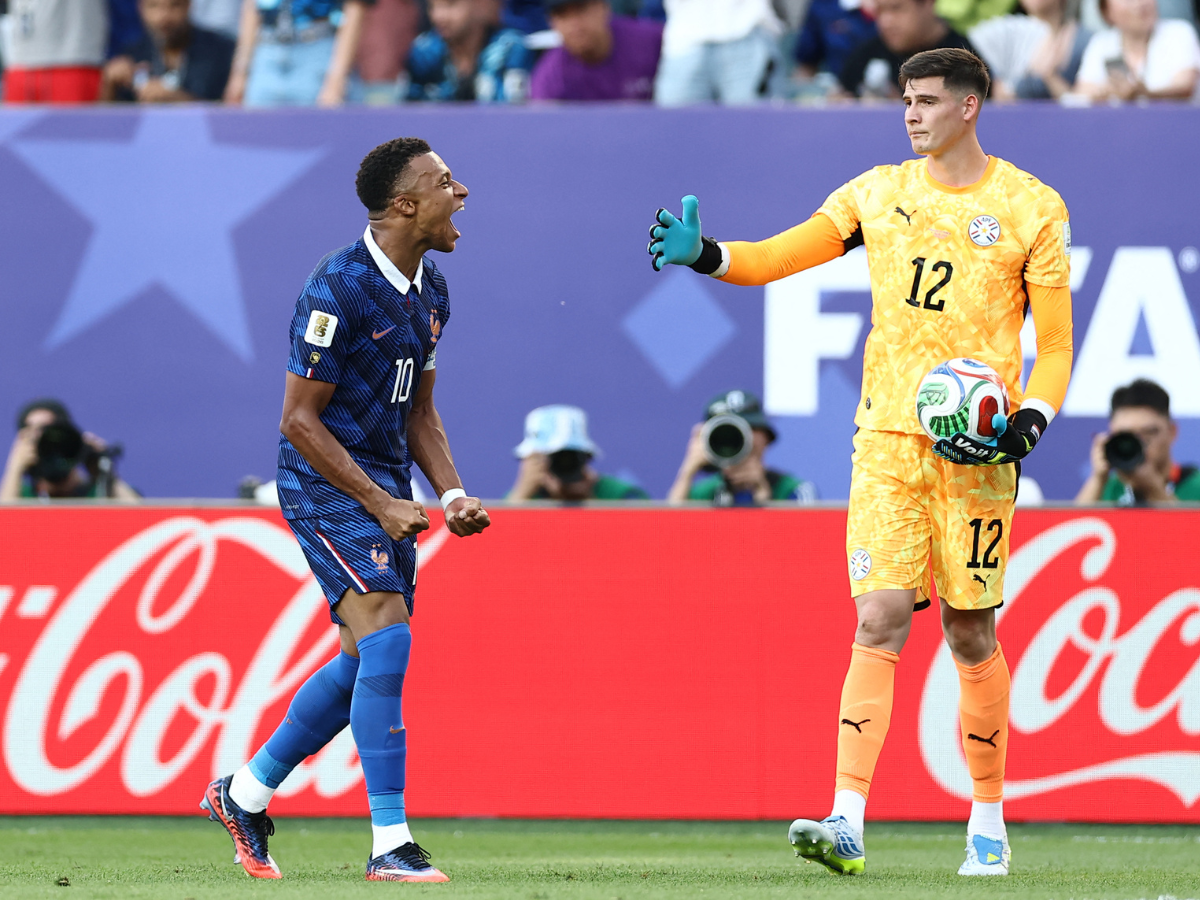
In the next match, against France, Paraguay played in exactly the same way, with plenty of physical contact, strong contests for the ball and 13 fouls in total. The game’s creative statistics closely resembled those from the match against Germany, with clear superiority for the opponent. The difference was that, in defensive terms, Germany used far more physical force against the Paraguayans than France, who — probably correctly — relied on their creativity. The change of opponent and approach provoked a frenzy over Paraguay’s style of play that would have been justified had it existed before that match. The problem is that it is deeply troubling for games, and particularly each team’s performance, to be judged differently according to the opponent when that performance does not change. The rapturous commentary after the “epic” victory and qualification against Germany became the harshest criticism — exceeding all bounds — of the same footballing approach. Having made no impact on the game, the great star of the French team and one of the tournament’s leading figures, Kylian Mbappé, now the highest scorer in World Cup History, adopted a particularly disdainful attitude towards his opponents, going so far as to refuse to shake the opposing goalkeeper’s hand when Gill extended it at the final whistle. A dispassionate view suggests that, for whatever reasons, France wanted to approach the match in the terms in which it was subsequently narrated, with their opponents portrayed in the most contemptuous terms as a collection of players defined by unsporting eccentricity. This continued in the media and the public debate and prompted a confrontation between Mbappé himself and genuinely abhorrent political figures from the land of the Guaraní, who in no sense represent any people anywhere in the world. The point is that this toxic discussion after France’s match against Paraguay would pass the baton to a far greater extreme that came to define the tournament. France went through, and the target of this toxicity was not merely a team that had played a physical game — one of the many we have seen in World Cup History and nowhere near as brutal as Qatar’s performance against Canada, which drew few reactions from the same sensitive, latter-day champions of beautiful football.
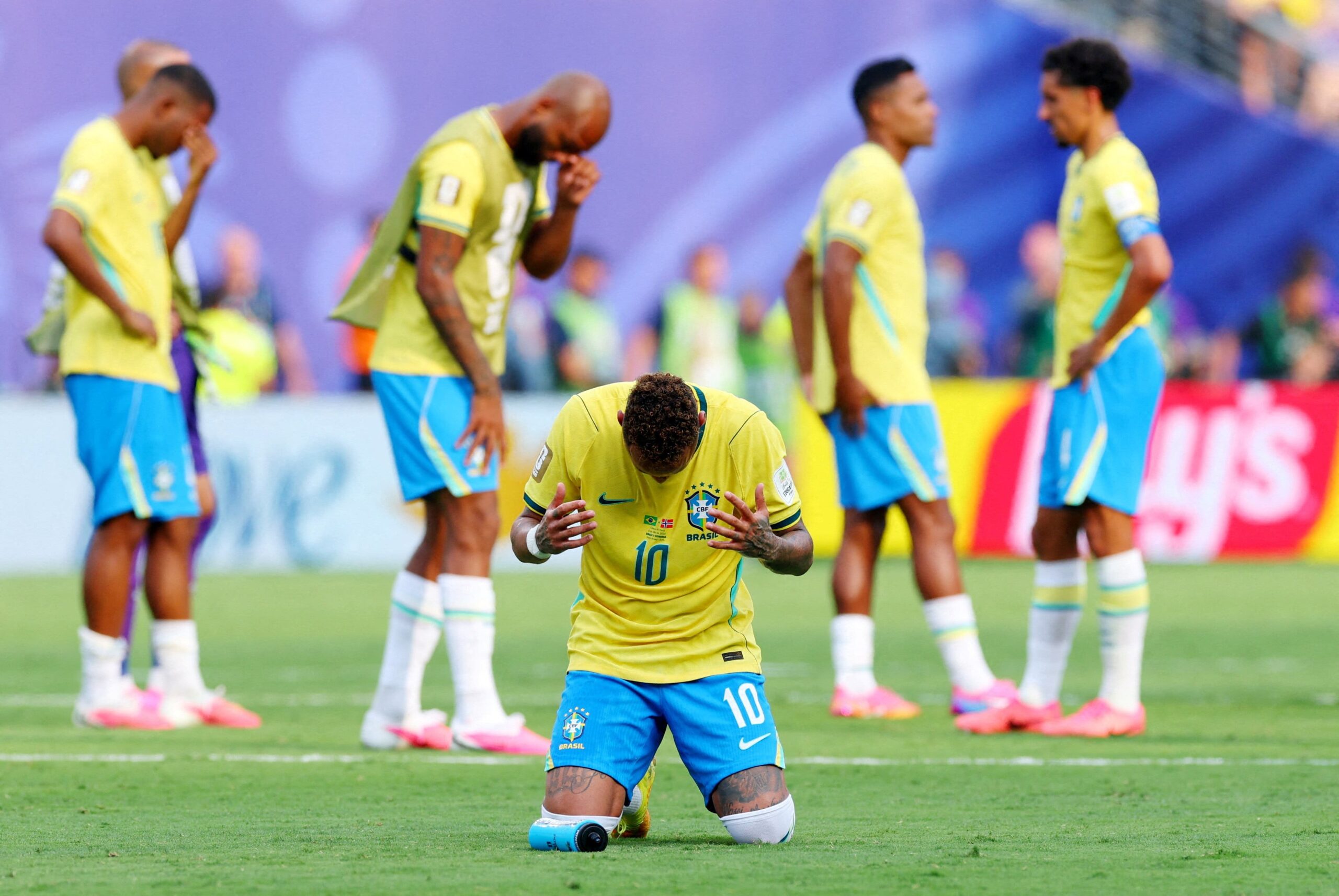
In the same round in which Paraguay were eliminated in this fashion and departed the tournament accompanied by all those harsh comments — far harsher than their fouls — equally harsh and painful was the elimination of the most historic team in World Cup history: five-time champions Brazil, who have lost their identity over the course of decades. Brazil faced Norway in the round of 16, a very good team with a formidable goalscorer, and the greatest problem in their campaign was that they essentially needed to exceed expectations: since the 2002 final, when they won their last trophy, they had never managed to eliminate a European team in the knockout stage of the World Cup. They had even lost the third-place play-off to the Netherlands in 2014, at the World Cup staged on their own soil. Ancelotti was chosen as coach not to instil a new philosophy and forge a new path for Brazilian football — it is sacrilegious, to say the least, to believe that an Italian could achieve that, given the respective football cultures — but to manage the supposed wealth of talent available to the national team. The result was a Brazil side that looked incapable of managing matches against teams with a clear game plan: Morocco, Japan and finally Norway. Even qualification against Japan was difficult, secured only because of that surplus of individual talent, which cannot take a team very far at a World Cup, particularly in a football landscape whose transformation into an industry makes it much more efficient at exploiting mistakes and leaves ever fewer openings for spontaneous individual inspiration to seize. Brazil were eliminated this early in the tournament for the first time since 1990, having been fortunate enough during the previous 20 years not to face European teams before the quarter-finals. The loss of Brazilian football from among the great schools that confront one another at a World Cup will be a major blow to football, and it stems not solely from a particular national weakness but from the broader uneven development of the sport, whose effects began to emerge around the time the team of Ronaldo, Rivaldo, Ronaldinho, Roberto Carlos and Cafú won its last title.
Examining World Cup History, we identified a pivotal point at which a different kind of football development began in Western Europe. In a region that had always possessed a network of powerful clubs and national teams, with a very rich tradition in its conception of the game and the development of the so-called schools of football, two events acted as catalysts, accelerating that development at an exponential rate. The first was the creation and evolution of the Champions League; the second, the liberalisation of international transfers after the so-called Bosman case. Without analysing again how these two events affected world football, we can note that their effects began to become visible in international football roughly a decade later. In 2006 every semi-finalist came from this network, while in the past 20 years, across six tournaments, only three times has a finalist come from outside Europe — specifically from South America, since no team from any other confederation has ever reached a World Cup final. That team was Argentina, whose ranks included Lionel Messi, the greatest footballer of all time. The greatest national team in World Cup History, Brazil, reached the semi-finals only once, suffering the unforgettable 7–1 defeat by Germany.
There is no sign of this trajectory being reversed, which means that the highest level of world football is becoming concentrated — and, unless something changes, will continue to be concentrated — within a very small geographical area. It is very good to watch teams from 48, or in future even 64, countries at a World Cup, but for the protagonists to come increasingly from an ever more restricted geographical area represents a regression for the so-called “World Game”. The siphoning-off of South American talent — players who never play in their homelands and become part of one major European club’s conception of the game — does nothing to help develop the great national schools of football on the other side of the Atlantic, which throughout history formed one pole of the footballing world. The trajectory of Brazil’s national team is unfortunately the best illustration of this course, and the Seleção’s appearance at the North American World Cup appears to signal the death of the World Game — which is equivalent to the death of the World Cup if it contains nothing more than a European tournament. This conclusion is one of the most important to emerge from this competition and is naturally anything but optimistic. Nor is this even a case of European football’s superiority in general, since these same contradictions are vast within the Old Continent as well. The last exception was Greece’s triumph at EURO 2004, just two years after Brazil won that World Cup and before Western Europe’s great counteroffensive. Since then, no team outside that narrow network, even within Europe, has been able to shake its dominance.
One team that does excel within this network, however — and especially in a national-team competition, where it has emerged to reinforce that network beyond club level — is Portugal, who were also eliminated in the round of 16 after an Iberian derby in which Spain dominated every area and phase of the pitch, yet the final score was only 1–0, thanks to a Merino goal in the first minute of stoppage time. The result also meant the elimination of the national team of a player who had been associated with it for 22 years, Cristiano Ronaldo, who saw his already distant dream of winning a World Cup extinguished that day in Dallas. More than for its footballing content, that game is pivotal because it coincided with a change in the form and content of the public and online discussion surrounding the tournament. It came two days after France’s match against Paraguay, which sparked the first fierce confrontation, and one day before Argentina’s match against Egypt, which would become a landmark game for both footballing and non-footballing reasons.
All the hosts were also eliminated in this round. Mexico lost an epic battle to England in the match that brought the World Cup programme at the mythical Azteca to a close; the United States, who had secured the suspension of Folarin Balogun’s one-match ban after an intervention by Trump, appeared powerless to deal with Belgium in their best performance of the tournament; and Canada, who kept the ball, imposed their tempo and were constantly in the opposing half, conceded three goals to an ultra-efficient Morocco, who advanced once again to the quarter-finals.

Egypt were the other African team, the one hoping to achieve against Argentina the breakthrough Cape Verde had not managed. In a match in which the albiceleste were much better than in the previous round and created far more chances, Egypt were superb on the counterattack, scored two goals and had another correctly disallowed, holding an enormous lead until the 78th minute. But at that point, the tactical management and the Pharaohs’ depleted batteries led to one of the most epic comebacks we have seen at a World Cup, while also opening the debate that marked the passage of major football tournaments into the dimensions of the world we inhabit: absolute madness.
The footballing law of the strong
The quarter-finals presented a paradoxical yet wholly predictable imbalance: in each of the four matches, a former world champion and member of the top four in the FIFA rankings faced one of four other teams seeking to exceed expectations. Norway had returned to the World Cup after 28 years, eliminated Brazil and were chasing an almost otherworldly qualification against England. Switzerland were back in the quarter-finals for the first time since the 1954 World Cup on home soil. Belgium, at the end of their most talented generation and eight years after their narrow elimination one step short of the final, were seeking to reach the last four for a third time; Morocco were demonstrating that they now belonged among the powerful footballing nations of the world, having again gone deep into the tournament, this time to nobody’s surprise.
Beyond this division, however, the make-up of the quarter-finals meant that Argentina and Morocco were the only two teams from outside Europe — and specifically that Western European network — to have eliminated more than one European team in World Cup knockout matches. In other words, the geographically restricted network could enjoy a clean sweep of the semi-final places. The first game, between France and Morocco, showed that the African team could do nothing to halt the tricolores’ remarkable run. Morocco sat deep and compressed their lines, hoping to create chances on the counterattack. This was the plan that had worked against Canada, but France’s quality was not the same, and their supremely talented opponents found ways to move the ball even through the narrowest channels. France advanced with a superiority that the final 2–0 scoreline did not fully reflect, having created many good chances; Yassine Bounou made several excellent saves, including from a Mbappé penalty, and Morocco departed without achieving another breakthrough.

In the second quarter-final, Belgium became perhaps the team to cause Spain more difficulty than any other. Despite Spanish superiority in yet another match, measured in the same statistics that generally create the impression of absolute footballing dominance (possession, for example), the match between La Furia Roja and the Red Devils resembled a rodeo. Belgium appeared more to have run out of strength at the end of the match — which also featured, among other things, an incomprehensible substitution of Thibaut Courtois — than to have run out of footballing ideas. Spain did not convince against Belgium that they could find the channels through a packed defence. Comparison with France’s performance against Morocco therefore could not make them favourites for the semi-final that followed.
England had the most difficult path through of all, coming from behind to beat Norway in extra time. Their great protagonist was Jude Bellingham, who exploited Norway’s gaps to the fullest whenever they appeared. Overall, however, the Norwegians looked a much better unit and scored the opening goal even though it did not come from Haaland; they also complained about a …cable that changed the ball’s path before they conceded the fateful second goal. Beyond their footballing quality, however, the Norwegians were also a team that made a broader impression at the World Cup because of the mass presence of their supporters and a dance routine that probably caused more awkwardness than football emotion among people who live in places where the average annual temperature is above zero degrees Celsius. The footballing result, though, was also an outcome of Norwegian football’s recent entry into the Western European elite at club level, with the emergence of a new major force in its domestic competitions, Bodø/Glimt, who have eclipsed the traditional powers Molde and Rosenborg and achieved distinction in European competitions that gives their overwhelmingly Norwegian players valuable top-level experience.

In the final quarter-final, played amid an already tense atmosphere around the debate over the tournament’s character, Switzerland sought to reach the World Cup semi-finals for the first time in their History and seal an entirely European last four. Although Argentina took the lead in the ninth minute through a Mac Allister header, the Swiss ran with the ball, took control of the game and showed themselves capable of threatening Dibu Martínez’s goal. They equalised through Ndoye in the 67th minute, but an incident five minutes later sealed the transition towards a different way of judging football incidents and correcting refereeing errors. Its analysis is especially important because, although this was not the first time the relevant protocol had been applied at the 2026 World Cup, in this quarter-final it had an enormous impact on the outcome. During an incident somewhere around the middle of the pitch, Paredes challenged Embolo for the ball and the Swiss player fell to the ground, appearing to writhe in pain after a hard challenge from his opponent. The Portuguese referee Pinheiro showed Paredes a yellow card for the hard foul. That decision triggered VAR’s responsibility to check whether everything had been handled correctly and whether Paredes should indeed have been booked. The relevant footage, however, showed that there had been no contact whatsoever between Paredes and Embolo, the Swiss player acting in an entirely theatrical manner and pretending there had been a violent collision. Under the laws of the game, this action warrants a yellow card. Embolo already had one for a hard challenge on Paredes, and Switzerland were consequently reduced to ten men for the remainder of the match. Two issues in this incident are worth noting. The first is that the on-field refereeing error went against Argentina, yet the referee’s eagerness not only to award a foul but also to show a yellow card was effectively what activated a process that ultimately punished Switzerland. The second is that numerous comments expressed outrage over Embolo’s yellow card because the incident occurred far from Argentina’s penalty area. Yet, given the sequence of events, only two decisions were possible: either Paredes’s yellow card stood and Switzerland were awarded another free kick, or Embolo was sent off for a second yellow. Despite the fact that what each player had done in the incident was clear, more than a few people openly expressed the view that it would have been better for the decision made before the VAR intervention to stand. Argentina failed to score against ten-man Switzerland in normal time, but with two goals from Julian Alvarez and Lautaro Martínez, Switzerland left room for a non-European team in the tournament’s last four.
The battles of the giants
The tournament thus reached a historic point, an unprecedented reality in which the four theoretically strongest teams, as defined before it began, had all reached the semi-finals. This outcome was not entirely accidental: the draw had been arranged so that, if these four teams won their groups, they would not meet one another before this point. With first in the world rankings meeting fourth and second facing third, the World Cup resembled the final stages of championships in other sports which, however, enjoy particular acceptance and popularity in the country hosting the football tournament. Two historic pairings, for different reasons, made up perhaps the most interesting semi-final line-up in decades.
Viewed through football History, the two pairings had distinct characteristics of their own. On one side, Spain and France represented the development of European football in the 21st century. Spain, to which the school of total football had been transmitted and almost entirely relocated from the Netherlands — initially with the arrival of Rinus Michels, then later Cruyff and others — faced the country that in recent decades had become the greatest factory for producing footballing talent, based on the assimilation of a cultural mosaic: the real society of its cities. To reach this point, both countries had to break historical bonds: Spain, those of its ethnic fragmentation; France, those preventing the acceptance of its population’s true cultural identity. In Spain, the centre of footballing development, at least in terms of its approach and ideological identity, shifted from Madrid to Catalonia, a development that had seemed impossible when Cruyff moved to Barcelona to play for the blaugrana and, through his long journey with the club, effectively helped create a footballing reflection of Catalonia’s distinctive communal consciousness. Yet this was the development that transformed Spain from a peripheral power into the locomotive of European football, bringing two European Championships and one World Cup in the first eruption of its new footballing identity, and already another European title in this second period of success. Across from them, France were the European team who had performed better than any other at the most recent global tournaments: winners in 2018, beaten on penalties in the 2022 final and the leading favourites in 2026. On their bench since 2012, Didier Deschamps had become their supreme reformer, his name associated with every great success in the country’s football.

The two teams showed different faces during the World Cup. Spain appeared to relapse into the aesthetically ugly game of excessive possession which, though it allowed them to dominate every match, could not provide unforgettable moments of footballing eruption. They managed to win most games by slender margins, yet it never seemed that their opponents deserved victory more. Founded on outstanding defensive work, they had conceded only one goal by the semi-finals — and indeed did not concede again through the end of the tournament. They were by far the best-drilled team, a quality reinforced by the fact that they were built around a large core from the same club, Barcelona, while the overwhelming majority of the squad played in the same Spanish league and a smaller proportion for British clubs — though in an era when English club football, too, had elevated this same Spanish footballing logic above all else.
France, on the other hand, appeared to have the greatest range of attacking solutions, scored beautiful goals and produced wonderful patterns through a supremely talented midfield and forward line. For these reasons, as well as their recent World Cup experience, they were regarded as strong favourites to win the title. Before the teams met, France appeared favourites for this semi-final too, both because of their quality and because no side they had encountered during the tournament had looked capable of challenging them. The only one to offer determined resistance, Paraguay, had done so with a physical and heavily defensive game, not by attempting to impose creative superiority. The same atmosphere could be detected in the French statements, but there was one element nobody could ignore. In the two most recent meetings between the teams, in the semi-finals of EURO 2024 and the 2025 Nations League, Spain had been the side to eliminate France. It was highly risky to consider France such strong favourites in a match in which the teams were appearing with relatively similar line-ups to those of previous years. But there was another, still more significant element for France at this tournament: from its very beginning, all the discussion inside the country, in the media, in every attempt to approach the course of the World Cup, had had one objective — revenge on Argentina for the lost 2022 World Cup. This obsessive French focus on the albiceleste perhaps prevented them from seeing clearly that, in the semi-final, they faced a team with the quality to place enormous obstacles in their path to the final. The outcome was clear on the pitch. For the first time at the World Cup, the French appeared “unprepared” and, from the moment Digne fouled Yamal and gave Oyarzabal the chance to open the scoring from the penalty spot, at no point did they look capable of turning the situation around. The Spaniards held the lead and kept the ball, then scored another goal through Pedro Porro to build a gap that, given the pattern of the game, would be difficult to overturn. Spain read the match better. They did not compress their defensive lines into narrow channels that would allow the short-passing game France had shown they could execute so beautifully. They cut their opponents in two, always leaving their midfield and forward line far enough up the pitch to create dangerous situations and score. Spain were not playing better football than France, but they adhered more faithfully to footballing logic, and the difference in quality and individual talent was not enough to eclipse that reality. La Roja therefore advanced to the final as the undisputed favourites, while also winning a symbolic duel by emerging victorious from a third consecutive meeting with France, in a European rivalry acquiring the hallmarks of a classic.
If the first semi-final was marked by the novelty of a new, emerging European rivalry, the second was one of the most classic duels in world football. Its roots lie in the 19th century, in 1893, when Scots — the first great rivals of the English both in international matches and in their tactical interpretation of the sport — founded Argentina’s national football association. It echoes 1913, when Racing became the first wholly Argentine team to win the championship in its country, opening the way to an understanding of football as a national cultural element of its criollo society. It echoes 1966, the teams’ first World Cup meeting, in a year when England, playing at home, went all the way to the final and lifted the trophy. It echoes a war, in 1982, which pitted against one another a dictatorial government, the apotheosis of murderous British liberalism and the insidious role of French diplomacy, while, as always, the peoples of the world were the victims — in this case, the people of Argentina. It echoes 1986, the most symbolic and the most legendary goals ever scored at a World Cup — both by the same man, in the same match. It echoes every duel that followed, all of them forever seeing this History behind them.

In the epic game in Atlanta, the most historic match of this year’s World Cup, which provided moments and a narrative to be printed in the great book of football history, England had to achieve a breakthrough of their own against one of the few opponents to have exposed a historical weakness in them — one that also translates into a psychological burden — and with a goal they had not achieved for 60 years before them: reaching a final. The English had shown the better form in their circulation of the ball, the diversity of their attacking threats and the condition of their best players, yet they had struggled in almost every match. They had convinced only in the second half against Croatia, but had difficulties against Ghana, Panama, DR Congo and Mexico — in a match, of course, shaped by special conditions at the Azteca — and naturally against a valiant Norway. And now they faced a team that had shown itself capable of overturning adverse situations just when it appeared entirely unable to respond. How England and their coach, Thomas Tuchel, “forgot” that detail is extraordinarily interesting. Their approach to the game, surrendering even the final yards in defence and placing Argentina within shooting range time after time despite raising a defensive wall, was a useful addition to the script the albiceleste continued to follow in producing heroic comebacks. And if, under normal circumstances, this defeat might have provoked enormous debate in England and tension over the national team’s future, the wider myth-making that had prevailed helped relegate any domestic criticism to the background and made it disappear very quickly.
In the third-place play-off, which the French and English players had said they did not want to play, what we essentially witnessed was a parody of football, a friendly far removed from the intensity of a World Cup. The only paradox was that the tournament’s statistics continued to count, thereby making Kylian Mbappé the leading scorer in the entire History of the World Cup. This match, won through Bellingham’s quality just when France appeared capable of overturning a 4–0 half-time deficit, was also the last for Didier Deschamps, an enormous figure who created a great tradition for France, one it is still too soon to judge in its entirety.
In the great final in New York, Spain reproduced their footballing approach to a superlative degree. They suffocated Argentina’s game, completed around 850 passes across the length and breadth of the pitch, immediately regained possession, made Messi disappear despite his attempts to play from numerous different positions and, with this outstanding performance across every statistical category — attempting 22 shots to their opponents’ zero over the 90 minutes — fully and thoroughly deserved to win the title through Ferran Torres’s goal in the 107th minute, in the second half of extra time, by which point Argentina were playing with ten men following Enzo Fernandez’s dismissal at the end of normal time. More than a few people rushed to discuss the difference between the teams’ performances and describe the outcome as “football justice”. The result was fair — but this was a World Cup final, not an academy, amateur or veterans’ tournament. In these great competitions, regardless of whether someone deserves the title or not (and usually they do), what we measure when trying to interpret football’s historical evolution is the content, far more than the result. Countless maxims from football’s great shapers, including Cruyff, Sacchi and others, could be added here, but there are so many such references that their sheer number could never be enough to convince those who do not wish to be convinced.
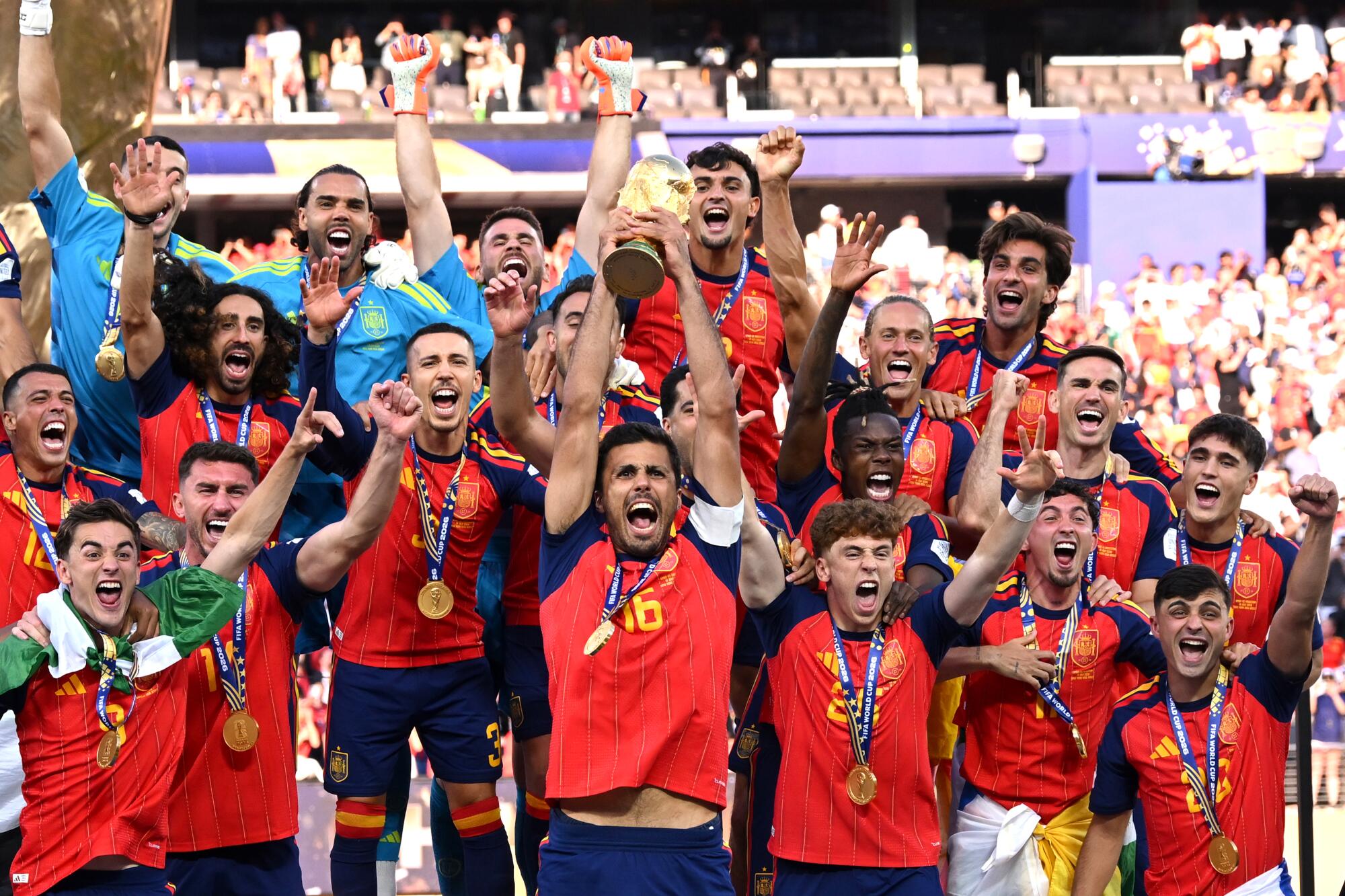
Spain’s victory cannot be regarded as a step forward for the aesthetics of world football. A qualification is necessary: no other team proposed a better approach, one that would allow us to consider any of the other tactical conceptions presented to be the future or the hope of the game — and that is perhaps a central negative conclusion from the 2026 World Cup. Football with no focus whatsoever on the vertical pass, with mechanical movements that, despite being executed to perfection, create neither intensity nor any development of the elements that appear as inspiration within the sport, cannot be what we dream of after decades spent constructing different systems and more fluid approaches, marrying different schools in the service of thrilling football. Although we see such an outcome at club level in Europe, with Luis Enrique’s Paris Saint-Germain an example of the evolution of ideas from previous decades, the Spain of the tireless and honest workman de la Fuente did not possess these characteristics. Here, of course, there is also a major question as to whether football’s evolution can now be expressed in international matches, or whether it is the exclusive privilege of clubs with almost 100 games per season and constant participation in competitions against familiar opponents, all of whom are developing simultaneously. The answers are neither singular nor easy — but if the “miracle” of a new footballing inspiration appearing at a World Cup can no longer occur, that means that, for one more reason beyond the geographical restriction of the football elite, the World Cup is dead. We all presumably hope that this is not true.
Argentina — the big story of the World Cup
Beyond recording football results, however, and sketching the game more broadly in order to compose the global picture it reveals at every World Cup, the story of the tournament is never limited to what happens on the pitch. The entire History of the World Cup, from the process of imagining and founding the competition through its passage across different eras — of wars, of apparently perpetual peace, of commercialisation, of oligarchy — is a History that expands to become political, cultural, social and even diplomatic. The 2026 World Cup could not be an exception to this absolute rule, and anyone attempting to tell its story by these same criteria must examine and narrate what happened to one team, thanks to one team, around one team and on account of one team’s progress. The true story of the 2026 World Cup is Argentina’s campaign.

Because of the special emotional relationship I have with the culture and football of this country, I tried hard to place the phenomena surrounding its national team’s campaign in their true proportions. This created the risk of a hasty underestimation of the very events and phenomena reflected in them. But if one wishes to examine the history of the present dispassionately, and for any record of it to have value as a legacy, one cannot attempt the telling without placing an honest and sincere perspective foremost. It was therefore necessary to undertake a careful review of all the events that will be recorded in History alongside the 2026 World Cup, so as to confirm that Argentina were indeed at its centre.
There is nothing prohibitive or unprecedented about a team that did not win the title being the central subject of the tournament. When we refer to the 1954 World Cup, won by West Germany, the great story is the legendary Hungarian side, the Aranycsapat, who lost unexpectedly in the final. When we look back at the 1974 tournament, again won by West Germany, the focus is the Netherlands and their totaalvoetbal, who also lost in the final. In 2026 Argentina, the team defeated in the final, do not occupy centre stage because of the footballing innovation they presented, unlike those two earlier sides, but for three other reasons. The first is the presence of Lionel Messi and the way a team is built to the specifications of one footballer, when he is the greatest of all time, to challenge for a tournament in defiance of rational tactical approaches. The second is the way Argentina won all their knockout matches, something that for purely footballing reasons will pass into History. The third is the entire discussion that unfolded around the tournament as it was played, which focused to an extreme degree almost exclusively on Argentina. A ferociously organised campaign achieved what every Argentine could have wished for: it made their country the centre of the global football conversation, its point of reference. Even though this campaign contained toxicity and hatred towards Argentina, it effectively placed the albiceleste under the spotlight at this tournament, perhaps overshadowing other teams that might have played leading roles. Football is the world’s most popular sport because everything that happens on the pitch has value when it can produce stories that people will tell for years. Well, the only leading team to leave the stadiums of North America with stories like these is the albiceleste.

Before the stories that unfolded after the World Cup began on 11 June, however, it is important to focus on the foundations that to a very great extent shaped the character and mettle of this Argentine team. The so-called Scaloneta is by far the most beloved national team in Argentina’s History. We are speaking of a country with seven appearances in World Cup finals, including at the inaugural tournament, three World Cups, and two of the greatest footballers of all time sharing its nationality; for one particular group of players to be the most loved in the country’s History is an enormous thing. Irrespective of this team’s results, Argentines felt joy simply at seeing them appear, before even knowing how they would play. They felt fortunate to be able to live through their moments, regardless of the results. This is an enormous psychological factor, especially in international tournaments, which are shorter than league championships and far more intense. It is perhaps a decisive factor in this team’s ability, often by the narrowest of margins, to win every competition it entered from 2021 onwards: two Copas América, one World Cup and a Finalissima of lesser significance but nonetheless counted as a title. Beyond the players, the same esteem extends to its coaching team, made up of major figures who wore the albiceleste and now surround Lionel Scaloni. These characteristics were also one reason continuity was preferred, with 17 players who had won the 2022 World Cup selected even though this worked against the squad’s average age. This unique relationship between a people and their national team has very few counterparts in History, all of them a distinct chapter deserving study in their own right.
The presence of Lionel Messi at a World Cup at the age of 39 — something very difficult to imagine on 18 December 2022, when he lifted the trophy in Lusail — made this bond stronger still. In a country thirsty for football mythology, the now confirmed greatest player of all time taking part at this age, with these performances in every match, made everyone’s relationship with the national team more than a matter of support: it was emotional. A series of factors, whether or not they became known, compelled these already beloved footballers to attempt feats beyond their limits in every match — with Messi’s presence itself such a feat — and the extreme emotion went beyond every boundary that an outside, occasional observer could understand. This is why, with every goal, in every match and after every win, those emotions were expressed primarily through tears. Nobody cried because they were sad; everyone cried because the mind understood that what they were living through and achieving went beyond what reason can contain within joy and excitement. Under these conditions, the 2026 World Cup was unique and will remain unforgettable for those who formed a bond with this Argentina team. The stories of that bond will be written in future, in the books where the most beautiful football stories are recorded, stories that do not always end in a title — otherwise they would be fairy tales.

This turn in the History of a team and a footballer who in 2016 appeared to have reached their nadir, emptied of the emotional reserves required to leave any mark on the history of international football, effectively protected everyone involved from different and toxic narratives, regardless of the team’s results at the greatest player’s final World Cup. It was this bond, this historical turn, that was targeted by an organised campaign, involving both anonymous and named participants, in an effort to dismantle it. It is a happy fact that football did not do them the favour — not even in the final! Who stood to gain from such an attack on one of football’s most beautiful stories will either be shown by History or remain forever forgotten; there is no need to develop theories. There are, however, certain facts that cannot be ignored. One is Cristiano Ronaldo’s perpetual and foolish imaginary rivalry — in every statement, he himself showed a need to be compared with Lionel Messi — a supposed conflict that lasted many years, with sworn supporters of a footballer (there is nothing more anti-football than supporting an individual in a team sport) needing to promote, through the media and other channels of communication, the arguments that fed this supposed rivalry. Another element is Argentina’s constant and unique presence as a counterweight to European football in global tournaments, as the only team from outside Europe to have eliminated eight European sides at the World Cup from 2006 to the present, followed by Morocco with three, while Costa Rica, the United States, Paraguay and Uruguay have each achieved it once. These two elements might have been mentioned arbitrarily had they not been connected to specific communications manoeuvres during the World Cup whose authors are known and named. Behind the named manoeuvres, however, came a much more extreme campaign by generally anonymous actors on social media, whose organisation is difficult to prove and document.
Argentina began their campaign in a relatively easy group, against Algeria, Austria and Jordan. Their preparations had featured no testing matches, making it extremely difficult to judge the standard of football this team could play. The opening game against Algeria was not triumphant, except for Messi, whose individual hat-trick quite literally drove mad anyone expecting him to play a middling role in this tournament. It was the first blow suggesting that his footballing genius was still capable of producing another miracle and, still more, that his team had not been programmed to play wonderful football but to serve his genius, making predictions about the albiceleste’s progress very difficult. The demolition campaign therefore began early. Although this opening match in the Albiceleste’s campaign began at a very difficult hour for Western Europe, on the morning of 17 June social media was full of an image in which the studs of Messi’s boot made contact with Aïssa Mandi’s calf. The foul may have had no effect on the game beyond Messi remaining on the pitch, but the incident was discussed as an unheard-of scandal. The photograph was repeated again and again, and it became apparent that the discussion surrounding the World Cup would not remain within healthy bounds. Perhaps the fact that Messi was threatening to become the highest scorer in World Cup History somehow had to be overshadowed. In the analysis we conducted after the World Cup ended, we found at least two more similar incidents that were not punished even with a yellow card and, although we counted them as refereeing errors, found nothing resembling the intensity of the discussion that followed them. It was later evidence supporting an initial view that all this myth-making was not an innocent affair.

In the second game, against Austria, Messi scored both of his team’s goals, taking his tally to five at the World Cup and moving to the top of the all-time scoring chart. In the match against Jordan, he came on as a substitute and scored again. Messi had scored six goals in three games, a total that in many tournaments had been enough to secure a player the golden boot. The opponents were not giants, but players who had scored so many goals had rarely done so only against powerful teams. In any event, this individual distinction perhaps interested only those — many and extremely vocal, of course — who needed personally to defend a footballer who failed to score against DR Congo. Who can they possibly convince that they love football?
The important point was that, despite Argentina not playing good football, supporters of the Scaloneta arrived at the North American stadiums in ever greater numbers, wanting to live the historic moments surrounding this team and their leader, Messi. Much could be thought about their approach to the game, which produced extremely slow movement on the pitch, especially when the Argentines had the ball at their feet, and could jokingly be compared to the Germany–Greece match created by Monty Python in 1972.
In their first knockout match, Argentina faced Cape Verde, the great surprise of their group, who had drawn with Spain and eliminated Uruguay. Given the shape of the bracket, Argentina appeared to have an easy task through to the quarter-finals and a relatively easy one through to the semi-finals, where all the world’s leading teams were expected to be. Yet in their match against the world champions, Cape Verde showed that they should be regarded as anything but easy opponents. In conditions that made football extremely difficult, with high temperatures and high humidity, where hydration breaks really were needed, Argentina made the mistake at numerous points of treating their opponents with arrogance. Cape Verde, however, were playing the match of their lives. They managed to equalise once in the second half and did so again in extra time through an outstanding goal by Sidny Lopes Cabral, one of the most beautiful we have seen at a World Cup. The discussion that followed this game did not bear the marks of extreme toxicity, perhaps because this particular Argentina team did not look like the terrifying prospect for the leading sides that they had been in Qatar, and Messi’s presence could not magically resolve all their weaknesses.
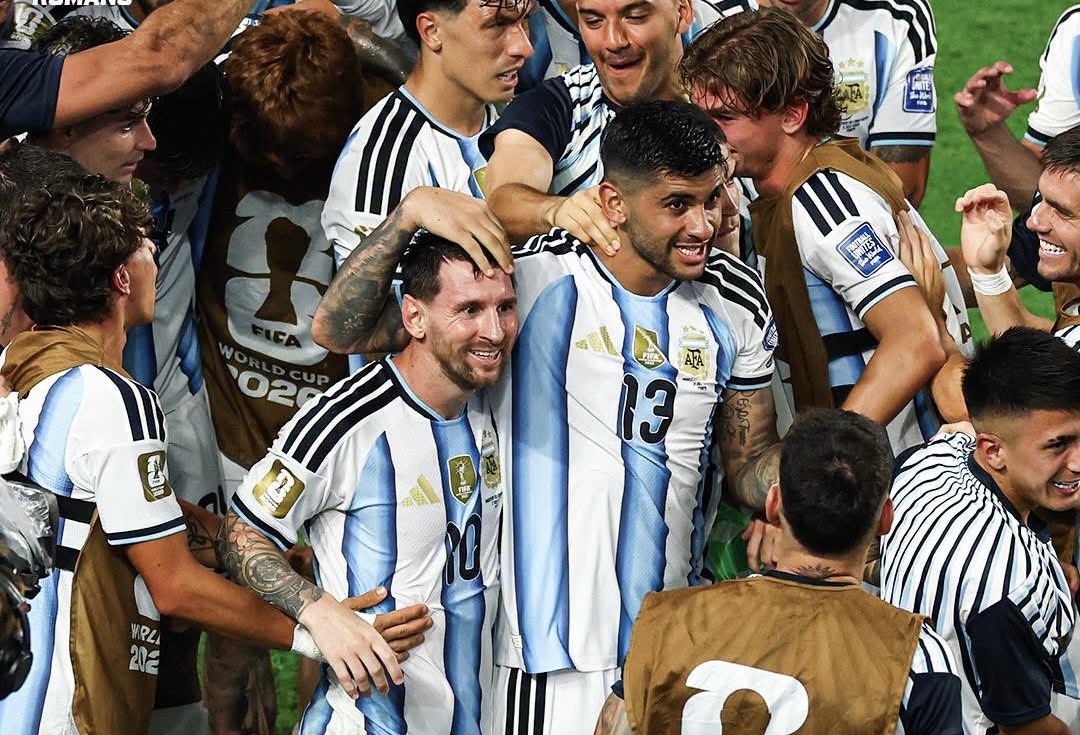
But in the round of “16”, Portugal were eliminated by Spain, while in France’s match against Paraguay the Guaraní played in their own “Argentine” fashion, capable of creating difficult situations for any team in the tournament. The extreme discussion that began after that match, centred on unsporting challenges — and naturally bore no relation to the almost non-existent discussion of Qatar’s performance against Canada — included stories about refereeing that protected teams who did not play beautiful football. Two days after that match, Argentina watched referee Letexier punish almost every challenge their players made against Egypt, in a game in which the Albiceleste had both control and possession and created a great many chances, though they did not become goals. Egypt went 2–0 ahead and also scored another goal, shortly before their second, from a move that began with a foul on Lisandro Martínez; the goal was therefore disallowed after a VAR review. Argentina, with their backs against the wall, sprang into action from the 78th minute onwards and, with Messi himself running riot, providing an assist and scoring a goal, there was every reason for the toxic discussion to reopen. The game did not need to go to extra time: in stoppage time, Lautaro Martinez held the ball, weighed it up, waited for Enzo Fernandez moving down the left wing and delivered a masterful cross, which Enzo met with a body movement worthy of becoming a poster on bedroom walls to complete the great comeback. After a difficult match of exceptional footballing beauty against Cape Verde, Argentina — who refused to lose to any opponent — showed that within 15 minutes they could overturn any scoreline, even when their strength and energy appeared to be gone. The footballing thought was always there, however, and that match against Egypt began a sequence of wonderful Argentine goals that deserve to be included among the tournament’s most beautiful passages of play.
What happened after that game defies description. With Egypt coach Hossam Hassan, who spoke of a rigged tournament, and the statements of Egyptian forward Zico also bearing responsibility, the floodgates opened for ordinary lies to spread: that the tournament was rigged, that FIFA was corrupt, that VAR played a suspicious role in supporting Argentina, and so on. As if that were not enough, the presence of an Israeli flag beside the exit from the pitch, held by a person whose nationality naturally nobody knew but who was there to provoke the Egyptian coach after he had dedicated the previous qualification to the people of Palestine, opened another enormous discussion about Argentines and Messi himself supporting genocide. The twofold attack, initially concerning the refereeing and then accompanied by an attack on the Argentine people, who were labelled “pro-Zionist” and “racist”, could sustain this propaganda indefinitely, even after the first explosion of fake news, once the claims concerning the refereeing decisions lost their force because the whole world could see the footage relevant to the VAR decisions.

It is telling that, from that match onwards, a series of celebrities — for some of whom nobody knows their precise profession — appeared to become conduits for this propaganda line. Jimmy Kimmel, the ABC presenter who had clashed with Trump in the past and whose late-night programme had been temporarily suspended, found an opportunity to speak about Trump having rigged the tournament for his friend Milei. Jimmy Kimmel may never before have spoken about football in his life, may never have watched football, may not even have watched that Argentina–Egypt game, but he had cause to express this anything-but-substantiated opinion before hundreds of millions of viewers. Trevor Noah, who began a series of live watch-alongs during the World Cup matches and wore the shirt of Argentina’s opponents for every one of their games, repeated the same pattern. A series of other famous people and unknown but highly influential online accounts took the same line. Within a few days, the whole world had heard that Argentina was a country where racism reigned supreme and the genocide of the Palestinians was supported.
Little importance was attached to bringing the historical truth to light, both on social media and through the publication of relevant academic studies concerning the place of Afro-Argentines in the development of South American society, the differences between Argentina and its neighbouring countries, and the true extent of the racism that exists there too, as it unfortunately does in every country on the planet. Few people, perhaps none, learnt about Bernardino Rivadavia, the country’s first president, who was of African descent. Nobody learnt the name of Bernardo de Monteagudo, a hero of the anti-colonial liberation struggle who was born in Tucumán to parents who had arrived as African slaves. Very few heard that, unlike the societies of Western Europe and the United States of America, Argentina never had racial segregation. An article from a major North American media outlet, analysing the reasons there were no black footballers in the Argentina national team, which had first appeared in 2022, resurfaced and once again made an impact; naturally, the analysis explaining that the Afro-Argentine population has become less distinct over the centuries simply because Argentines of exclusively African descent mixed with other ethnic groups was not heard on a mass scale. Still fewer people learnt about the mass participation of former African slaves in the struggle for independence from Spain. A photograph, a manipulated video, an extreme or distorted statement, always travels faster and reaches more people than organised, documented knowledge.

For the purposes of the same propaganda, ordinary lies began to circulate, while statements that had never been made were attributed to former football stars and great coaches, making them all appear to be attacking FIFA, Argentina and Messi. Photographs of Messi from his 2013 trip to Jerusalem appeared even though the same images also included his Barcelona team-mates, creating problems later, when the corresponding narrative had to change before the final. For some reason, Argentina had to become a red rag to the rest of the world, by any means necessary. It is telling that very little of this attack focused on the country’s far-right president, Javier Milei, even though that might ostensibly have served the same purpose. Milei’s absence from the crosshairs of all this propaganda plainly raises questions about its ideological basis.
In Argentina, however, all these publications had precisely the opposite effect. The attacks on the country and its people, the indefensible personal attacks on the players, made the bond between Argentines and the Scaloneta stronger still. The country’s football team no longer represented football alone; its very presence was a source of honour for Argentines, who, against a backdrop of social conflict, created a universal wave of support for their team, because those fighting austerity and the anti-popular assault in Argentina were already equipped to understand where all this propaganda came from: it wished them no good, nor did it operate in defence of their class interests.
The game against Switzerland was Argentina’s first knockout match against a European team. Argentina opened the scoring and tried to protect the result but could not; Embolo’s childish act, however, condemned his team, who ultimately could not hold out, and Argentina prevailed in extra time. The procession of beautiful goals continued, with Julian Alvarez scoring one similar to the goal Argentina had conceded to Sidny Lopes Cabral roughly a week earlier. For a third consecutive game, Argentina showed that they might not play spectacular football, but they could qualify under any circumstances, score in many different ways, find spectacular goals through the talent of their players, and rely on Messi to continue as a decisive factor. He could move around the pitch, reading the evolution of the game, giving his team an advantage that seemed impossible for anyone who understood football less well than he did — which is to say, the whole of humanity — to find.

Naturally, this game was followed by a campaign resembling the previous one: first, criticism of the VAR decision, intended to create impressions chiefly among people who neither know nor care to learn the laws and any changes to them — because at a World Cup many people take only an occasional interest in football but do not hesitate to draw wider conclusions about the world, politics and society through something they do not understand — and then the return of the classic pattern about far-right, racist Argentina, in a campaign that ever more “figures” from the United States (a country that has presumably never known racism) rushed to join. But the next opponent was Argentina’s most historic footballing rival, England, in a match that, under this entire climate, plainly could not be confined to its purely footballing content. This was also the moment for the Argentines to make their own political statement, whose significance under the country’s present political conditions perhaps few people understand.
One of the fundamental events in the modern history and relations of the two countries, England and Argentina, was the 1982 war in the Malvinas Islands. It was an ambitious move by a dictatorial regime that felt the ground shaking beneath it and was very close to being overthrown, seeking an issue that would create national unity. Comparable examples can be found in other countries. The particular feature of the Malvinas, however, is that they represent a clear survival of colonial rule, a remnant of the British Empire, in the South Atlantic. This means that, although the Argentine junta’s aim was to protect its own power, there is a specific basis on which to define the status of the islands, which remain occupied by the United Kingdom and inhabited by British settlers who, in a sham referendum several years ago (after not a single Argentine remained), voted to remain under British sovereignty. In that war, the junta spilled the blood of young soldiers who went to sacrifice themselves for their homeland, but instead, as happens in many cases, were sacrificed for the sake of an insane plan that reached an impasse when the French government disabled the French aircraft it had sold to Argentina’s dictatorial regime. And if anyone believes this conflict between the Argentine junta and Margaret Thatcher’s regime is enough to make every subject of the United Kingdom defend the “national interest”, they would probably have been shocked to see Scottish and Welsh cities, towns and villages filled with Argentine flags before the World Cup semi-final.
As for the players and coaching staff, before the match they said the rivalry was purely footballing, as was natural and as happens in every comparable case. But who could ignore that the Argentines’ central song for this World Cup included the lines “for the Malvinas, for Diego, for Leo’s last one”, a song the players themselves sang in the dressing room after every epic qualification? The country’s president, Javier Milei, had banned — not through law, but through an appeal — any mention of the Malvinas, seeking to maintain friendly relations with Great Britain and especially the United States during a period of tense international relations and imperialist conflicts. But the Argentine people had no desire to separate their history from their representation by a national team that had always represented their entire culture and the nation’s self-determination, on a footballing level and symbolically on a political one. The strange thing in all this is that none of those ostensible champions of anti-racism could find the same inspiration to speak about this issue, a living history of colonialism.
The match between the two teams in Atlanta was by far the most intense of the tournament, even before it began. The images of the players before they entered the pitch resembled illustrations of people going into battle, not into a placid football match. The atmosphere inside the stadium was tense as well, with God Save the King effectively unable to reach television sets as sound through the Argentines’ anti-English chants. Videos emerged that naturally castigated this behaviour too, as though football stands were obliged to respect protocols in the face of colonialism and conform to the commercial rules governing how the sport is presented. As though it were better to pretend that there is “peace and love” while our “friends” drop bombs on half the planet, as FIFA does, than to proclaim our opposition to colonial and imperialist designs. “Ah, strength comes from fists, not kindly faces,” Nazım Hikmet wrote of Chile’s Unidad Popular.
The players, of course, were not representatives of people’s committees or revolutionary trade unions, and so the task they themselves had set was to win on the pitch, knowing that no football victory could change the just demand concerning national sovereignty, nor could that sovereignty be decided by the result of a football match, as the veterans of the Malvinas War wrote in a statement. On the pitch, what Argentina showed — and what many wanted to credit solely to England’s coach — was that they were capable of scoring in any way, from any position and through any magical move, even with a 1.75-metre footballer scoring a header among six giants after a cross from Messi’s right foot.

The same scene repeated itself: another epic comeback, this time against an indisputably strong opponent; the ability to find solutions by any means; the Argentines’ absolute refusal to lose. It sent the World Cup’s “anti-vaccination” movement into a frenzy. This situation could not be allowed to continue under any circumstances; every means had to be employed to create problems for the team itself, if possible. But how could they achieve that, given the extraordinary bond between the players, the team and the entire Argentine people?
At the end of the match, the Argentine players celebrated victory with the supporters, taking a banner from the stands and raising it on the pitch, one that Milei himself certainly would not have wanted to see there. The banner read “LAS MALVINAS SON ARGENTINAS” — the Malvinas are Argentine — and became part of the imagery of World Cup mythology. This banner placed the players of this team irreversibly at the very summit of Argentine hearts and esteem. A campaign then began in the English tabloids calling for the work visas of Argentines playing for English teams to be revoked; their writers decided for themselves what punishment should be imposed on the players and the Argentina team, and naturally the same influencers who cared so very deeply about democratic rights and individual liberties, genocide and other issues took part in this whole climate. Naturally, this campaign found fertile ground in Great Britain, where an anti-immigrant, racist and xenophobic movement continues to grow, with developments appearing ominous.

Outside Britain, however, Argentina’s appearance against Spain in the tournament final revived the story of Argentines and Messi himself supposedly supporting the genocide of the Palestinian people. Exploiting the position of Spain’s social-democratic government (and naturally none of its previous — or probably subsequent — governments), the narrative attempted to present the World Cup final as a battle between two teams, one playing for Palestine and the other for Israel. Some media outlets took photographs from a match played in Gaza by Palestinians who had lost limbs in Israeli attacks, half of them wearing Spain shirts and the other half Argentina shirts, and completely concealed the presence of the latter, or presented the event as a “performance” of support for Spain. One of the outlets to publish a long article developing the same rhetoric, however, was The Times of Israel website, revealing in practice that this propaganda served the designs of the state of Israel, which is trying to prove that its actions enjoy the acceptance of other peoples.
And while all this concerned ridiculous conspiracy theories, the build-up to the final perhaps revealed the greatest conflict of our era in World Football. At present, FIFA is trying to strengthen global competitions and expand the presence of countries in its most valuable asset, the World Cup, in order to retain its position of power in the governance of football across the planet. Yet the frenzied development of European football, itself supported by the uneven growth of club competitions and the creation of permanent elites, has given UEFA particular power. UEFA is looking for ways even to issue threats over various elements of FIFA’s plans when they do not serve the interests of these clubs. It is telling — and it is a fact — that the President of the Council of Europe, not a football official, was the first to announce that moves would be planned to prevent the World Cup expanding into a 64-team tournament, even if in practical terms this adds no matches to the calendar or to footballers’ legs.
In the great struggle between two camps, neither of which football supporters have any need to back, FIFA and its president, Infantino, have found allies in the Americas: political allies such as US President Trump, but also ostensibly footballing ones, with Argentina’s presence in the global elite instrumentalised for their purposes. For this reason, extensive investigations are under way into FIFA’s relationship with the AFA, the Argentine Football Association. These investigations are an expression of internal political contradictions in the United States, of the contradictions between Europe and the United States against a backdrop of war and the formation of new balances, and naturally have nothing whatsoever to do either with football or with the peoples who love and watch it. It is important to stress here that wanting Argentina to lose in order to oppose Infantino’s interests is like wanting Spain or France to lose in order to oppose Ceferin’s interests and those of any other officials. It is simply ridiculous — often the designs of such officials may even be served by defeats for the teams they ostensibly want to see excel. But this cannot concern us, for two reasons: first, because it reduces us to conspiratorial speculation; second, because these interests have no point of contact with the interests of peoples, whether in Europe, Argentina or anywhere in the world.
The extent to which politics is currently entangled with football is not a matter of conjecture. In a social-media post, the EU Commission wished European Spain good luck before the final on 19 July. One might say this was reasonable, even if nothing similar happened in either 2014 or 2022. In 2018, however, when the World Cup was held in Russia and France and Croatia reached the final, the corresponding and extremely political post referred to the presence of two EU national teams on Russian soil, a few years after the previous and a few years before the next major conflict between the two imperialist powers, with the Ukrainian people as its victims. After the final, the Commission felt the need to write that Spain was bringing back a trophy “Made In Europe”, in an extraordinarily unusual attempt to claim parentage of a part of football culture. This was not disconnected from the broader climate. The European Union, increasingly marginalised in the conflicts between powerful imperialist countries, wants to remain at the centre by putting culture forward. This applies not only to football but to every cultural product, every component, in other words, of the soft power that forms a central pillar of international diplomacy. Ursula von der Leyen’s congratulatory post, in which she congratulated the world champions in Spanish, followed the same line. Yanis Varoufakis, a politician of limited reach in his homeland but with far greater resonance in Europe, also rushed after the final to make a statement extolling team play for defeating extreme individualism, associating the former with Spain and the latter with Argentina. These political and in no way footballing statements plainly serve all the corresponding political designs and are never made by chance.
In a world facing a dark crossroads, in which football, as Menotti said, is the last legal thing left, the World Cup was plainly instrumentalised by every side. Argentina’s national team found itself at the centre because its presence affects the balance: the last national team outside Europe with a constant place in the elite, the last to make football truly global.
Returning to football, however, and considering these conditions too, Argentina did not present at this World Cup a different footballing proposal, a new approach, a new football ideology — something no other country produces more of. Messi’s departure means that the football which placed him at its centre cannot remain the national approach at major tournaments, and naturally at no point in the competition did we see what football the remaining Argentines could play by themselves as members of a unified football culture. The question of Argentine football’s future and its international achievements remains open, and perhaps Messi’s great historical challenge after his playing career, given his ability to understand the game in all its moments and eras, will be to contribute to a project which, if successful, will place him in the ultimate football pantheon, alongside figures such as …Cruyff.
If no new approach — competitive, interesting, innovative — emerges from Argentina, if Brazil remain in their chronic stagnation, then football will have taken a major step backwards, with the ideas of previous decades continuing to be repeated and alternating at the summit, at least in international competitions. Meanwhile, the global game will shrink dramatically into one geographical region, which has loved and developed it but cannot enjoy exclusive privilege over its historical course, because football is not colonial plunder.
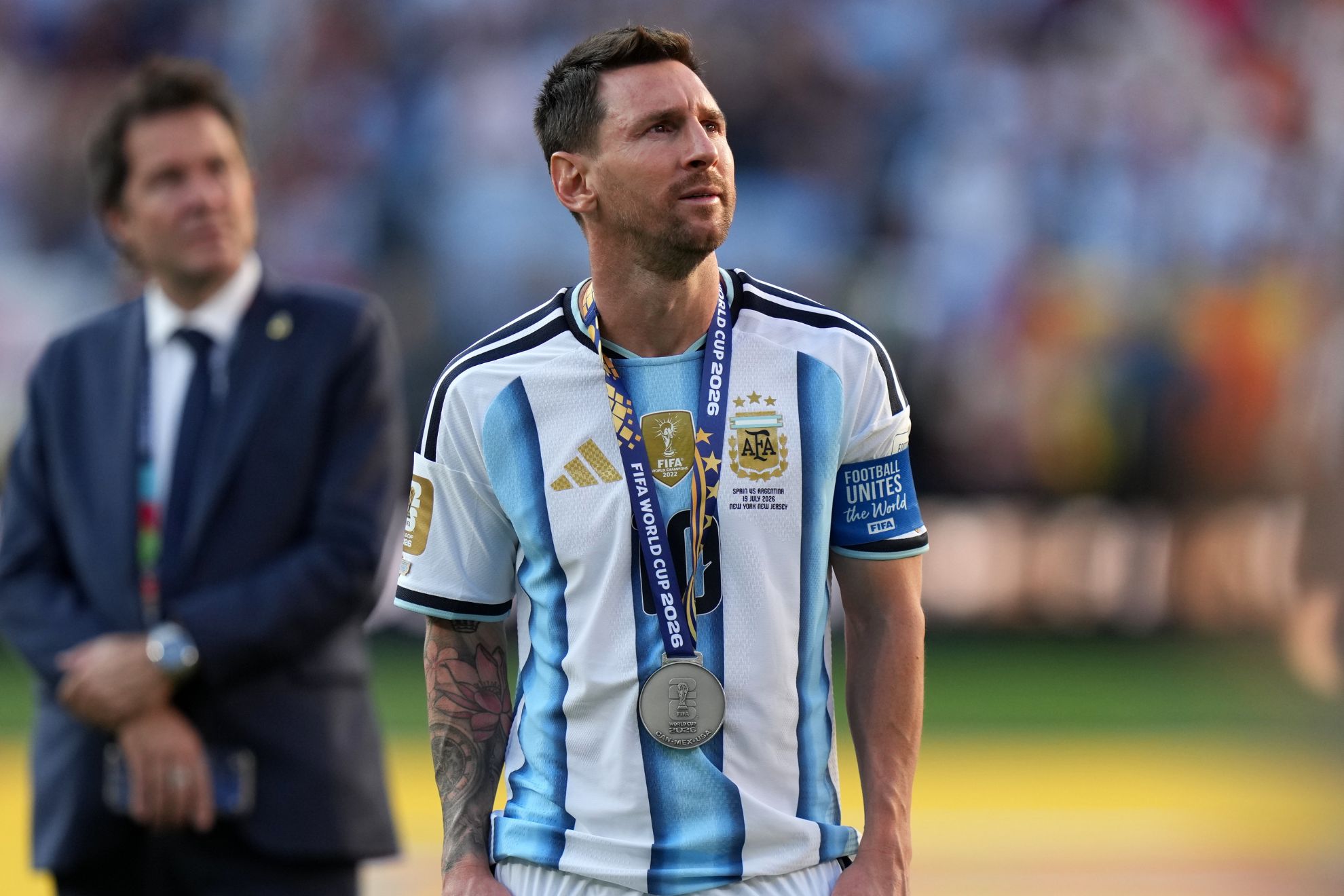
And if there is one thing that was not handed, after any result, to any elite or political design but remained the people’s possession, it is the relationship between supporters and their team — and, in a country where people love their national side, with their beloved Selección. In Argentina, despite defeat in the final, thousands of people took to the streets, celebrated their team’s campaign and expressed the honour they felt at being represented by it. Even inside the stadium after the final whistle, Argentina’s supporters never stopped singing for their team and the greatest player of the tournament and of all History, even though he received no individual award from the FIFA that had supposedly arranged everything for him. The Argentine players, with Messi in more tears than ever before, celebrated with the people. Naturally, even this was exploited by propagandists of every kind, who tried to claim that the Argentines had turned their backs on the winners — something they had not looked for in either 2018 or 2022, when the defeated teams had left the pitch because there was nobody there to continue chanting for them. Apparently nobody had a word to say about the Argentine players continuing to wear their silver medals as the fruit of their efforts, instead of throwing them away in an excess of unsporting behaviour like spoilt children accustomed only to standing on football’s highest peaks. But none of all those who failed to see mattered in that moment, because the silver medal around the neck of Messi and every Argentine footballer was celebrated as pure gold: not the gold of a football victory, but of a victory with an infinite legacy shaping the most difficult thing in football — a country’s understanding of, and genuine love for, the game.
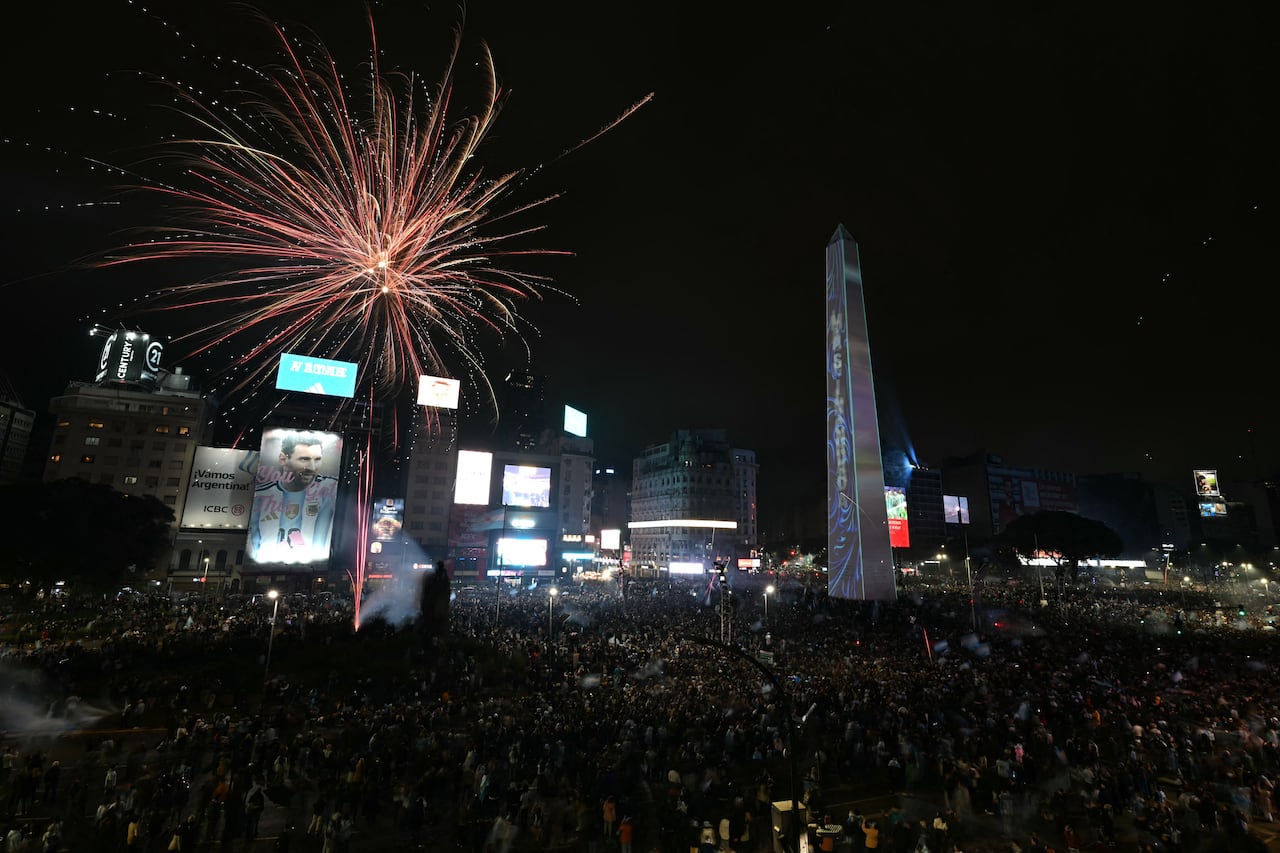
The 2026 World Cup was a snapshot of its age: an age that contains and portends still more armed conflicts; an age of imperialist rivalries; an age of exclusions; an age of apparent toxicity that is nothing other than the modern form of political propaganda, with its modern means. It was a snapshot of the age of oligarchy and of elite football, concentrated in a handful of countries and an even smaller number of clubs, factories of football profit. It was a snapshot of gentrified football, with the entrance of countless figures who have nothing to do with it, ready to tell its story just as they tell the story of so many other things, taking part in mechanisms of propaganda and misinformation that blunt the political judgement and consciousness of peoples. It was a snapshot of football that does not appear to be evolving aesthetically or tactically, with the victory of a recycled old formula, initially hailed but subsequently condemned and abandoned even by those who conceived it. One could say that the World Cup as we knew it is dead. Yet the World Cup was and always will be the meeting point of every tribe in the footballing world, the place that gave birth to our childhood dreams and insists on giving birth to our adult ones. For that reason, it will always give birth to the hope that, just as the world must change and the conditions serving us this life and this football must be overturned, so too will we once again experience the World Cups we always dreamed of when, as children, we picked up a ball to kick against a wall or between two stones. Long live the World Cup!
