
The years after 2020 were not like the ones before—everything had changed, and so had we. We were no longer the small and wronged; we had grown, become strong, invincible, and of course, enemies of a system in whose home turf we now played. That was the meaning of Varela’s goal, the meaning of the unbeaten double, the finals won at OAKA, the won throw-in, the goals in Agrinio, in Tripoli, and so many others. Our generation no longer searched for moments and heroes in a glorious past—it gave birth every year, every match, to its own mythology. The Double-Headed Eagle had grown, and many things had changed—yet we were still here, faithfully, in a new quality of support, passion, and devotion.
We changed a lot—we gradually left behind the microphones, the ink, the people holding them, and we found a new quality in communication, because no longer could any professional—paid within a sociopolitical framework that encourages the acceptance of the unacceptable simply because it stems from whatever authority and is parroted by its mouthpieces—satisfy any of our needs. In that sense, we also changed our criticism; we became again that fearless, great club with “the truth of Toumba,” a courtroom that always judged with fairness, recognized effort, and thundered against dishonesty.
We changed and learned to keep within the family those who had given to it. We found again our footing under the guidance of a foreigner, because after all, we all came as foreigners to the land where only the Club is host. And if he came from Romania, we added yet another Balkan flag next to the one of our fan identity, to underline the character of the city that our Club adorns. With the materials we already had, we built a new, modern, and yet thoroughly and profoundly true identity—one that no longer needed to speak of the grandfather who set out from Polichni on foot to Toumba, but instead, reflecting him in another era, had its own heroes on the same concrete stands, ready to recount their own stories.
With those weapons in our supporter’s quiver, and that growth beneath our wings, we went on to do something very different than before. Because in 2019 something unimaginable had happened—but this time, it was so unimaginable that the next conquest of the summit would be a scenario worthy of epic cinema. No one knew when or how we’d see this film, but now, as we bid farewell to the year, we know: it was 2024—the most epic year in PAOK’s history.
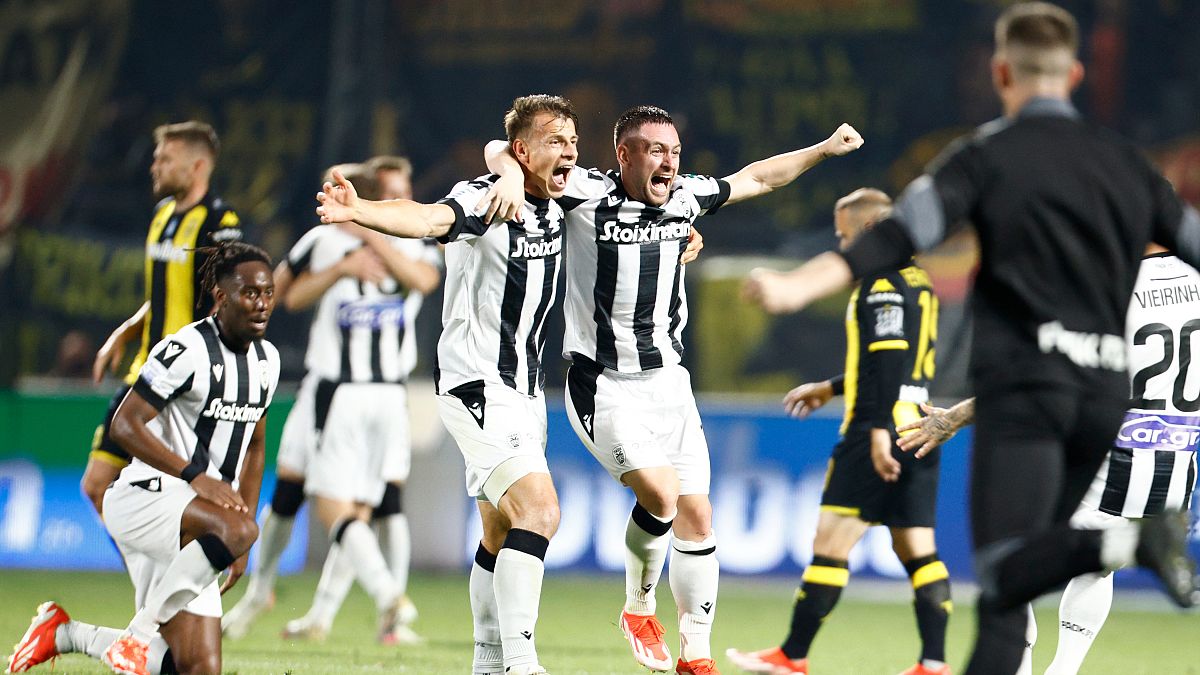
Today, as the seconds tick away marking the shift into a new numerical quality of time, memories rise up and are drawn into the chest that becomes the epilogue for those great things we never managed to express in a way that could match their depth within our soul. That was the 19th of May, 2024—a day no one else could ever understand, because even we will never be able to describe it.
PAOK won the league for the first time in the 21st century in 2018—and because it did so in a regular, legitimate way, they stole it. Then we won it again in 2019—and because we did it in a way that took everyone’s breath away, they couldn’t steal it. Then we were on course to win in 2020—and because we would’ve done it in a way that would become the norm, they tried to steal PAOK’s very soul. So the next scene had to be an immense story.
The only way PAOK could win the championship was where no one expected it—and no one expected the PAOK of 2024. Maybe only those madmen who kept repeating, this time with a realistic tone, the slogan of the late Paschalis: “Champions This Year – PAOK.” PAOK played the best football, made another European leap—but winning a European title seemed more likely than winning the Greek league. That’s why PAOK’s championship cannot be compared to any other Greek club’s title, whether inside or outside the borders.
To win the league, PAOK HAD to lose to Aris, HAD to fail to beat Lamia. PAOK had to appear harmless, so that it could strike only when no one expected it—truly guerrilla-style. There was only one scenario for PAOK to win the league, and it demanded four straight wins, the last one just meters from our own home turf, at the ground of the city rival, who had their own motivations—willing to let go of a title for themselves just to keep the team of the city from winning it, right in their home. PAOK had to have a referee butcher them on the final matchday, the marked date of May 19, in order to reach the summit. There was no other way to win—because in any other case, another “reason” would have been found to stop them, whether inside or—mostly—outside the pitch.
The epic movie could not be complete without parallel intrigues—bags of cash touring Thessaloniki hotels, and the owners of the contenders showing up in the wrong city the night before the crucial match of their teams. Like all tragic heroes, they did not realize that such acts—acts of hubris—only confirmed the tragic irony we now clearly perceive thanks to the passage of time, and that many of us understood even then, as subjects within a storyline filled with strong mentality, responsibility, and determination.
That day, the 19th of May, I was in my flat in London. As the games began, I could’ve turned on the broadcast to witness history. But I couldn’t—the physical loneliness, the distance, didn’t allow my soul to keep pace with the intensity of what was unfolding. I shut off the phones, the TV, even the internet—cutting off all contact with the outside world. I put on “Let the Women Wait”—a film that mirrors our society, which, like this championship, cannot be understood in its artistic depth by those who cannot grasp the historical depth of a black-and-white title. When the film ended, I would know the final scores. That’s when I’d check the internet. When the time came, the roulette ball hadn’t landed on red 36—it had settled on the black-and-white: 19, 5, 24, 31, 11… the numbers no longer mattered. It was the greatest championship of all time—and it was so because PAOK had won it.
In the dying moments of the year, just hours ago, everyone was tallying up the good, the big moments of the season, to keep them in their personal chest of fond memories. That’s when I remembered May 19 and couldn’t stop feeling overwhelmed—because on that day, no one was around to understand what was happening inside my soul. Blessed are those who were in Toumba and the streets of Thessaloniki, in the mass euphoria of that day, where their wait found release and redemption. The rest of us, who were far away, will have to wait to live it another time—because it was so immense, it couldn’t possibly come out of us all at once. In the years to come, it will be channeled elsewhere, into many other things—like this space for football, which began to be born as a spiritual need during those days.
2024 had its miracle—and it was black-and-white. The next stories in our generation’s black-and-white mythology will also be miracles—because they can be nothing else. Those who chase PAOK will simply keep being the necessary dragons in our tale, with a fire that can no longer turn our dreams to ash.
The old PAOK, the one “of our grandfathers,” was a hard song—the song of exile, caught between lament and the Saturday night bouzouki. Our PAOK is a song by Loïzos, who, though he came from elsewhere, also fell in love with this Club—a song that carries within it both the tenderness and the strength of our soul, both of which grew larger on that May night.
