
Latest matches
Articles on the World Cup
The World Cup is dead – Long live the World Cup!
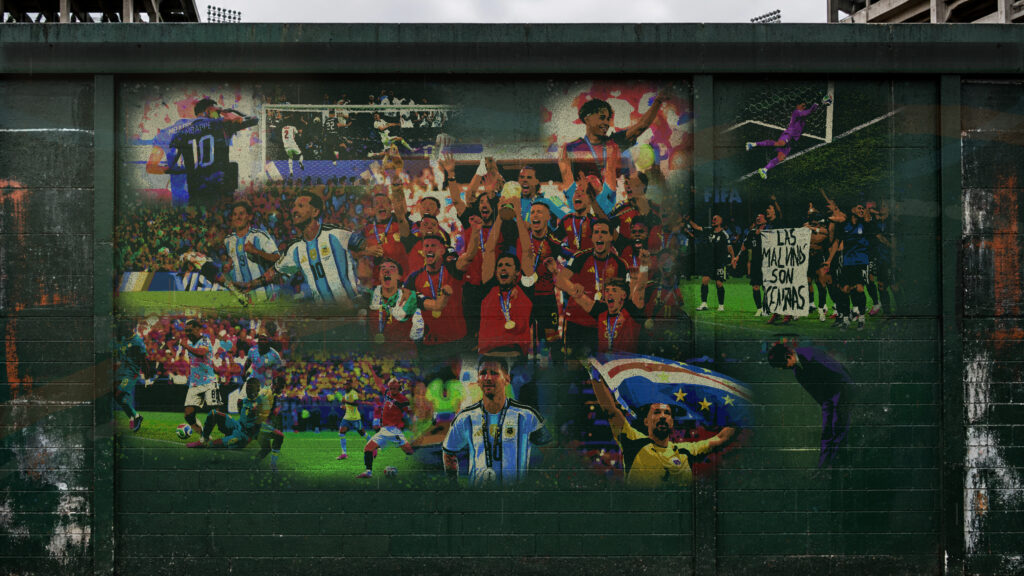
On the afternoon of 19 July 2026, in East Rutherford, somewhere west of the Hudson, Lionel Messi walks across the grass of a football pitch for the final time wearing Argentina's albiceleste World Cup shirt. A silver medal hangs around his neck; before him stands a vast end full of people wearing the same shirt, bearing his name thousands of times over, chanting it rhythmically with no desire whatsoever for this ritual to end. Behind him, the Spanish national team celebrates winning the most important trophy in world football. And while this moment, charged with the emotion of the greatest human being ever to have played football, has now passed into History, 40 days earlier it would have been impossible for anyone to write the script of how he reached that point, in front of that end. This is the History of football, which would be a sorry thing indeed if it were written only in scores and statistics, if it did not give birth to stories with heroes who have always created its mythical narratives. A World Cup does not have just one story, nor just one narrative. This scene was the final page of its central story, but, like a mythology of heroes in its own right, the World Cup always contains many stories large and small that...
A Story for the World Cup
If one tries to find the human activities that simultaneously attract people’s interest on a global scale, it is difficult to identify any that has a greater impact than the FIFA World Cup. Over the years, the World Cup has claimed an ever more central place in the life of societies, in every country, during the period in which it is held. Perhaps the fact that it takes place every four years helps in this, since it makes the period of its staging less ordinary. Beyond the countless social activities related to it, the personal and collective memories that are created, society as a whole, in every part of the world, seems to be transformed during this period. Naturally, economic activities, within a network of interconnected opportunities, revolve around this central tournament. The streets, catering businesses, clothing shops, fill with the colours of the flags of the whole world, ultimately changing even the appearance of cities, of the places where people live. No other tournament today manages to change the appearance of cities to such a degree – the Olympic Games usually transform only the city or the country that hosts them, but never does an event taking place in America change the appearance of the streets of an Asian or European city. In this sense, the World Cup cannot...

The Photograph of Fútbol’s New History
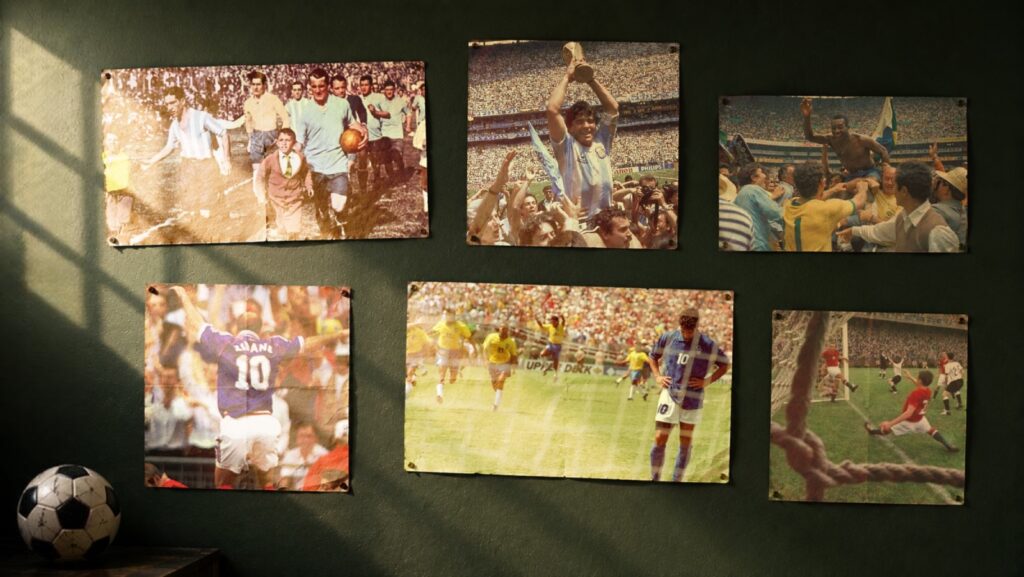
On 30 July 1930, Uruguay and Argentina faced each other in the very first FIFA World Cup final. While that match was inherently historic as the inaugural contest for the Jules Rimet trophy, the awarding of that cup was not necessarily the most defining aspect of the day. More than a final, it was a snapshot of football’s evolution — a turning point when a British export transformed into a cultural expression uniquely shaped by the societies who embraced it. Within those four chalked lines, football was no longer merely a sport — it was becoming the language of a people. The 1920s were foundational years for the growth of Latin American football. The game brought over by British settlers bore their cultural stamp, their worldview, their ideals. By the late 19th century, the ships of the British Empire had brought thousands of expatriates to the ports of the continent. In 1880, 20% of British foreign investment was funnelled into Latin America. By 1890, over 45,000 Britons lived in Buenos Aires, while substantial communities also formed in São Paulo, Rio de Janeiro, Montevideo, Lima, and Santiago. Those same ships brought football — football as the British knew it — which quickly became a pastime of the local middle class, often eager to imitate the customs of the robust and wealthy...

The Death and Birth of a Game
On 5 July 1982, on a sunny afternoon, the national teams of Brazil and Italy faced each other at the Estadi de Sarrià in Barcelona (then the home ground of Espanyol), vying for a place in the semi-finals of the World Cup. That match — remembered in the footballing scriptures by many names — became a historical landmark of the sport. At the time, the World Cup was structured with two group stages. First, the 24 teams were split into six groups, with the top two from each advancing to form four new groups of three teams each. The winner of each group would then progress to the semi-finals. So, while the Brazil–Italy clash had all the intensity and finality of a quarter-final — since the winner would advance — it was, in fact, the third and final match of Group 3 in the second round. That group also featured the reigning world champions Argentina, marking the World Cup debut of Diego Armando Maradona. After Brazil’s dazzling display of dominance at the 1970 World Cup — a triumph made possible in part by the unique conditions of Mexico’s high altitude, which created larger spaces on the pitch — the team remained attached to a style of play built around individual skill and inspiration. This approach was characterised by the inclusion...

The “Miracle of Bern”
On 4 July 1954, the final of the 5th FIFA World Cup Final took place in Bern, Switzerland. On the pitch, and under the eyes of 62,500 spectators, two teams lined up, each with its own reasons to dream of reaching football’s Everest. On one side stood Hungary, in a mythical era during which they were without question the most modern and dominant force in world football. Just two years earlier, they had won the Olympic football tournament in Helsinki — still considered at the time one of the sport’s major competitions. But Hungary’s brilliance wasn’t just about results; this team, built on the foundations laid pre- and inter-war by Jimmy Hogan, had become a machine of innovation under the stewardship of Gusztáv Sebes. On the other side was West Germany, seizing a unique opportunity: less than ten years after the end of the Second World War, they had the chance to win a major international tournament — a symbolic step towards restoring national dignity. Hungary's golden generation — who would later leave their mark across European football as both players and managers — had developed an attractive, high-tempo style of play built on rapid 15-metre passes, covering the entire breadth of the pitch. Around thirty years had passed since the offside rule was amended, prompting the shift from the...